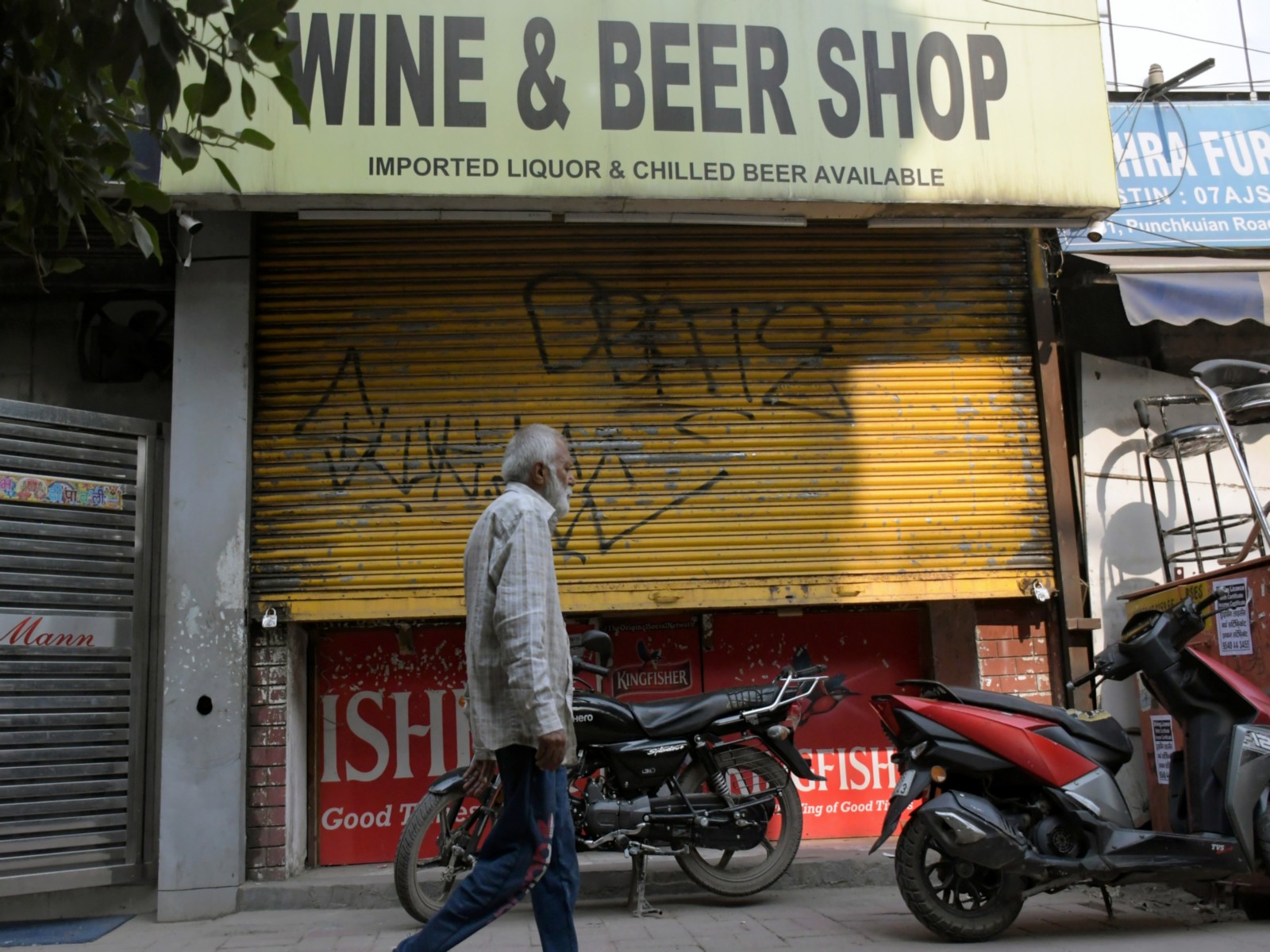
Leh (Ladakh) [India], October 31 (ANI): The All Ladakh Liquor Traders Association defended the livelihood of liquor traders and questioned what they described as selective targeting of their business, and urged the administration and civil society to consider the economic consequences of any decision affecting the liquor trade.
The Association at a press conference maintained that liquor trading is a legally licensed business in Ladakh and that people from different religious communities, including Muslims, Buddhists, Christians and Hindus, are associated with the trade. It objected to the perception that the business belongs exclusively to one particular community and said that decisions should not target one section of society.
The representatives questioned why restrictions and scrutiny were being focused particularly on liquor businesses when other commercial activities also generate substantial profits. They cited the example of contractors and competitive bidding, arguing that if equality is the concern, similar principles should be applied consistently across different sectors.
The Association appealed to the administration to assess the financial implications before taking any decision. It pointed out that several traders, particularly those who recently entered the business, have invested lakhs of rupees in licences, stock and infrastructure. Some, it said, have not even received a month’s opportunity to operate and recover their investments.
A representative warned that sudden policy changes or closure of businesses could put considerable financial pressure on traders and their families. He urged civil society and the administration to consider both the positive and negative consequences of any proposed restrictions.
A major part of the press conference was devoted to criticism of climate activist Sonam Wangchuk. One of the Association’s representatives accused him of taking contradictory positions on alcohol consumption, stating that while he has reportedly advocated making Ladakh a dry region, traditional beverages such as chang have also been discussed positively.
The representative questioned why liquor should be singled out for prohibition while other substances, including drugs and cigarettes, and issues relating to meat consumption, were not being addressed with the same approach. He argued that if the objective is to protect Ladakh’s society and environment, the discussion should cover all such concerns consistently.
The representative also raised allegations regarding homemade apple wine marketed under the name ‘Ule Topo’, questioning whether the product had the required government licence and why the administration had not taken action.
He further accused Wangchuk of selectively highlighting issues and urged him not to interfere in the livelihoods of liquor traders. He said the Association would also support a complete prohibition if the same standards were applied consistently to other activities, including meat consumption, cigarettes and drugs.
The Association also highlighted the revenue generated through the liquor trade for the government. Representatives referred to taxes, licence fees and additional charges paid by traders and questioned whether imposing further financial burdens on one business sector would be fair.
They argued that liquor traders are already contributing to government revenue through various taxes and fees, including GST, and said any additional taxation or restrictions should be considered after proper consultation with stakeholders.
During the discussion, representatives stressed the need for a wider social awareness campaign involving all communities and religious organisations. They suggested that awareness programmes should focus on the harmful effects of alcohol, drug abuse and other social problems, particularly among the younger generation.
They also discussed the possibility of channelising resources towards social awareness, education and community welfare. One representative suggested that if awareness efforts reduce demand, businesses would eventually decline naturally without sudden administrative action.
Responding to questions about incidents of violence, fights and serious injuries reported around some establishments, including incidents described as nearly fatal, Association representatives acknowledged that such incidents had occurred.
They said individual licence holders must remain responsible for their establishments and claimed that CCTV cameras are installed and footage can be provided when required. However, they maintained that maintaining law and order is also the responsibility of the police and administration.
The Association called for collective discussions involving the administration, civil society organisations, hotel and tourism associations, taxi unions, merchant associations and other stakeholders to develop a practical solution.
The representatives also cautioned that declaring Ladakh a completely dry region without a comprehensive enforcement mechanism could encourage illegal liquor sales and black marketing. Citing examples of dry states such as Gujarat and Bihar, they argued that prohibition must be accompanied by effective enforcement and public awareness.
They clarified that the Association does not support illegal activities and said that liquor sales must operate within the framework of government regulations.
Concluding the press conference, the All Ladakh Liquor Traders Association urged religious organisations, civil society groups, political representatives and the UT administration to engage in constructive dialogue rather than targeting a particular business sector.
The Association maintained that it was not opposing public awareness or efforts to address substance abuse but wanted its members’ livelihoods, financial investments and legal business interests to be considered before any policy decision is taken.
It called for a balanced approach that addresses social concerns while ensuring fairness, accountability and equal treatment for all business sectors in Ladakh. (ANI)
Related reading