
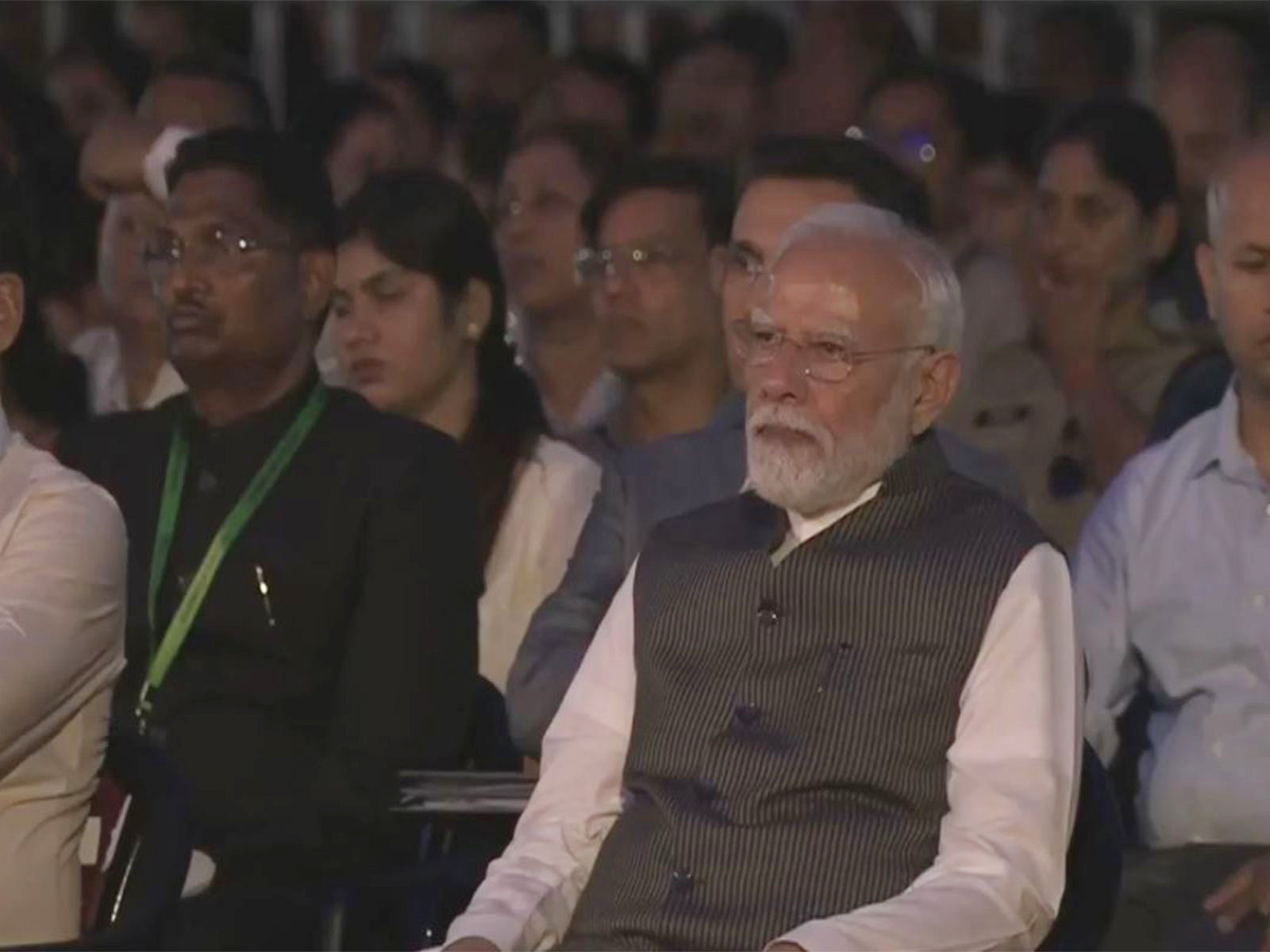
Narmada (Gujarat) [India], October 30 (ANI): Prime Minister Narendra Modi on Friday inaugurated Bharat Parv 2026 and attended the Ekta Prakash Parv at Ekta Nagar in Narmada district in Gujarat.

The events will be followed by the Narmada Aarti at around 8:15 pm.
As per the Gujarat Chief Minister’s Office, PM Modi dedicated and laid the foundation stones for various development projects worth over Rs 14,000 crore to the nation from Banaskantha district. On the occasion of the national-level celebration of PM Kisan Utsav Diwas, he also released the 24th instalment of the Pradhan Mantri Kisan Samman Nidhi (PM-KISAN), transferring financial assistance directly to farmers’ bank accounts across the country.
The Prime Minister also inaugurated the Bharat Bovine Breeding and Research Centre (BBBRC), the new potato expansion facility and the UHT-ASRS facility of Banas Dairy through virtual means. He also performed the ground-breaking ceremony for two new compressed biogas plants of Banas Dairy at Tharad and Radhanpur.
Besides dedicating two new railway services to Gujarat, the Prime Minister inaugurated and launched several development projects worth crores of rupees in the metro, anganwadi, agriculture and animal husbandry sectors.
Describing farmers as among the strongest pillars of a developed India, the Prime Minister said that the welfare and empowerment of farmers had always remained the government’s highest priority.
He said the country’s agricultural budget had increased more than fivefold compared to 2013-14. The PM-KISAN scheme had become an integral part of the lives of small farmers. More than Rs 1,000 crore had been transferred to the bank accounts of over 50 lakh farmers in Gujarat, including approximately Rs 50 crore benefiting thousands of farmer families in Banaskantha. On Friday, more than Rs 18,000 crore was transferred to the accounts of nearly 10 crore farmers across the country.
The Prime Minister said that the government’s farmer-oriented policies and decisions over the past few years had delivered benefits or savings worth more than Rs 50 lakh crore to farmers.
Citing five major examples, he said approximately Rs 4.5 lakh crore had been directly transferred to the bank accounts of small farmers under PM-KISAN. More than 85 per cent of the country’s farmers belonged to the small-farmer category, and the government had extended financial assistance to them.
To protect Indian farmers from the impact of sharp increases in international fertiliser prices caused by global instability, the government had spent approximately Rs 16 lakh crore on fertiliser subsidies.
He said the government had fulfilled its commitment to providing Minimum Support Price (MSP) to farmers. Over the past 12 years, more than Rs 24 lakh crore had been paid to wheat and paddy farmers through MSP procurement.
Under the Pradhan Mantri Fasal Bima Yojana, farmers had received crop insurance compensation exceeding Rs 2 lakh crore over the past 10 to 12 years.
Similarly, the Pradhan Mantri KUSUM Yojana had helped reduce irrigation costs. Approximately 12 lakh solar pumps had been distributed under the scheme, providing additional electricity to farmers and saving them the expense of purchasing more than 800 million litres of diesel.
The Prime Minister said these five major schemes and decisions had collectively delivered financial benefits and savings exceeding Rs 50 lakh crore to farmers, increasing their incomes and strengthening the capacity of India’s agricultural sector.
Prime Minister Modi said agriculture was not merely a means of livelihood but an integral part of India’s tradition and culture. Over the past 12 years, the government had emphasised the extensive use of science and technology in agriculture and animal husbandry.
He cited Soil Health Cards as an excellent example of this transformation. Earlier, farmers did not have precise information about the type and quantity of fertilisers required for their fields. Soil Health Cards had helped modernise farming practices, and more than 26 crore cards were now available to farmers across the country.
With climate change posing major challenges to agriculture, the government was continuously working to provide farmers with innovative, climate-resilient seed varieties. Approximately 3,000 new varieties of seeds had been made available to farmers in recent years.
Describing animal husbandry as an important pillar of the rural economy, the Prime Minister highlighted the significant contribution of rural women to this sector.
He said the government had placed special emphasis on promoting science and technology in the dairy and animal husbandry sectors over the past decade. Better animal breeds could increase milk production, while timely vaccination and appropriate treatment could protect livestock from diseases.
“Healthy livestock will also increase the income of my brothers and sisters engaged in animal husbandry,” he said. Referring to the National Gokul Mission, the Prime Minister said it was playing an important role in conserving indigenous livestock breeds and improving their quality through scientific methods.
The newly established research centre in Banaskantha would contribute significantly to the breeding and genetic improvement of indigenous cattle breeds such as Gir, Sahiwal and Kankrej, as well as buffalo breeds such as Mehsana, Murrah and Jaffarabadi. It would be the country’s first such research centre dedicated to the Kankrej breed.
He said modern technologies such as In Vitro Fertilisation (IVF) were helping livestock farmers pass on the superior qualities of high-milk-yielding, healthy and low-maintenance cows to future generations.
The government was also conducting a nationwide free vaccination campaign to protect livestock against diseases such as Foot-and-Mouth Disease (FMD). Approximately 150 crore vaccine doses had been administered so far, benefiting the livestock of more than eight crore animal rearers and reducing their financial burden.
As a result of these efforts, milk production in the country had increased significantly. The average daily milk yield per cow or buffalo, which was less than five litres in 2013-14, had increased to approximately eight litres.
India was witnessing the fastest growth in milk productivity globally and had emerged as the world’s largest milk producer, he said.
The Prime Minister said the government’s objective was to ensure that livestock farmers earned income not only from milk but also from cow dung and agricultural residues.
For this purpose, infrastructure for producing biogas, Bio-CNG and organic fertilisers was being developed in collaboration with cooperative institutions such as Banas Dairy. Foundation stones for two new Bio-CNG plants were laid on Friday.
He said the government was committed to improving livestock health, increasing milk production and ensuring the productive utilisation of cow dung to enhance farmers’ incomes. Animal husbandry was being transformed from a traditional occupation into a powerful means of increasing farmers’ earnings and bringing prosperity to rural areas.
Stating that the government was adopting a comprehensive approach to rural prosperity, Prime Minister Modi referred to initiatives aimed at developing the fisheries sector and promoting cooperative activities. He said India’s seafood exports had more than doubled.
He also highlighted beekeeping as an important supplementary occupation for increasing farmers’ incomes. Honey production in the country had doubled over the past 12 years, with women’s self-help groups making a significant contribution to the sector. India had now become the world’s second-largest exporter of natural honey.
The Prime Minister recalled that he had first taken the oath as the head of a government on October 7, 2001, and completed 25 years of public service in this capacity on October 7.
He said he initially had no experience of government offices or official files, but the love, guidance and affection he received from the people of Gujarat had been invaluable.
Recalling his humble beginnings, he said that a person born into a poor family, whose ancestors had never even dreamed of becoming village sarpanches, had been given the opportunity to serve Gujarat first and subsequently the entire country. He said he would remain indebted to the people of Gujarat throughout his life, as every citizen of the state had taught him something and guided him on the right path.
He said he had entered public life with just two commitments: serving the nation and contributing to national development through the development of Gujarat.
“Whatever I have achieved today is because of the people of this country. I will remain indebted to all of you throughout my life and will dedicate myself to your service until my last breath,” he said.
Reminding people of the severe shortages of water and electricity that Banaskantha and North Gujarat faced 25 years ago, the Prime Minister said people had responded positively to his appeal to conserve water and electricity and had transformed the situation through their hard work.
He urged people to renew their commitment to conserving water and electricity.
He said the availability of Narmada water and modern irrigation techniques such as drip irrigation had transformed Banaskantha. Potatoes produced in the district had now gained recognition across the world.
Banas Dairy had expanded its cooperative activities to other parts of the country, including Kashi, setting an excellent example of the strength of the cooperative movement.
The capacity of the potato-processing plant manufacturing French fries had also been expanded to enable it to procure more potatoes from farmers. This would prove highly beneficial to potato-growing farmers.
Under the ongoing cluster development programme for fruit and vegetable producers, 12 clusters had been approved for crops including tomatoes, potatoes, chillies, grapes, bananas, onions, oranges, pomegranates and cocoa.
Subsidies were also being provided to farmers for developing new orchards and rejuvenating existing ones. The two clusters approved in North Gujarat would particularly benefit potato farmers in Banaskantha and Sabarkantha districts.
Highlighting infrastructure projects aimed at accelerating Gujarat’s development, the Prime Minister said two new railway services had been flagged off: Ahmedabad-Varanasi Sabarmati Express and Mehsana-Becharaji-Sabarmati MEMU train.
He also laid the foundation stones for metro projects connecting GIFT City and the airport as part of the expansion of Ahmedabad Metro.
The Ahmedabad-Mehsana Highway would be upgraded from four lanes to eight lanes.
For the welfare of children and mothers in Gujarat, more than 4,000 modern anganwadis were inaugurated across the state. These facilities would benefit approximately four lakh children and pregnant women.
The Prime Minister said the government was continuously undertaking development initiatives to ensure that every farmer, youth, woman and daughter of the country moved forward with the vision of a developed India.
However, he said that certain elements were uncomfortable with India’s progress and development and attempted to create difficulties whenever the country faced a crisis.
Referring to the ongoing war situation involving Iran and Gulf countries, he said that while India was united in facing global challenges, some elements had attempted to spread rumours about fertiliser shortages among farmers and LPG shortages among women, creating an atmosphere of fear and uncertainty.
He further said that the intention behind such attempts was to destabilise the country and discredit the government. However, the government had ensured that farmers did not face any shortage of fertilisers or other agricultural requirements, even during the crisis.
Despite a sharp rise in international prices of fertilisers and their raw materials due to the global conflict, the government had ensured that the burden did not fall on Indian farmers.
He said that while a bag of urea costing approximately Rs 3,000 in the international market was being made available to Indian farmers for less than Rs 300, a bag of DAP fertiliser costing over Rs 5,000 internationally was being provided to farmers for just Rs 1,350.
The government was extending financial support to empower farmers and improve their standard of living, he said.
The Prime Minister said India’s rapid development journey was generating new hope across the world. He called upon citizens to continue moving forward with the spirit of ‘Ek Bharat, Shreshtha Bharat’.
He said that on October 31, National Unity Day, the nationwide ‘Run for Unity’ would be organised to strengthen the spirit of national unity inspired by Sardar Vallabhbhai Patel.
He appealed to all citizens, particularly the youth, to participate enthusiastically in the Run for Unity scheduled for the following morning.
Announcing a change in the timing of this year’s annual National Unity Day celebrations at Ekta Nagar, he said that a grand Unity Ceremony would be held at 5:30 pm on October 31.
The programme would feature a parade by police and security forces along with various tableaux.
He invited citizens from Kashmir to Kanyakumari and Kutch to Kamakhya to participate in the event, pay their tributes to Sardar Vallabhbhai Patel and strengthen their commitment to ‘Ek Bharat, Shreshtha Bharat’.
Concluding his address, the Prime Minister congratulated all citizens who had contributed to the development journey launched from the sacred land of Banaskantha.
Gujarat’s development journey is accelerating under PM Modi’s leadership. Adressing the farmers’ welfare programme, Chief Minister Bhupendra Patel said that, inspired by the Prime Minister, the nation had received the valuable gift of various development projects worth Rs 26,092 crore.
He said the establishment of a modern breeding centre in Banaskantha would make superior livestock breeds available through new technologies, enabling livestock farmers to achieve higher productivity, greater prosperity and sustainable livelihoods.
Recalling the journey of service, dedication and good governance that began in Gujarat under PM Modi’s leadership on October 7, 2001, the Chief Minister said it had now propelled India towards becoming the world’s third-largest economic power.
Congratulating PM Modi on completing 25 successful years in public service and making his first visit to his home state after achieving this milestone, the Chief Minister extended greetings and best wishes on behalf of the people of Gujarat.
He said such enthusiasm, energy and a strong commitment were possible only through the guiding principles of ‘Nation First’ and ‘Nagrik Devo Bhava’ (citizens are like gods).
Recalling the challenges Gujarat faced when PM Modi assumed responsibility for the state, including shortages of electricity, water and road infrastructure, the Chief Minister said he had transformed these challenges into opportunities by putting into practice the principle that Gujarat had immense potential and only needed direction and momentum.
Today, Gujarat was leading the country in emerging sectors such as solar rooftop energy, renewable energy and green growth.
Expressing confidence that Gujarat would play a leading role in achieving the vision of Developed India 2047, the Chief Minister said Prime Minister Modi had instilled unwavering confidence in development among millions of people through the mantra of ‘Sabka Saath, Sabka Vikas, Sabka Vishwas and Sabka Prayas’.
He expressed confidence that Gujarat would remain at the forefront of building a ‘Viksit Bharat’ and ‘Self-Reliant India’ under the Prime Minister’s leadership when the country completes 100 years of independence in 2047.
Addressing the gathering, Deputy Chief Minister Harsh Sanghavi said he shared a close familial and emotional bond with Banaskantha.
He recalled that around 50 years ago, due to the lack of basic facilities such as water and electricity, thousands of families, including his own, had been forced to migrate from Deesa and their native villages.
Women had to travel long distances in search of water, while families struggled to arrange fodder for their livestock. However, Prime Minister Modi had made a firm resolve from this very land that Banaskantha would no longer remain backwards.
Harsh Sanghavi said the Narmada waters, Sujalam Sufalam Canal and drip irrigation had transformed the fortunes of the region.
Under the Prime Minister’s guidance, Banas Dairy had grown into Asia’s largest dairy cooperative. Earlier, livestock farmers received a profit of only Rs 30 crore, but today Rs 1,400 crore is being transferred directly into their bank accounts. Amul’s turnover, too, had increased from Rs 2,200 crore to more than Rs 1 lakh crore.
Referring to remarks made by opposition parties against the Prime Minister, Sanghavi said that they had even failed to respect the dignity of the Prime Minister’s late father and were conspiring to remove Modi from office.
He called upon the 140 crore citizens of the country to reject such attempts and collectively declare that “Modi will not go.”
Gujarat Legislative Assembly Speaker Shankar Chaudhary said Prime Minister Modi had undertaken the remarkable task of transforming the once-arid land of Banaskantha into a green and prosperous region.
He said the Narmada waters, Sujalam Sufalam Canal and round-the-clock electricity supply had completely transformed the region.
Whenever the Prime Minister visited Banaskantha, he introduced new ideas for the upliftment of farmers and livestock rearers.
By treating cow dung as ‘wealth rather than waste’, the Prime Minister had introduced the Gobardhan Yojana, which was now generating an annual income of more than Rs 100 crore for livestock farmers.
Inspired by the livestock revolution in Brazil, the Prime Minister had also paved the way for improving animal breeds and substantially increasing milk production, Chaudhary said.
As part of the PM Kisan Utsav Diwas celebrations, financial assistance of more than Rs 18,680 crore was transferred to over 9.34 crore farmer families across the country under the 24th instalment of the Pradhan Mantri Kisan Samman Nidhi scheme.
Of this amount, more than Rs 1,051 crore was transferred to over 52.33 lakh farmer families in Gujarat.
It may be noted that through the first 23 instalments of PM-KISAN, more than Rs 4,47,000 crore had already been disbursed to over 11 crore farmer families across the country.
In Gujarat, more than Rs 24,137 crore had been transferred to over 69.26 lakh beneficiary farmers.
The national-level programme was telecast live across the country, including every corner of Gujarat.
In the state, 34 district-level programmes and more than 2,100 cluster-level programmes were organised.
Ministers, Members of Parliament, MLAs, elected representatives, agricultural scientists and senior officials participated in these programmes.
During the events, approval letters under various schemes of the Agriculture and Horticulture Departments were distributed to beneficiary farmers at the respective venues.
The national-level programme was attended by Ministers Jitubhai Vaghani, Kamleshbhai Patel, Pravin Mali, Swaroopji Thakor, Ramesh Katara and Manisha Vakil; Chief Secretary MK Das; Members of Parliament Babubhai Desai and Bharatsinh Dabhi; District Panchayat President Vasantbhai Purohit; MLAs Keshaji Chauhan, Aniket Thakor, Mavji Desai and Lavingji Thakor; secretaries of various departments; senior government officials and elected representatives, the release said.
Banas Dairy Vice-Chairman Bhavabhai Rabari, members of the dairy’s board of directors, milk producers, a large number of farmers and cooperative-sector leaders were also present. (ANI)
Related reading


