VMPL
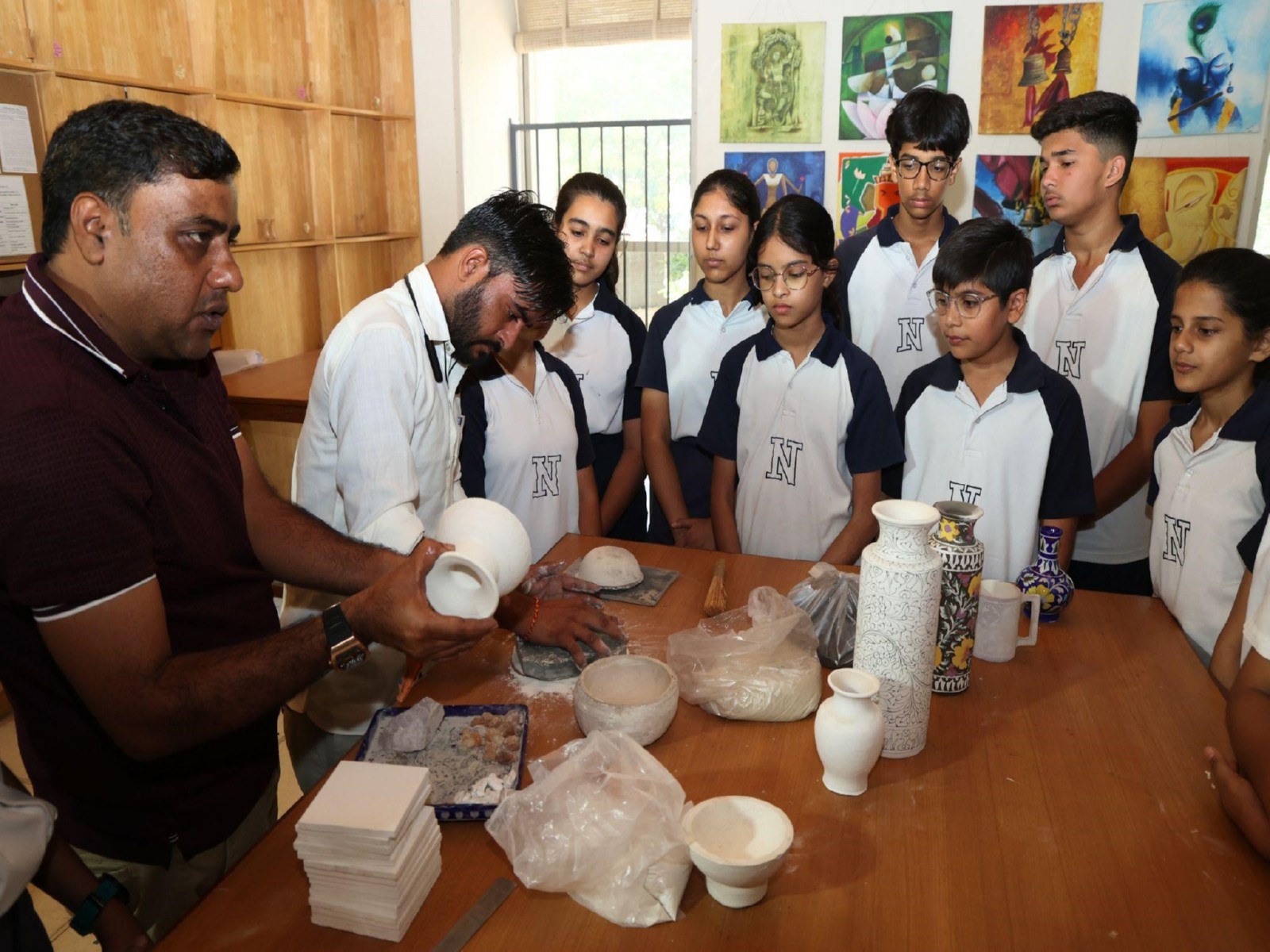
Jaipur (Rajastha) [India], October 30: Students of Grade VIII at Neerja Modi School, Jaipur, explored the techniques and artistic heritage of the city’s traditional blue pottery during a hands-on workshop held on October 22. The session introduced students to the intricate process of blue pottery-making, from preparing the raw material and understanding traditional pigments to creating their own designs on ceramic tiles.
The workshop aimed to familiarise students with one of Jaipur’s distinctive craft traditions while encouraging creativity, artistic expression and an appreciation for traditional craftsmanship.
The session began with an introduction to the materials used in blue pottery-making. Students learned that, unlike conventional pottery, Jaipur blue pottery traditionally uses a mixture of quartz powder, powdered glass, gond katira (a natural gum) and water. The ingredients are combined in carefully measured proportions to prepare a workable dough, which is kneaded, soaked for approximately 24 hours and rolled into thin sheets. The material is then shaped, dried and refined to create a smooth surface for decoration.
Students were also introduced to the artistic techniques that give blue pottery its distinctive appearance. Artisans traditionally sketch designs onto dried surfaces before tracing the outlines in black and filling them with coloured pigments. Cobalt- and copper-based pigments contribute to the characteristic blue and turquoise shades, while other colours are used to create intricate patterns and decorative motifs.
The workshop further explored the finishing stages of the craft, including the application of glaze, drying and kiln firing. Students learned how exposure to high temperatures transforms the colours and gives finished artefacts their distinctive appearance. The demonstration highlighted the precision, patience and technical understanding required at each stage of the process.
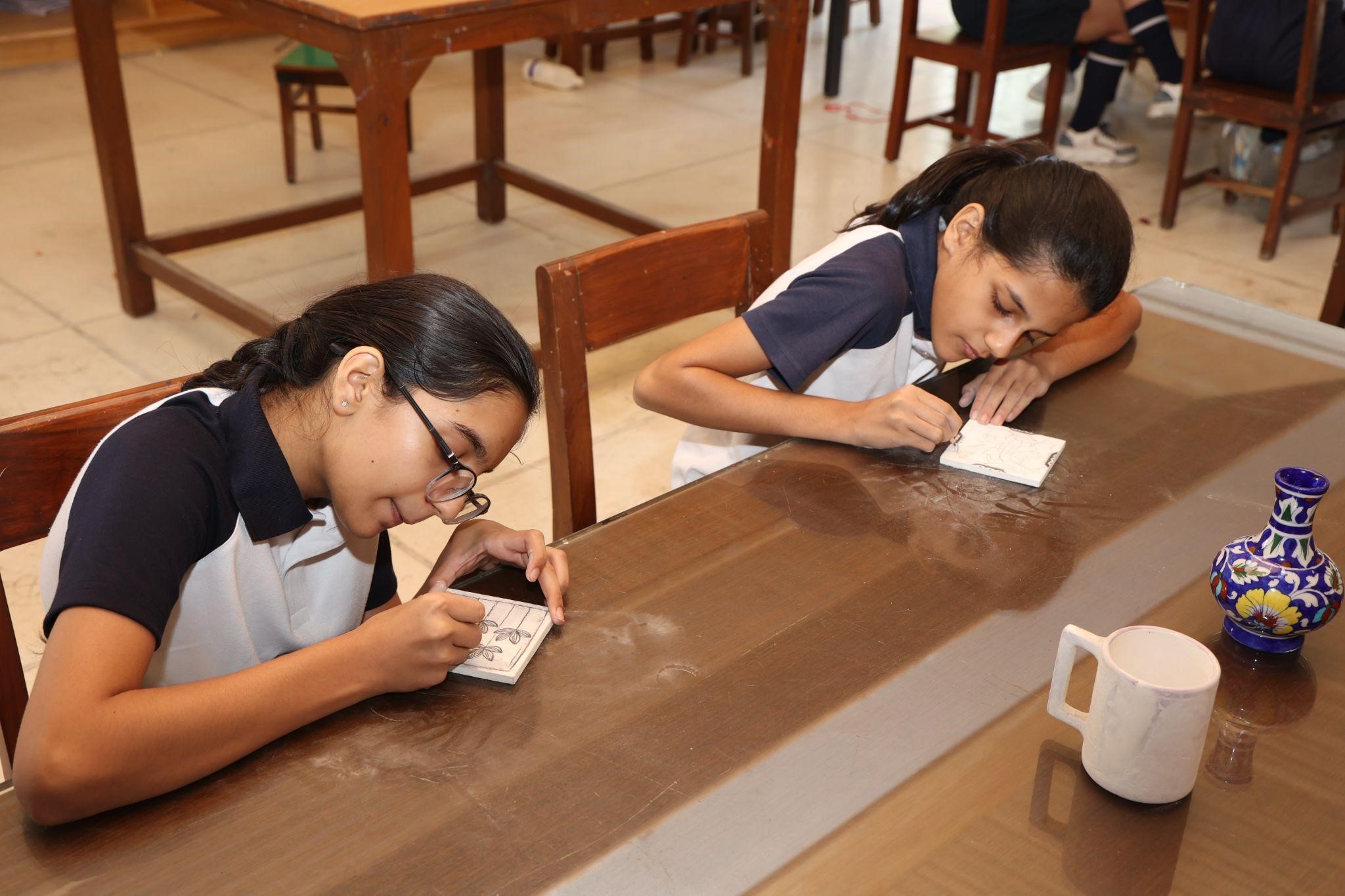
Following the introduction, students applied their learning by painting individual designs on ceramic tiles. Their creations reflected a variety of artistic influences, combining traditional Indian themes with personal interpretations. One student depicted Lord Krishna lifting Govardhan Parvat, while another drew inspiration from Kalamkari art. Other students explored motifs from Gond art, represented the lotus flower, India’s national flower, or experimented with abstract compositions.
The practical activity gave students an opportunity to translate their observations into original artwork while exploring different approaches to colour, patterns and composition. By creating their own designs, they gained a closer understanding of the relationship between traditional techniques and individual artistic expression.
Through the workshop, Neerja Modi School provided students with an opportunity to engage directly with Jaipur’s rich cultural and artistic heritage. The experience connected classroom learning with practical exploration, helping students recognise the skill and attention to detail involved in preserving traditional crafts.
The initiative also underscored the value of experiential art education in encouraging students to explore indigenous art forms, understand their cultural significance and develop their own creative perspectives. By combining an introduction to traditional techniques with hands-on practice, the workshop offered Grade VIII students an engaging way to discover the enduring appeal of Jaipur’s blue pottery.
(ADVERTORIAL DISCLAIMER: The above press release has been provided by VMPL. ANI will not be responsible in any way for the content of the same.)
Related reading