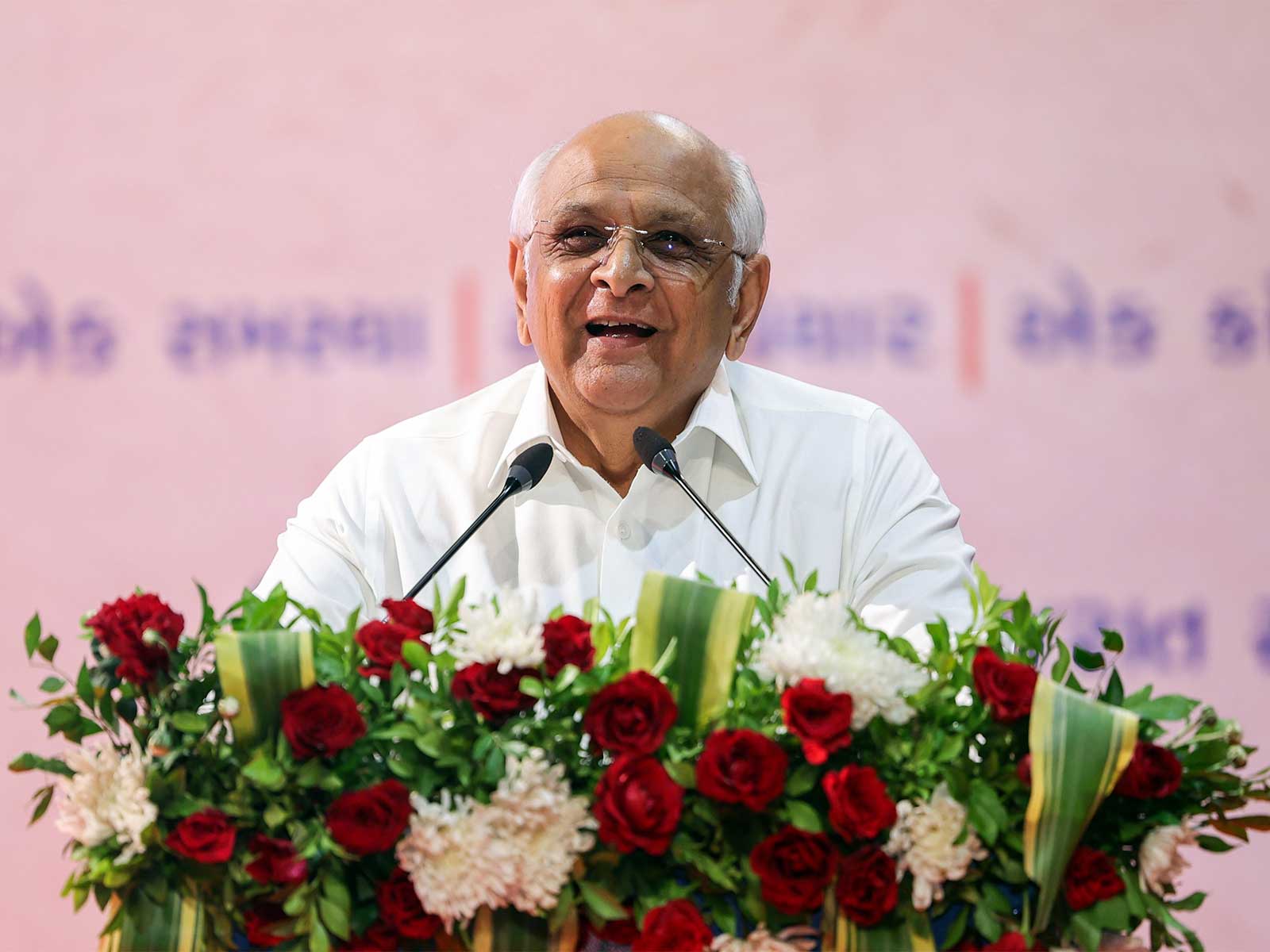
Gandhinagar (Gujarat) [India], October 29 (ANI): The Gujarat government, under the leadership of Chief Minister Bhupendra Patel, has expanded the scope of the Sardar Patel Good Governance CM Fellowship Programme to strengthen governance and improve the implementation of government schemes.
Under the decision, the number of fellows has been increased from 41 to 47, while the number of projects has been raised from 20 to 45.
According to an official release, the decision has been taken by the General Administration Department (GAD), which functions under the direct leadership of the Chief Minister. The expansion will provide greater opportunities for young talent to contribute to research, policy analysis, administrative coordination and the evaluation of government schemes across various development sectors in the state.
According to the new resolution issued by the GAD, the Indian Institute of Management Ahmedabad (IIM Ahmedabad) will serve as the knowledge partner for the programme. The resolution also specifies the role of a senior faculty member to be appointed by the knowledge partner.
The CM Fellowship Programme aims to provide young people with knowledge, research capabilities and analytical skills an opportunity to work with the state administration for one to two years and gain practical experience in government functioning. Their expertise will be utilised to improve social services, make public welfare schemes more outcome-oriented and streamline administrative processes.
The expanded fellowship programme will cover key areas such as education, healthcare, nutrition, agriculture, social development, urban administration, the environment and public administration.
The projects will focus on identifying bottlenecks in the implementation of government schemes, ensuring the effective utilisation of available resources and providing practical recommendations to government departments for improving their functioning.
Keeping the holistic development of children in focus, the programme will include projects related to Anganwadi services, nutrition, anaemia reduction, early childhood education and interconnected libraries.
A project aimed at expanding centralised kitchen facilities across the state has also been included to strengthen the implementation of the PM POSHAN mid-day meal scheme and the Integrated Child Development Services (ICDS).
Studies under these projects are expected to generate useful recommendations to improve the reach of government schemes, the quality of services and their implementation.
Under the fellowship programme, projects in the healthcare sector will examine challenges related to claims under the PMJAY-MA scheme at government hospitals and the utilisation of public healthcare services.
The objective is to simplify procedures, improve operational efficiency and identify opportunities to strengthen the delivery of healthcare services.
In agriculture, fellows will analyse the challenges involved in implementing natural farming practices and the difficulties faced in ensuring that the benefits of government schemes reach farmers. The findings are expected to help the concerned departments formulate practical measures to address these issues.
In line with the state’s long-term development vision, the expanded programme will include evidence-based policy research, data analysis and monitoring of priority development projects under the ‘Viksit Gujarat@2047’ initiative.
Studies will also examine the functioning of district-level committees, follow-up on decisions and ways to improve coordination among various government departments.
The projects may use artificial intelligence (AI)-based tools, wherever required, to classify information, prepare summaries and identify key issues at an early stage. However, information generated through AI will be used only after verification against original documents and data.
In the area of urban administration, the programme will include projects aimed at improving civic services in the Rajkot Municipal Corporation, preventing the recurrence of complaints and using data analysis to identify and address problems proactively.
Projects related to the recycling of solid and wet waste and the reuse of resources in Bhavnagar have also been included.
The increase in the number of fellows and projects is expected to widen opportunities for young professionals to contribute to government functioning, research and practical improvements across multiple sectors. The initiative aims to strengthen the implementation of government schemes, improve administrative coordination and accelerate efforts to achieve the state’s development goals. (ANI)
Related reading