New Delhi [India], October 25 (ANI): The Delhi Government’s Food Safety Department has launched an intensive drive against food adulteration during the festive season, conducting raids at 13 premises in Nihal Vihar and destroying around 402 kg of food items.
In a separate operation at Mori Gate Khoya Mandi, officials destroyed another 520 kg of abandoned and rotten khoya and chhena. Chief Minister Rekha Gupta said strict action would be taken against those compromising public health, warning, “Those who violate rules and play with public health will not be spared.”
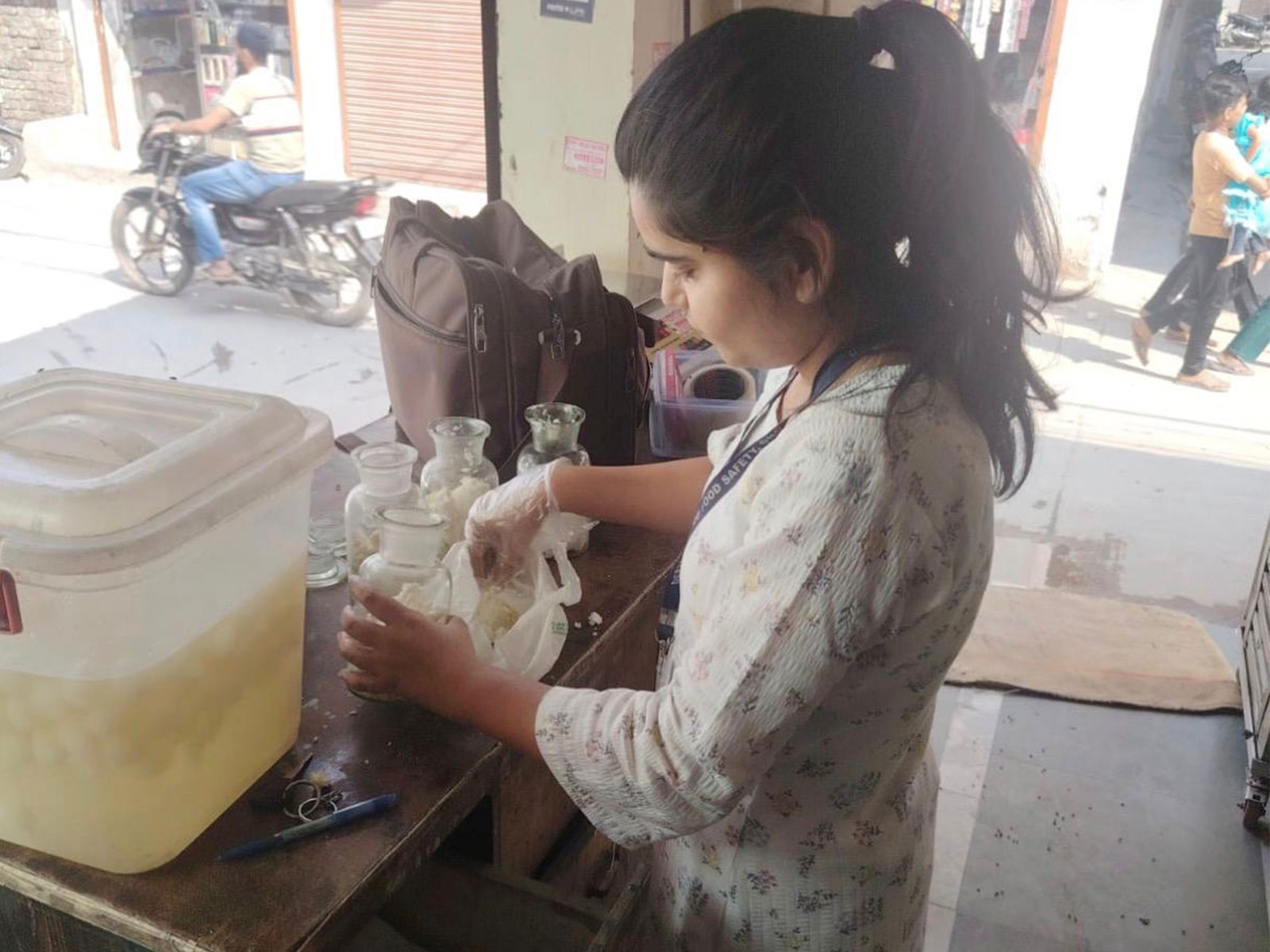
During the raids in Nihal Vihar, Food Safety teams inspected premises, including unlicensed rasgulla manufacturing units, sweet makers and sweet shops. Around 402 kg of food items were destroyed, comprising 265 kg of rasgulla, 45 kg of chhena, 80 kg of milk cake and 12 kg of grated coconut. The teams also collected 14 samples for testing, including six of chhena, two each of milk cake and rasgulla, and one each of motichoor laddoo, besan laddoo, rasbhari and paneer. According to the department, during an earlier operation on August 26, shopkeepers had shut their establishments and officials could trace only three premises. This time, surprise raids were conducted on a holiday, with teams deployed simultaneously across different lanes.
In another operation at Mori Gate Khoya Mandi, officials found 370 kg of khoya and 150 kg of chhena abandoned, rotten, and emitting a foul smell. The entire 520 kg was destroyed on the spot, and three khoya samples were collected. The department recalled that around 3,050 kg of khoya and paneer had also been destroyed at the same market on September 4 during Janmashtami. Action will be taken against the concerned food business operators under the Food Safety and Standards Act, 2006, based on inspection findings and laboratory test reports. The department said inspections would continue throughout the festive season.
Reiterating the government’s commitment to food safety, Chief Minister Rekha Gupta said the purity of sweets was a matter of public health as well as cultural and social responsibility.
“Sweets are part of our tradition, faith and mutual affection. Ensuring their purity is not just a legal obligation but a serious responsibility linked to public health. No business operator will be allowed to risk people’s health for higher profits,” she said. (ANI)
Related reading