New Delhi [India], October 25 (ANI): External Affairs Minister S Jaishankar on Sunday said the Global South countries are facing a “4F crisis” of finance, fuel, food and fertiliser, calling on the Global North to recognise its equal stakes in finding solutions and stressing the need to urgently de-risk the international economy.
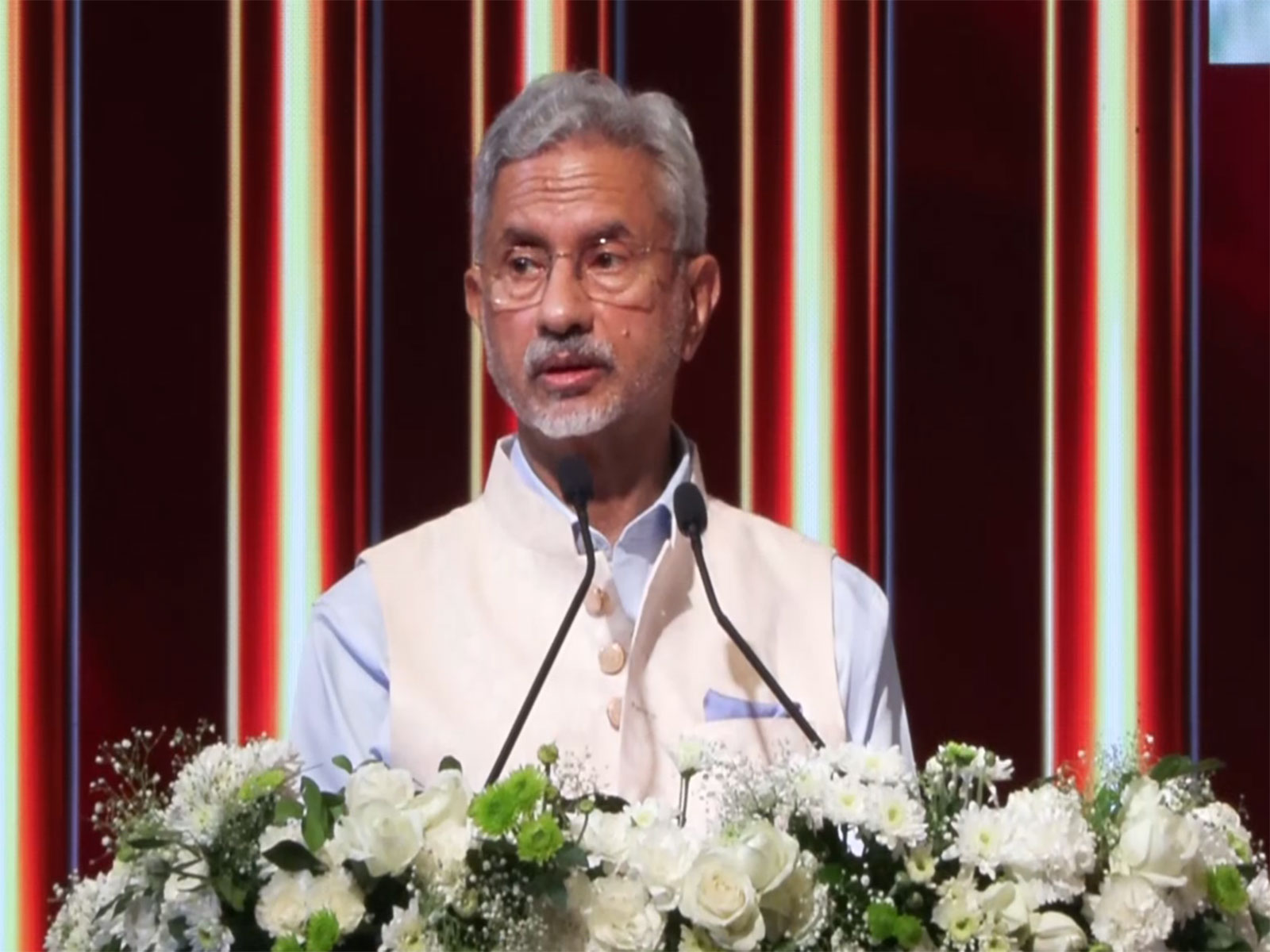
Speaking at the Chinmaya Amrit Mahotsav Global Sammelan on ‘Non-Dualism for World Understanding’ at Bharat Mandapam on the occasion of UN Day, Jaishankar said nations needed more diversified options and warned that market distortions caused by restrictions and choke points were adding to the suffering.
“The Global South today faces a 4F crisis of finance, fuel, food, and fertiliser. The Global North must realise that it has equal stakes in finding solutions. The international economy must be urgently de-risked, and nations provided with more diversified options. Market distortions through constriction and choke points only add to suffering. A genuine dialogue in this regard is overdue,” he said.
Jaishankar also highlighted the transformative potential of artificial intelligence (AI), cautioning against leaving the development of a technology with far-reaching consequences in the hands of a few.
“Progress is understandably associated with the march of technology, and humankind now really stands at the crossroads. AI promises to be the mother of all change. But something so sweeping, something so consequential, it cannot be left in the hands of just a few,” he said.
The External Affairs Minister said concentrating control over AI in the hands of a few would run counter to the global trends of freedom and democratisation witnessed over the past eight decades.
“That would go counter to the trends of freedom and democratisation that the world has seen over the last 80 years,” he added.
Highlighting India’s position on AI governance, Jaishankar said the country advocated an approach that was responsible, inclusive and human-centric, taking into account the technology’s universal applicability and the need for a broader perspective.
“For this reason, India is a strong advocate of a responsible, inclusive, and human-centric approach. That is a recognition of AI’s universal applicability and of the need to develop a wider perspective,” he said.
Earlier in September, Jaishankar cautioned that ongoing global conflicts and the resulting disruptions to grain shipments and fertiliser production threatened to trigger a major food crisis in the coming months, placing severe compounding pressure on developing nations.
Speaking at an event organised by the Asia Society in New York, EAM Jaishankar linked the looming risks directly to acute strains across energy supplies, grain exports, fertilisers, and global finance. He emphasised that the profound ripple effects of the Ukraine conflict and the Iran-Gulf crisis are resonating heavily far beyond the borders of the nations directly involved.
Detailing the severity of the agricultural bottleneck, he noted, “We are already looking at major significant fertiliser shortages,” while highlighting that key grain exporters would face severe impediments in dispatching shipments, particularly through critical Black Sea corridors.
Underscoring the gravity of the outlook, EAM Jaishankar warned, “So there is gonna be a major food crisis probably, you know, in the coming months.” His remarks framed the unfolding situation as an imminent systemic risk rather than an inevitable conclusion that has already materialised.
During the address, Jaishankar also highlighted the importance of cooperation among nations in addressing global challenges.
“Humankind has witnessed perpetual arguments between those who stress competitiveness and others who see a virtue in cooperation. These may be individual or even societal predicaments, but on the global stage, they translate into how nations behave with one another. The collective and cooperative instincts of the world were articulated, were expressed eight decades ago in the founding of the United Nations,” he said.
Referring to Article 1 of the UN Charter, Jaishankar said the institution was intended to be “a centre for harmonising the actions of nations in the attainment of common ends.”
“It is fitting, therefore, that we gather to advance a sense of oneness as we celebrate the UN Day. After all, whether it is the challenges or the opportunities that confront the world, these can be best, most effectively addressed collectively,” he added.
Highlighting the impact of the ongoing conflicts, the External Affairs Minister said that people and economies far removed from the fighting were also bearing the consequences.
“There are today two major conflicts going on in the world: in Ukraine and in West Asia or the Middle East. Societies and economies, peoples far away, who have little say in the matter, are actually paying the cost. We cannot remain helpless spectators,” Jaishankar said.
“India expresses global sentiment when we urge that dialogue and diplomacy are the only solution. We are making efforts ourselves and are open to working with other partners to that end,” he added.
On the need for reforms in the United Nations, Jaishankar said the shortcomings and limitations of the global body must be recognised and addressed, adding that the case for reformed multilateralism was becoming stronger by the day.
“Large parts of the world cannot be left out from decision-making. The UN must show leadership, not be a spectator to global crises,” he said.
Calling for a renewed commitment to collective action, Jaishankar said the international community must continue to work towards long-awaited changes in the global multilateral system.
“On this occasion, even as we recognise the need for such long-awaited changes, let us renew our commitment to work together. We are common, we are shared, we are united,” he said.
Celebrated on October 24, United Nations Day marks the anniversary of the entry into force in 1945 of the UN Charter. The United Nations officially came into being with the ratification of this founding document by the majority of its signatories, including the five permanent members of the Security Council. (ANI)
Related reading