
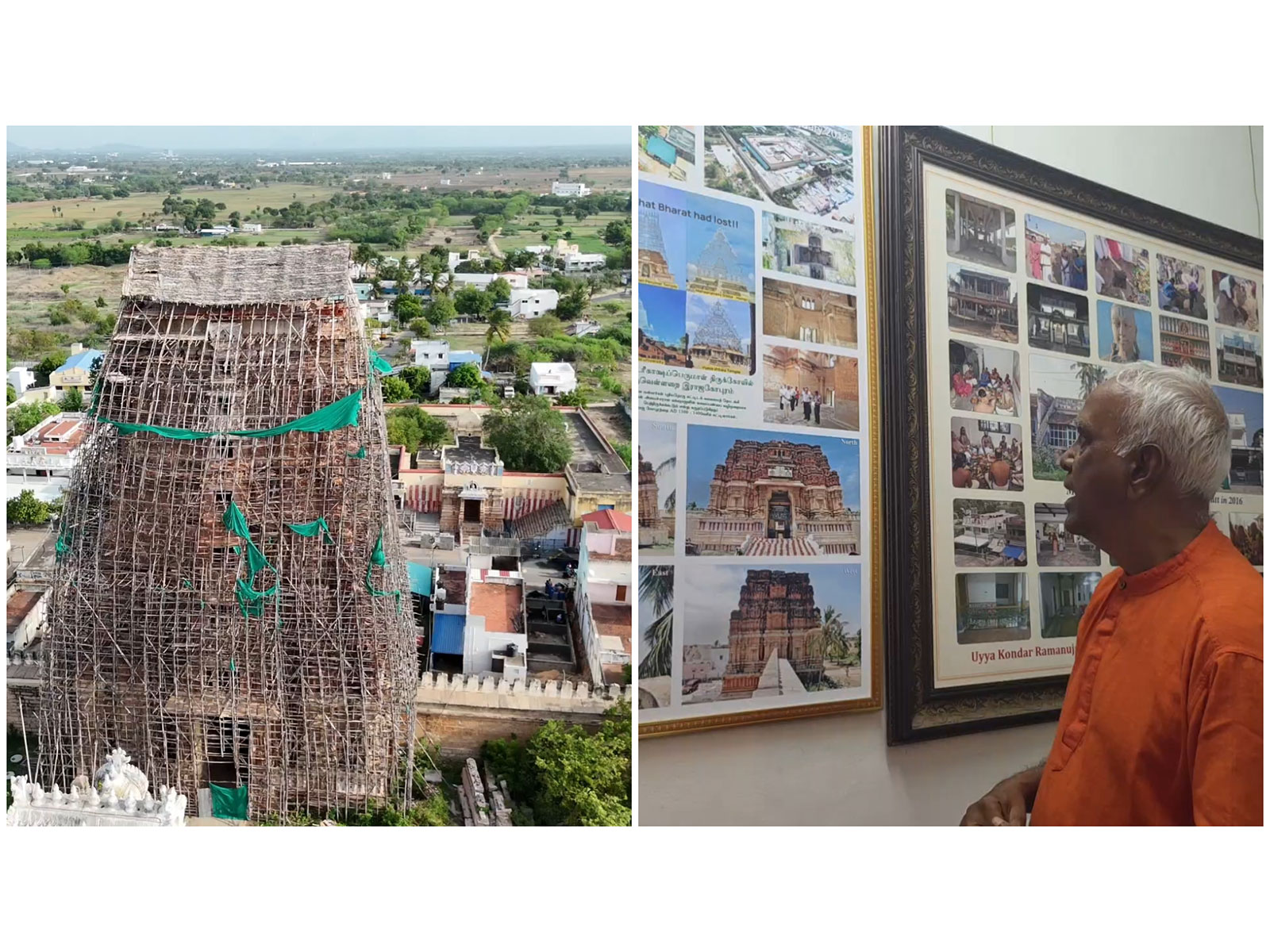
Chennai (Tamil Nadu) [India], October 22 (ANI): A 1,300-year-old temple in Tamil Nadu is set to get a 125-foot Rajagopuram, built using traditional techniques and natural materials instead of cement and steel.
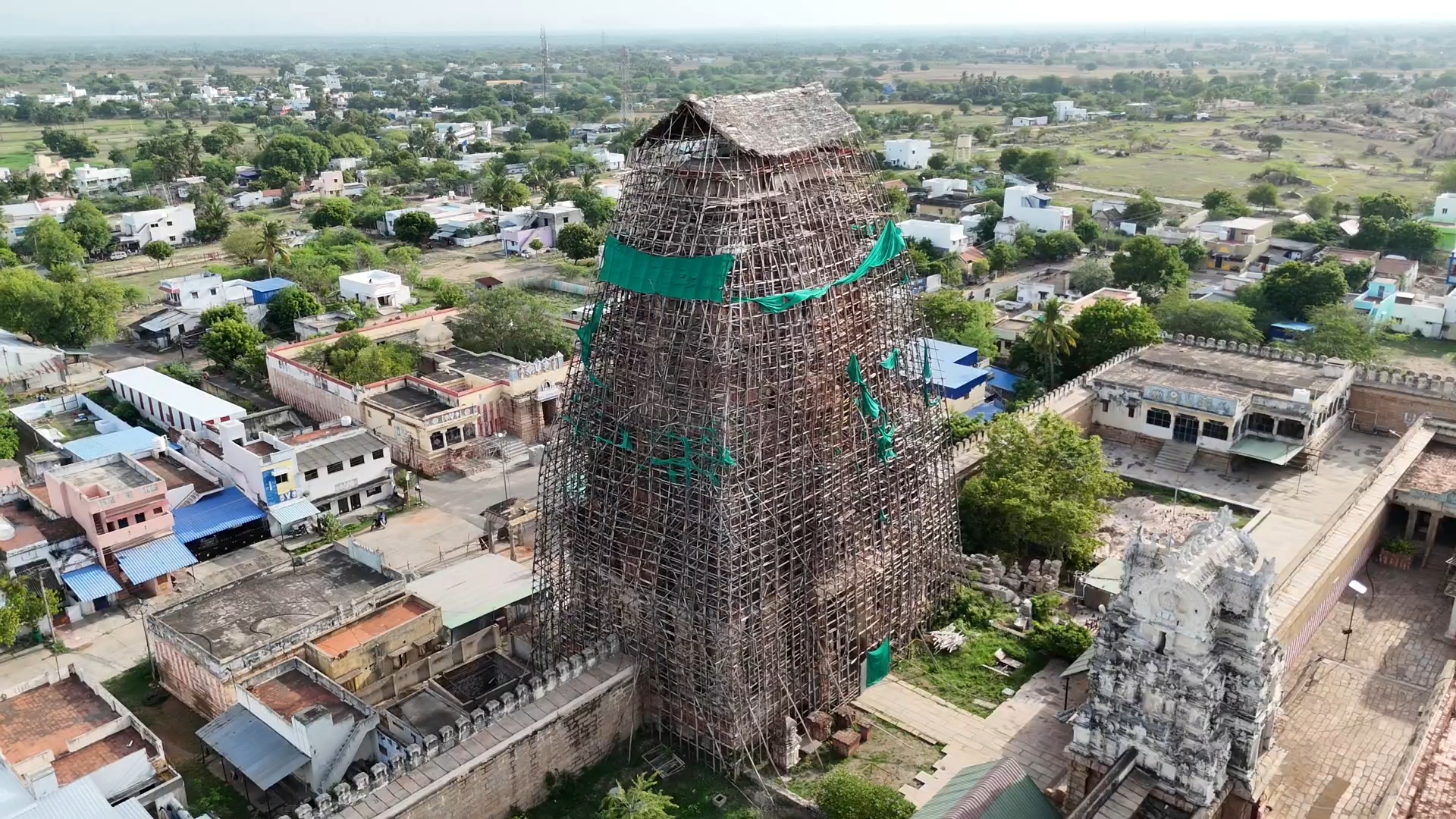
The Rajagopuram, or main entrance tower, at the Pundarikakshan Perumal Temple in Thiruvellarai, near Tiruchirappalli, is being built with seven tiers. The project aims to complete the tower, which has remained unfinished for centuries, while preserving traditional construction methods.
The work is expected to be completed by April 2027, with an estimated cost of Rs 14.65 crore.
The temple is dedicated to Lord Vishnu and is one of the 108 Divya Desams, the holy places associated with Vaishnavite saints. Located on a white rocky hill, the temple is believed to date back to the Pallava period, around the eighth and ninth centuries.
The temple complex is known for its rock-cut caves, old sculptures, inscriptions and a unique swastika-shaped stepped tank. It also saw additions and repairs under rulers from the Chola, Pandya and Vijayanagara dynasties.
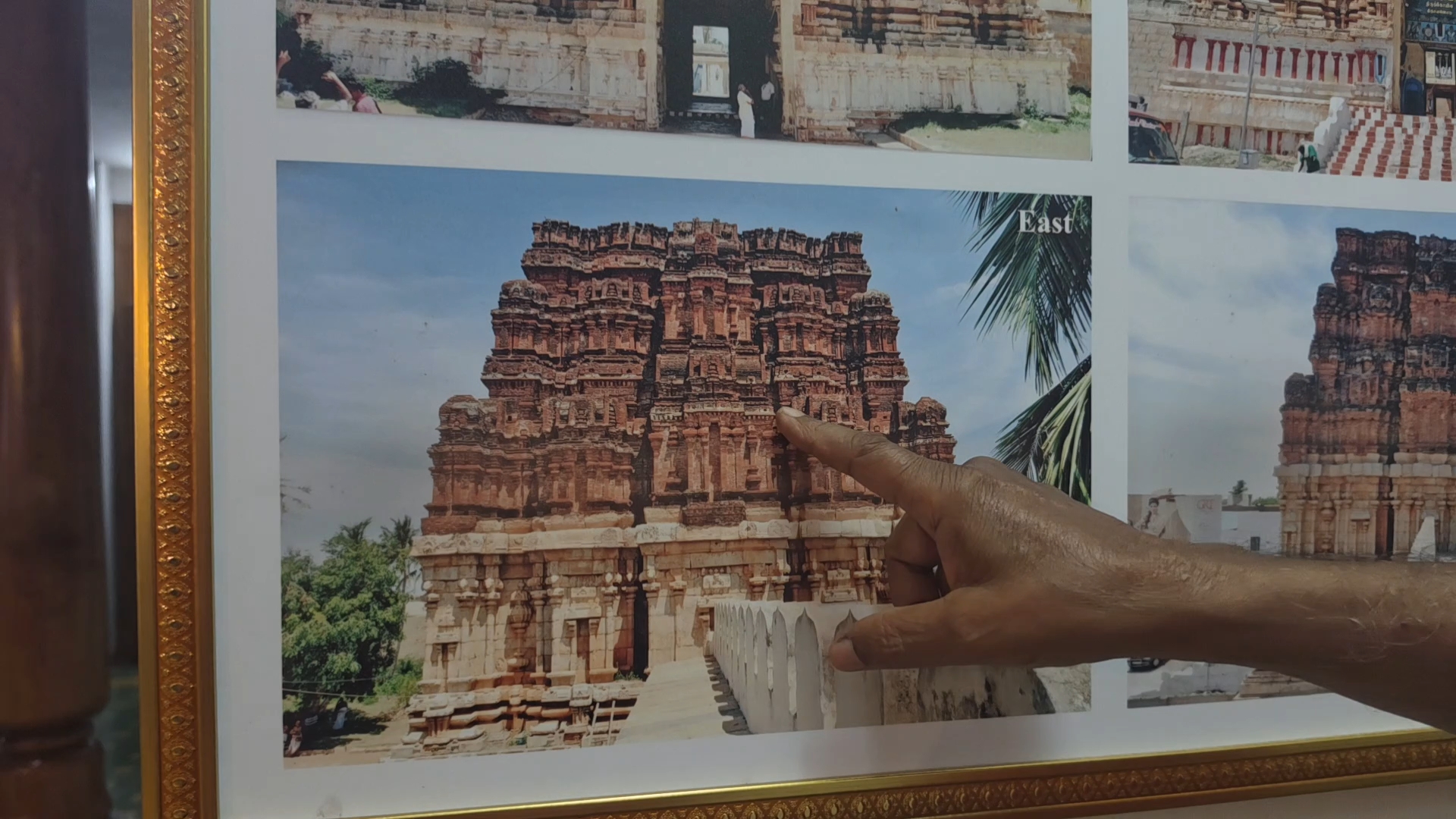
The Rajagopuram, which earlier stood at around 60 feet with two tiers, is being raised to about 125 feet with seven tiers. Seven kalasams, or ornamental structures, will be placed at the top.
VS Jayabal, an engineer and donor associated with the project, said the aim was not only to complete the tower but also to keep traditional building skills alive.
Speaking about the work, Jayabal said, “It is a great privilege for us to be involved in completing the Rajagopuram of the historic Sri Pundarikaksha Perumal Temple at Thiruvellarai, which has remained unfinished for centuries.”
The construction uses lime mortar and specially prepared bricks instead of modern materials such as cement and steel. Other materials used in traditional building methods include Iluppai wood, kadukkai, jaggery, bael fruit and aloe vera.
Jayabal said around 12 lakh specially selected bricks had been sourced from Thrissur in Kerala. Architect Sabapathi Kumaragurubaran and his team are carrying out the construction in consultation with the donors.
Explaining why the project matters to his family, Jayabal said the work was also about passing traditional knowledge on to younger generations.
“Our aim is not just to complete a temple tower, but also to preserve traditional construction techniques and pass them on to the next generation,” he said.
He also spoke about the need to ensure that natural materials remain available for future projects. As part of the effort, the family has planted 450 Iluppai trees across around 8.5 acres of temple-owned land. Iluppai wood is used in traditional construction, while oil extracted from its seeds is also used at the temple.
Jayabal said he travels from Coimbatore to Thiruvellarai three or four days a week to supervise the work, spending around five to six hours a day at the site.
The project began in 2015, according to the information provided about the restoration work, while Jayabal said construction on the current phase began on April 1, 2024. The consecration ceremony is planned for either the Vaikasi or Avani month in 2027.
The temple is traditionally believed to be older than the Sri Ranganathaswamy Temple in Srirangam, although its exact founding date has not been firmly established. The ongoing work seeks to complete its long-unfinished entrance tower while keeping traditional building practices alive for future generations. (ANI)
Related reading