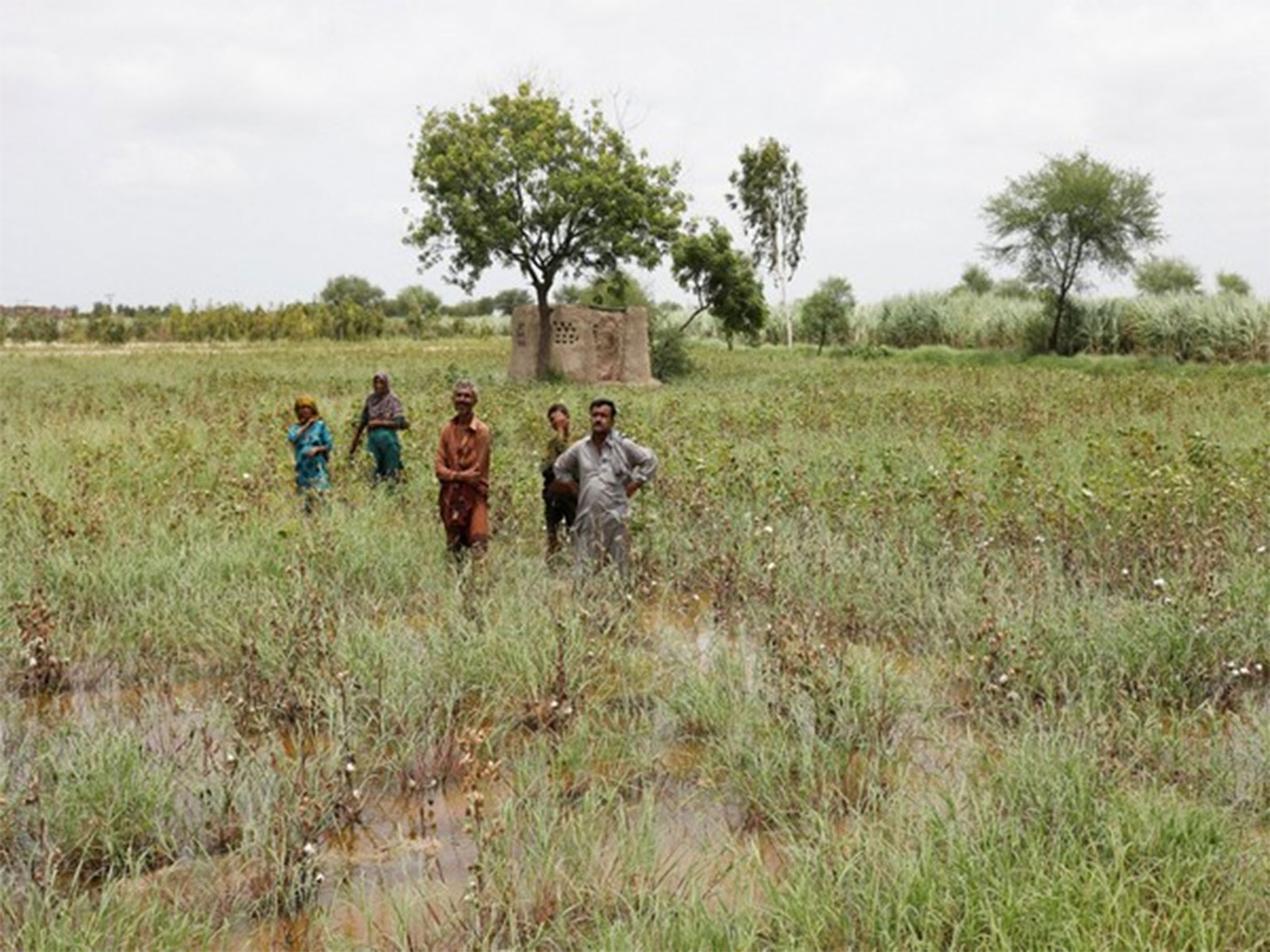
Multan [Pakistan], October 19 (ANI): Pakistan Kissan Ittehad President Khalid Mahmood Khokhar has urged the government to declare an agricultural emergency, warning that delayed policy decisions, rising production costs and inadequate crop prices are pushing farmers towards repeated financial losses, ARY News reported.
Addressing a press conference in Multan, Khokhar said losses incurred in one cropping season could affect the next three crops, leaving farmers struggling to recover financially. He stressed that Pakistan’s agriculture sector was falling behind due to the absence of timely government interventions and consistent policies, according to ARY News.
Khokhar demanded that farmers be provided with a profit margin of 25 per cent over their production costs, arguing that growers were not receiving fair returns for their produce. He said the government was citing conditions imposed by the International Monetary Fund (IMF) to justify its inability to ensure remunerative prices for agricultural products.
Highlighting concerns over wheat production and availability, the Kissan Ittehad president said ordinary people were facing difficulties in obtaining wheat, while farmers lacked adequate incentives to increase cultivation. He maintained that growers would be encouraged to produce more wheat if they received a fair price for their harvest. He also pointed out that the government had fixed the wheat price at PKR 4,500 per maund, ARY News reported.
Khokhar also raised concerns over sugarcane farmers, stating that growers had yet to receive adequate prices despite a 16 per cent increase in sugarcane production this year. He said cultivation had reached an unprecedented level in the country’s history, raising concerns about whether farmers would recover their investments and earn reasonable returns.
The situation highlights broader challenges facing Pakistan’s agricultural sector, including rising input costs, inadequate returns for farmers and uncertainty over government pricing policies. Agriculture remains a key source of livelihood and an important contributor to the country’s economy and food supply. However, concerns over crop prices and delayed policy decisions have increased pressure on farmers. (ANI)
Related reading