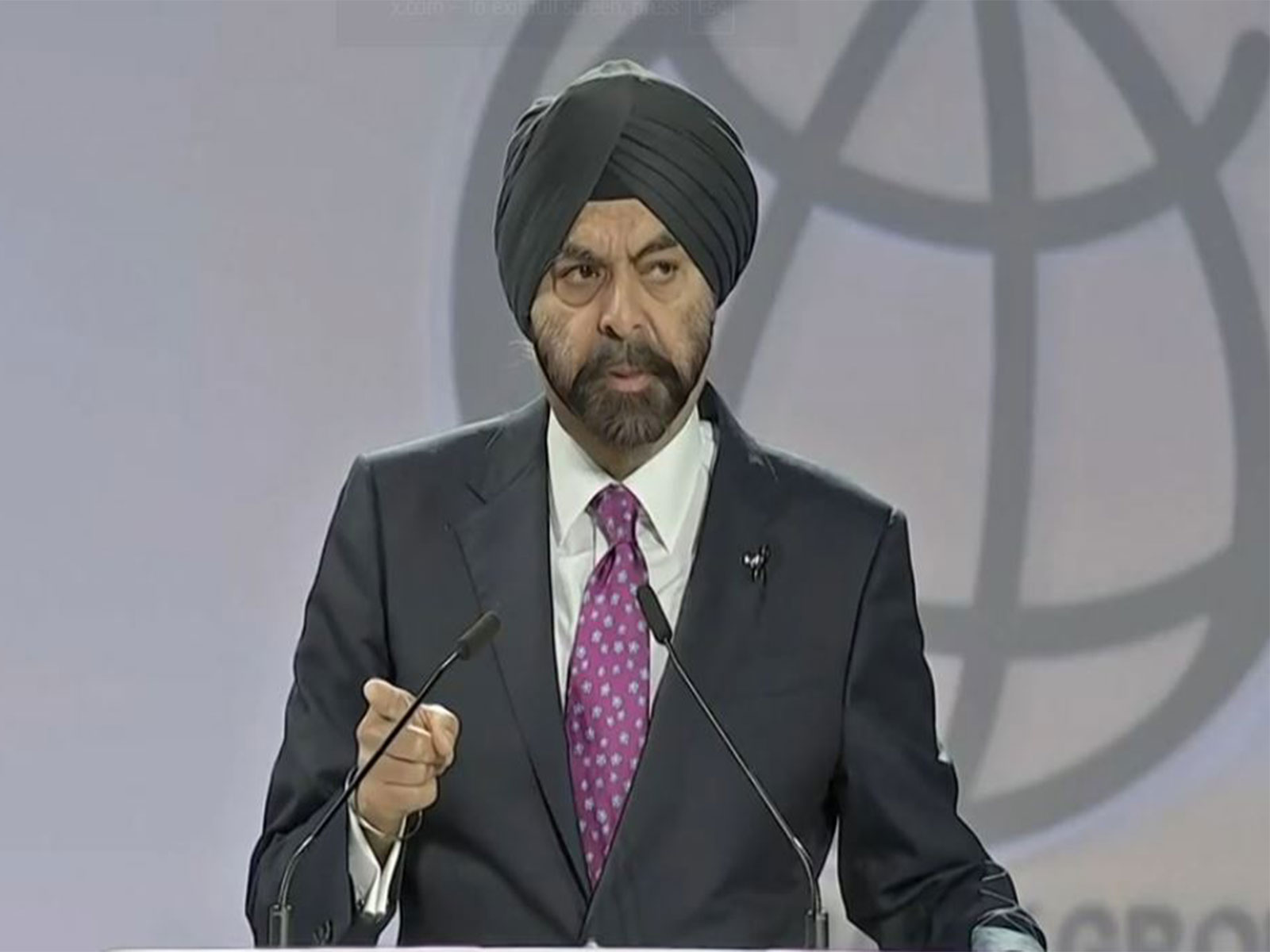
New Delhi [India], October 16 (ANI): The World Bank Group plans to expand its critical minerals business fivefold over the next five years and has identified 20 countries for potential partnerships to develop local industries, President Ajay Banga said on Friday, highlighting efforts to retain more jobs and economic value within developing economies.
Addressing a plenary session of the World Bank’s Annual Meetings in Bangkok, Banga said, “In critical minerals, we plan to multiply our business five times in the next five years. This week, we launched our first country compacts with other MDB (multilateral development bank) partners to build local industries and keep more jobs and value at home in the minerals business,” adding that they have identified 20 countries to partner with for the work.
He said the World Bank Group was also stepping up its focus on economic corridors, which combine infrastructure development with investment opportunities. The institution launched 52 new economic corridor projects last year, up from 23 a year earlier.
Banga cited the example of a corridor initially intended mainly for mineral transportation that was increasingly being used by farmers to transport crops to markets, helping towns and cities grow along the route.
Alongside these efforts, the World Bank Group is expanding its mobilisation of private capital to finance development. Banga said the institution mobilised USD 112 billion in private capital last year, up from around USD 35 billion in fiscal year 2022, a more than threefold increase.
“Last year, USD 112 billion, a threefold increase,” he said, adding that total financing, including the institution’s own financing, exceeded USD 230 billion.
Private capital mobilisation nearly tripled in lower-middle-income countries and quadrupled in upper-middle-income countries, while more than doubled across Africa. However, mobilisation remained flat in low-income, fragile and conflict-affected economies, where attracting commercial investment continues to be difficult.
Banga said the institution was addressing barriers such as currency risks and limited access to finance through guarantees, equity and local currency financing. It is also working with other multilateral development banks to develop common mechanisms for transferring investments to other investors, freeing up capital for new development projects.
The broader objective is to scale up investment in sectors that improve productivity and create jobs, including infrastructure and energy, agribusiness, healthcare, tourism and value-added manufacturing.
Banga also flagged a projected global gap of around 800 million jobs, warning that failing to create opportunities for young people could have consequences across borders.
“A job is not a statistic. A job is dignity,” he said, emphasising the importance of employment in enabling young people to build their futures.
He said the World Bank Group’s development model combines public financing where markets cannot reach, private capital where it can generate jobs at scale, philanthropy to support early-stage risks and technology to make financing more effective.
“The jobs gap is a projection. It does not have to be our future,” Banga said, calling for development initiatives to be implemented at greater scale and pace. (ANI)
Related reading