New Delhi [India], October 14 (ANI): Amid an upturn in political protests over the Special Intensive Revision (SIR) of electoral rolls, several trade and industry associations across the country have written to Lok Sabha LoP Rahul Gandhi, Prime Minister Narendra Modi and the Chief Justice of India, raising concerns over alleged disruptions to commercial activities during the crucial festive season and seeking measures to safeguard traders, workers and businesses.
In a series of representations dated October 12 and 13, trade bodies from Delhi, Uttar Pradesh, Rajasthan, Karnataka and Keralam expressed apprehension that protests, road blockades and restrictions on market access could adversely affect business operations, particularly during Navratri, Dussehra, Diwali and Chhath Puja, when commercial activity traditionally gathers momentum.
While several associations urged Gandhi to reconsider the timing and manner of the protests, several others sought intervention from the Centre and the judiciary to ensure that the democratic right to protest does not impede lawful commercial activities or jeopardise the livelihoods of traders and workers.
In a letter addressed to Gandhi, the Delhi Pradesh unit of the Bhartiya Udyog Vyapar Mandal, represented by its president Naveen Garg, expressed concern over the prevailing atmosphere of uncertainty in markets amid protests concerning SIR.
The association said the festive period was among the most significant trading seasons of the year, with the livelihoods of crores of traders, employees and their families dependent on uninterrupted business activities.
It cautioned that an atmosphere of fear and uncertainty arising from demonstrations could adversely affect markets, while incidents of violence, damage to shops or precautionary market closures could further aggravate the concerns of the trading community.
Urging Gandhi to bring the protests to an immediate end, the association called for steps to restore peace, confidence and normal commercial activities in markets.
Echoing similar concerns, the Uttar Pradesh Udyog Vyapar Mandal said traders were apprehensive about the possible economic consequences of continued political demonstrations.
The organisation maintained that traders should not be made to bear the economic costs of political disagreements and warned that the business community could resort to peaceful democratic demonstrations of its own if commercial interests continued to be affected.
The Federation of Trade and Industry of India (FTII) urged Gandhi to reconsider the timing and manner of the agitation over SIR, citing concerns over declining customer footfall and business losses during the festive shopping period.
“We respect the right of every political party and citizen to raise concerns and pursue democratic remedies,” the federation stated.
“Thousands of small traders, shopkeepers, employees and daily-wage workers depend on this season for their livelihoods. Their businesses should not become collateral damage in a political dispute,” it added.
The federation urged Gandhi to pause street-level agitation during the festive shopping period and pursue political concerns through dialogue, representations and appropriate democratic or legal channels.
FTII also said that traders and their families depended heavily on the festive season for business and urged Gandhi to take steps towards restoring an atmosphere of peace and confidence in markets.
The Indian Recovered Paper Traders Association (IRPTA) also expressed concern over the impact of protest-related disruptions on commercial activity and urged Gandhi to reconsider demonstrations that could obstruct markets.
In Rajasthan, the Jaipur Vyapar Mahasangh, led by its president Subhash Goyal, adopted a sharper position, alleging that political demonstrations were affecting small shopkeepers and employees whose livelihoods depended on uninterrupted business operations.
In a letter dated October 12, the association questioned the impact of such protests on the country’s business environment and accused Gandhi of pursuing a political approach detrimental to traders’ interests.
It urged an immediate end to disruptive demonstrations and warned that traders would not remain silent if their livelihoods continued to be affected.
The association subsequently wrote to Prime Minister Modi on October 13, seeking protection for commercial hubs and measures to prevent disruptions to trade, employment and investment.
It also approached the Chief Justice of India, calling for legal safeguards to ensure that political demonstrations do not obstruct lawful commercial activities.
Meanwhile, a number of market and industrial associations in the national capital submitted representations to PM Modi, seeking stronger administrative and legal safeguards against disruptions arising from political agitations.
These included the New Delhi Traders Association, East Punjabi Bagh Market Welfare Association, Central Old Market Tilak Nagar Association, Rewari Line Small Industries Welfare Association, Mayapuri Industrial Welfare Association, Nai Sarak Traders Association, Mohan Singh Place Traders Association, Naraina Small Industries Welfare Association, Iron Merchants Welfare Association, Green Park Extension Market Association, Janpath Traders Association and Chawri Bazar Hardware Association.
In their letters dated October 13, the organisations highlighted the importance of uninterrupted commercial operations for employment generation, industrial production and economic activity, while seeking measures to prevent forced market closures, road blockades and disruptions to the movement of goods and customers.
The Mayapuri Industrial Welfare Association emphasised the need to protect industrial establishments and smaller enterprises from disruptions, while the Nai Sarak Traders Association called for safeguards for traders, employees and customers.
Other associations, including the Janpath Traders Association and Chawri Bazar Hardware Association, sought stronger protection for the right to conduct lawful business without intimidation or obstruction.
Taking the matter to the judiciary, the Federation of All India Distributors Associations (FAIDA), in a representation dated October 12 and signed by its national president Ch. Krishna, sought urgent intervention from the Chief Justice of India against what it described as disruptive agitations affecting commercial centres and the national economy.
“Weaponising street protests to choke arterial highways, block public transit, and force market shutdowns during our peak festive season is an outright abuse of democratic freedom,” the federation stated in its letter.
FAIDA contended that disruptions to commercial activity during the festive season could adversely affect micro-entrepreneurs, retail workers and taxpayers dependent on seasonal trade.
The federation urged the Supreme Court to issue binding directions for clearing commercial corridors and restricting disruptive demonstrations to designated non-commercial locations.
The Bangalore Wholesale Cloth Merchants Association, represented by its president Prakash Pirgal, also approached the Chief Justice, seeking legal protection for self-employed traders affected by protest-related disruptions.
The association highlighted the financial vulnerability of family-run businesses that had invested heavily in festive-season inventory, warning that interruptions to trading activities could affect their ability to recover investments and sustain livelihoods.
In a separate representation to PM Modi, the association sought measures to ensure market stability and the protection of commercial establishments while respecting the right to peaceful protest within the framework of law.
The Mahila Vyapar Mahasangh Sansthan also wrote to the Chief Justice on October 13, drawing attention to the difficulties faced by women entrepreneurs, artisans, traders and small businesses during periods of commercial disruption.
The organisation stressed that the festive season was particularly important for women-led enterprises and smaller establishments, many of which depend on seasonal sales to sustain their operations.
It sought appropriate judicial directions to protect commercial activities while maintaining a balance between constitutional freedoms and the rights of business owners.
The Narela Food Processing Industries Welfare Association, represented by its general secretary Anup Goyal, submitted separate representations to Prime Minister Modi and the Chief Justice, expressing concern over the possible impact of political disruptions on industrial operations, food processing activities and supply chains.
The association sought administrative and legal safeguards to protect industrial establishments and prevent unlawful interference with commercial activities.
The Dall & Besan Millers Association, Delhi, also approached the Prime Minister, highlighting concerns over the economic consequences of political demonstrations and calling for measures to protect traders, workers and industrial establishments.
In Keralam, the Calicut Chamber of Commerce & Industry, in a representation signed by its secretary Dr Bobish Kunnath, urged the Prime Minister to ensure the protection of markets, commercial establishments and major transport routes during public agitations.
The chamber said disruptions to business activities could result in financial losses, affect employees and consumers, interrupt the movement of goods and adversely impact the local economy.
“We firmly believe that the democratic right to protest must be respected while ensuring that it does not unlawfully deprive traders and the public of their right to conduct legitimate economic activities,” the chamber stated.
It urged the Centre to issue appropriate guidelines to the authorities concerned to safeguard commercial areas and ensure uninterrupted business operations.
The representations, while varying in their demands, broadly underscored concerns within sections of the trading community over the economic implications of political demonstrations during a commercially significant period.
Several organisations acknowledged the constitutional right to peaceful protest but maintained that demonstrations should not obstruct markets, restrict public movement or prevent workers and customers from accessing commercial establishments. While the associations alleged declining footfall, business losses and disruptions to livelihoods, the representations did not provide independently verified figures quantifying the financial impact or establish the extent of the alleged disruptions.
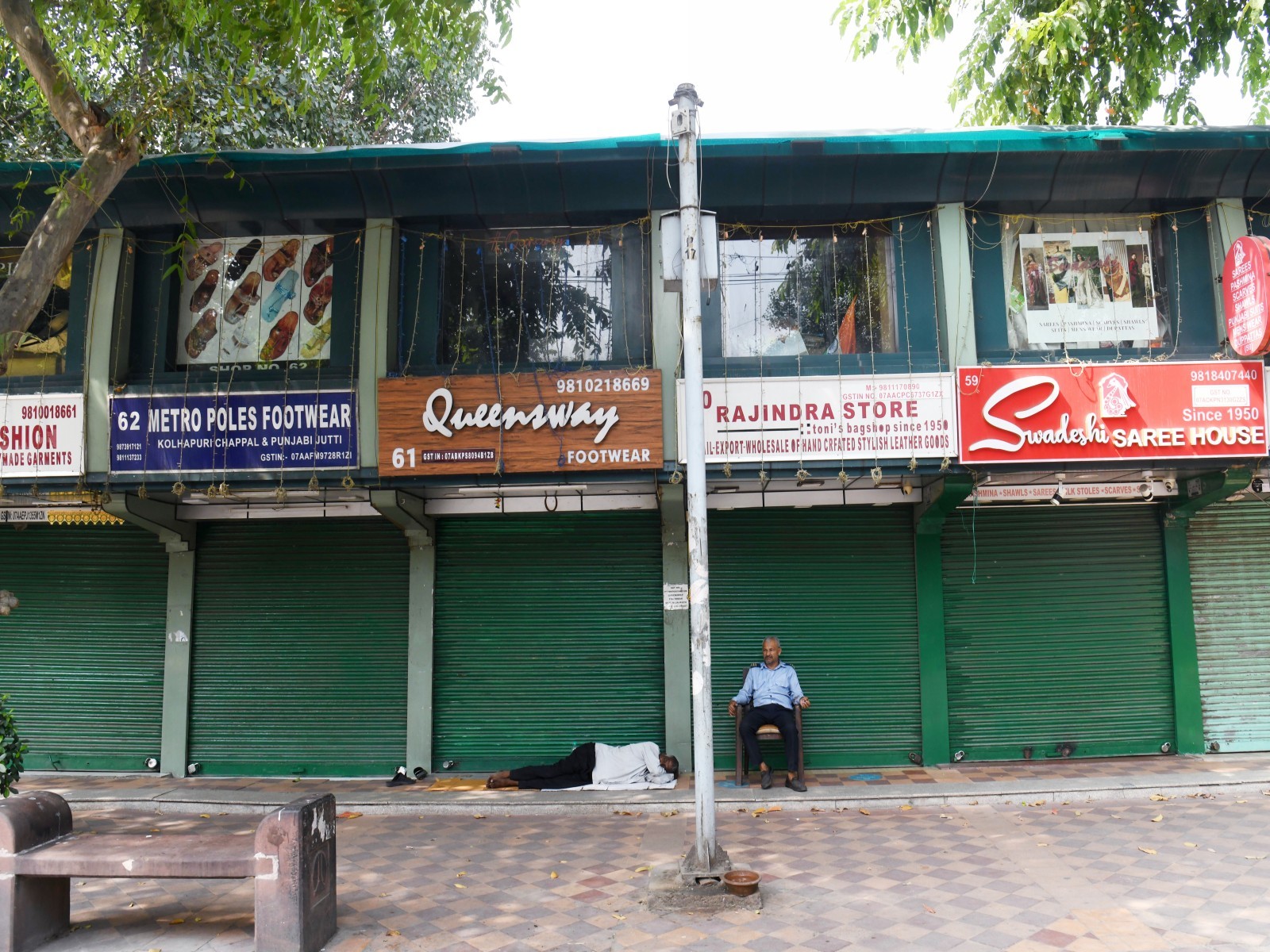
In Delhi too, trade bodies and business owners have alleged that business has come to a near standstill due to police barricading and restrictions on access amid ongoing Opposition protests over the Special Intensive Revision (SIR) of electoral rolls.
Khan Market Traders Association President Sanjeev Mehra had told ANI that police barricades begin around a kilometre before the market, making it difficult for customers to reach the area.
He said traders were operating at only 10-20 per cent of their usual business, with customers staying away due to concerns about access and the possibility of protests turning violent.
The disruptions come amid ongoing opposition protests against the SIR process and demanding Chief Election Commissioner Gyanesh Kumar’s resignation.
Earlier, INDIA bloc leaders marched towards the Supreme Court and filed a petition challenging the exercise.
The petition seeks suspension of the ongoing SIR process pending adjudication and the formation of an independent committee headed by a retired Supreme Court judge to examine its implementation. (ANI)
Related reading