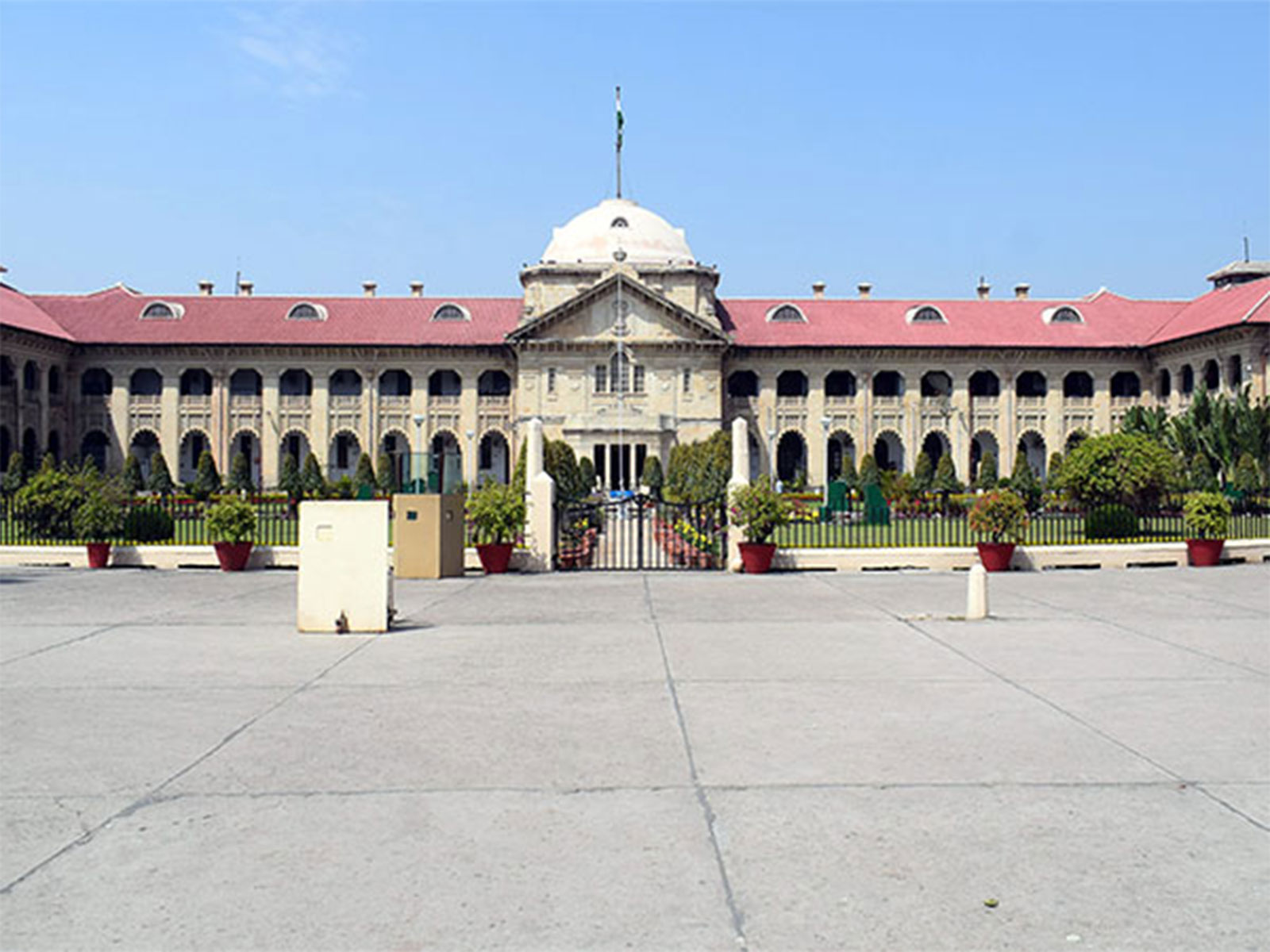
Prayagraj (Uttar Pradesh) [India], October 14 (ANI): The Allahabad High Court has ordered the filing of a petition seeking a fair and impartial investigation and a Central Bureau of Investigation (CBI) probe into Bhojpuri actress Akanksha Dubey’s death.
The court observed that the argument that the incident was a case of murder was baseless in view of the charge sheet filed for abetment to suicide and the absence of a protest petition challenging it.
A division bench of Justice Rajiv Mishra and Justice Dr Ajay Kumar II passed the order while hearing a petition filed by Madhu Dubey, the actress’s mother, in connection with the case registered at Sarnath police station in Varanasi.
During the hearing, Advocate Saurabh Tiwari, appearing for the petitioner, cited photographs of the deceased and argued that the circumstances visible in them pointed towards murder rather than suicide.
Tiwari submitted that the deceased’s left foot was touching the ground and that she was in a sitting position on the bed. He also pointed to injuries on her wrist, claiming that these circumstances raised questions about the manner of her death.
The advocate further submitted that spermatozoa had been recovered from the deceased’s body and clothes and that a Forensic Science Laboratory (FSL) DNA report had matched the DNA of a man allegedly involved in the crime.
He alleged that the then Station House Officer (SHO) had deliberately concealed the DNA-matching information in the counter-affidavit filed before the High Court, claiming that this indicated police complicity. He also alleged that the facts recorded in the First Information Report (FIR) had been coerced from the deceased’s mother.
Citing the Supreme Court’s order in Pooja Pal vs Union of India, Tiwari argued that a court could transfer a case to the CBI for a fair investigation even after a charge sheet had been filed and the competent court had taken cognizance of the matter. He further contended that the post-mortem report was not conclusive evidence to establish the manner of death.
Opposing the plea, the counsel for the other side informed the court that the police had filed a charge sheet under Section 306 of the Indian Penal Code (IPC), which deals with abetment to suicide, and that the competent magistrate had taken cognizance of it.
The bench then asked the petitioner’s counsel whether an application had been filed before the District Magistrate seeking a re-examination of the post-mortem report or whether a protest petition had been filed before the magistrate challenging the charge sheet, in accordance with the Supreme Court’s decision in Bhagwant Singh vs Commissioner of Police.
The petitioner’s counsel admitted that no such application or protest petition had been filed.
The court observed that, in view of the charge sheet under Section 306 of the IPC and the absence of a legal protest petition challenging it, the argument that the incident was a case of murder was baseless.
The bench also clarified that, in the absence of the deceased’s body, a re-investigation into the incident or the manner of death could not be undertaken.
The High Court disposed of the petition and directed that it be recorded. (ANI)
Related reading