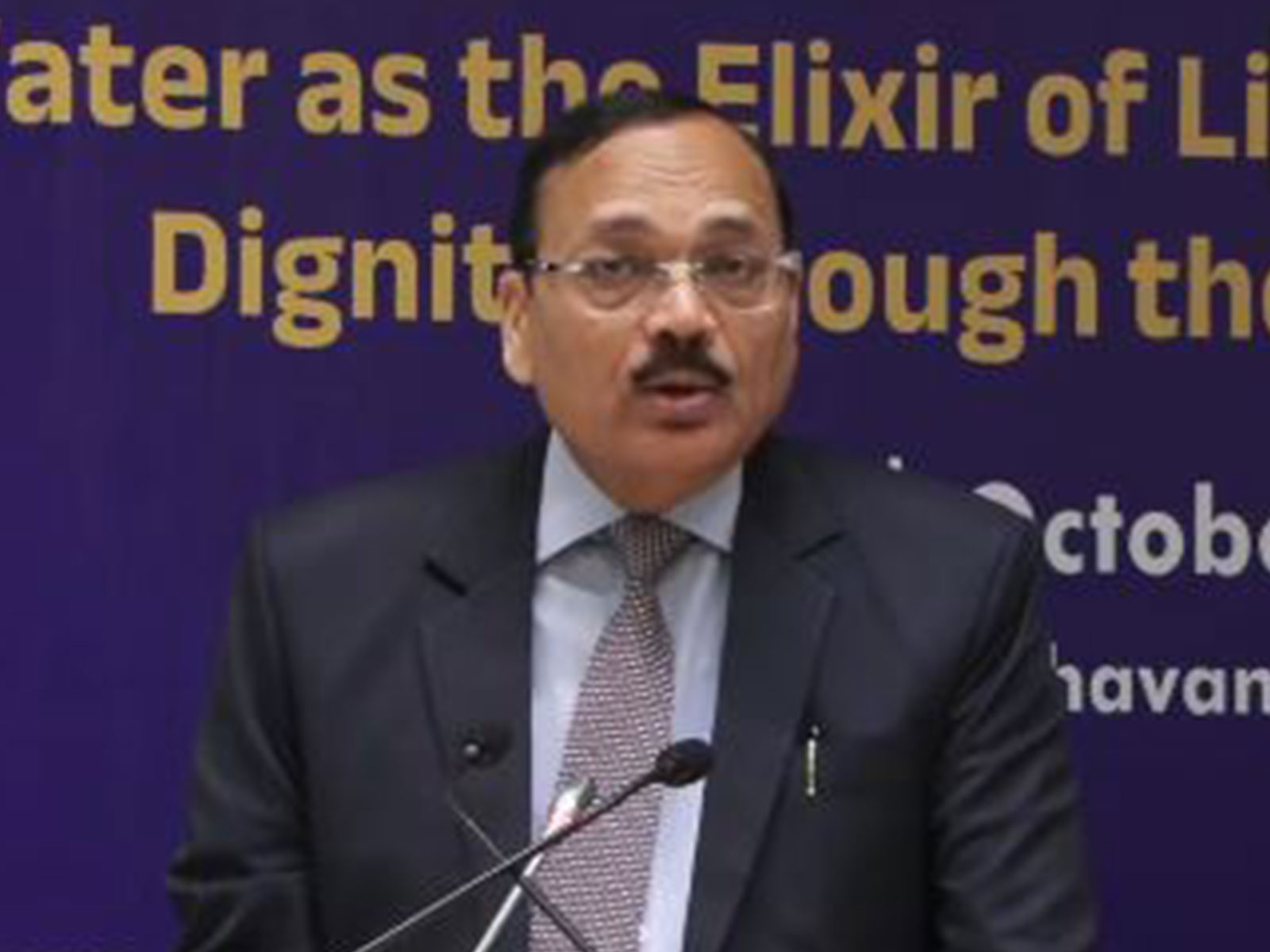
New Delhi [India], October 12 (ANI): Chief Justice of India Surya Kant on Monday said a right that works for the powerful but fails the powerless is effectively a privilege, stressing that human rights protection must reach those who struggle to make their voices heard.
He also cautioned that access to drinking water cannot be considered adequate merely because a household has a tap connection, emphasising that the supply must be safe, reliable and available when needed.
Addressing the 33rd Foundation Day celebrations of the National Human Rights Commission (NHRC), the CJI said the protection of human rights must extend to the most vulnerable sections of society, while underscoring the importance of access to clean water as an essential component of the right to life and dignity.
“A right that works for the powerful but fails the powerless is not a right in the true sense. It is a privilege with better branding,” he said.
Referring to the challenges faced by undertrial prisoners who have never met their advocates, migrant workers without documents, elderly people abandoned by their families and persons with disabilities who encounter barriers in accessing services, Justice Surya Kant said the effectiveness of a human rights institution should not be measured merely by the number of cases it decides, but also by whether it can be heard by those least able to make themselves heard.
On access to water, the CJI said it was not merely an isolated entitlement but one of the essential conditions that made the fulfilment of other rights possible.
“A mere tap is not the same as access to water. A pipe that runs dry cannot fulfil the promise that the pipe represents. And water contaminated with arsenic, fluoride or other harmful substances is not a service; it is a threat to life and health,” he said.
Justice Kant was addressing a one-day conference on “Water – The Elixir of Life”, organised alongside the NHRC’s Foundation Day celebrations.
He said the meaning of human rights had widened over the years, with Article 21 of the Constitution evolving from protection against the deprivation of life and personal liberty into a guarantee of a life lived with dignity.
The right to health, food, shelter, livelihood and a clean environment are now understood as essential to that dignity, he said, adding that the Supreme Court’s environmental jurisprudence had recognised the right to enjoy pollution-free water and air as part of the right to life.
“The constitutional question, therefore, is no longer only what the State must refrain from doing, but also what it must ensure so that people can live with dignity,” the CJI said.
He acknowledged efforts to expand access to drinking water, including through household tap connections in rural areas, but said the next challenge was to ensure that water was safe, reliable and available when families needed it.
He also called for collective responsibility to address water-related challenges, saying governments must build and maintain supply systems, courts must intervene when constitutional rights are violated, and human rights commissions must investigate complaints and identify systemic failures.
Civil society and international institutions, he added, also had important roles in bringing ground realities to the forefront and contributing scientific knowledge and cooperation.
The CJI further warned that depleted aquifers, polluted rivers and compromised drinking water sources would transfer a burden to future generations that had played no part in creating these problems.
“The right to water must therefore be understood not only as a right of the present, but as a responsibility towards the future,” he said.
Commending the NHRC’s work over the past 33 years, Justice Surya Kant said the Commission had registered more than 24 lakh cases and disposed of over 23 lakh, with a disposal rate exceeding 98 per cent.
He said the figures represented not merely institutional output but instances in which grave human rights violations had been brought into the public eye.
The CJI also welcomed the launch of the NHRC India mobile application and the digitisation of its records, saying the initiative would make it easier for citizens to file complaints, track their progress and access information. (ANI)
Related reading