New Delhi [India], October 9 (ANI): Defence Secretary Rajesh Kumar Singh on Friday outlined a multi-pronged strategy to accelerate arms procurement, restructure the Defence Research and Development Organisation (DRDO), and build a sovereign defence industrial ecosystem.
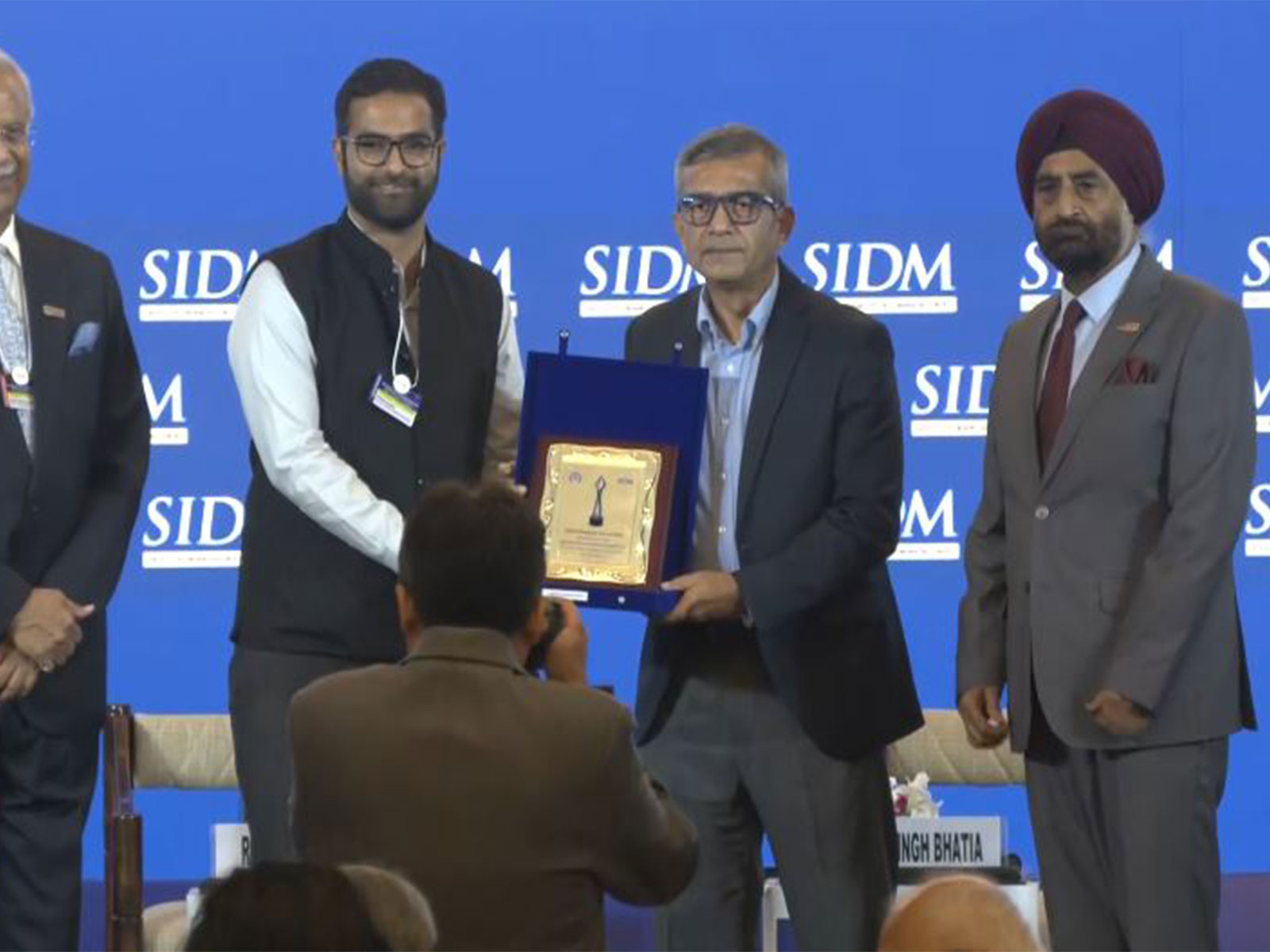
Speaking at the Society of Indian Defence Manufacturers (SIDM) Annual Conference in Delhi, Singh emphasised a shift from rigid public-sector dominance to an equal partnership with private enterprise; the Defence Secretary framed domestic manufacturing as both a pillar of strategic autonomy and an engine of national economic growth.
Addressing recurring concerns regarding bureaucratic delays in high-value defence acquisitions, such as jet engines and multi-role fighter aircraft, the Defence Secretary emphasised that adherence to established framework processes is essential to safeguard the integrity of defence procurement.
Acknowledging the friction between swift military inductions and democratic accountability, the Secretary cautioned against bypassing statutory procurement checks, which could lead to legal or institutional challenges.
“On procurement, I will not say much, except that all are being processed at the highest levels. One or two others are in the pipeline, including Multi-Role Fighter Aircraft (MRFA) and a few more. All these programmes are being processed. In a democracy, you have to follow a certain process to get these things done. If you bypass that process, you risk vitiating the entire procurement process itself. Hopefully, some of the procurement-related processes will translate into signed contracts within this calendar year,” said Singh.
Major capital acquisitions like the MRFA program and jet engine co-production deals are undergoing high-level evaluation, with formal contracts targeted for conclusion within the current calendar year.
Addressing long-standing structural inefficiencies in defence research, the Defence Secretary detailed fundamental reforms to transition DRDO away from manufacturing roles toward core scientific research.
“Some basic reforms that were needed have been initiated, particularly in terms of bringing greater clarity to roles and responsibilities and ensuring that DRDO evolves into a primarily R&D-focused institution, rather than functioning as a systems integrator or, de facto, an OEM in certain areas. Exceptions may be necessary in some strategic areas where there is no alternative,” said Singh.
DRDO will relinquish its self-assumed role as an Original Equipment Manufacturer (OEM) or system integrator, reserving hands-on production only for niche, critical strategic domains. By November of the coming year, technology for all conventional missile systems will be systematically transferred to private industry partners for commercial production.
“In other areas, including science and technology, we have opened things up. By next November, I have been assured by our Science Cluster that all our missile systems, including all types of conventional missiles, will be transferred to the private sector, which is willing to come forward, take up these technologies, and work towards their productionisation. Internally, DRDO’s resources and personnel are spread too thinly. There are, I believe, around 33 laboratories, and a substantial consolidation of DRDO laboratories may be necessary. This would involve reorienting the organisation, reducing the administrative burden on scientists, and allowing them to concentrate on their work in the laboratories. Measures to free scientists from administrative paperwork, tendering, and processes such as GeM procurement are also very much under consideration,” said the Defence Secretary.
DRDO’s network of laboratories will undergo rationalisation and consolidation. Concurrently, administrative burdens, such as direct handling of Government e-Marketplace (GeM) tendering, will be lifted from scientists. Modernising recruitment processes and instilling strict project accountability are prioritised to eliminate routine schedule and cost overruns.
“Some rationalisation of the number of laboratories is also overdue, and we will have to examine this issue. Finally, on talent, in my view, DRDO needs to pursue a much more natural recruitment process. There must also be significantly greater accountability to ensure that time overruns do not continue to occur routinely, as they have in recent years. At the same time, DRDO has a proud record in several areas, including strategic programmes and science and technology. Steps are therefore being taken to introduce a reform-oriented approach to DRDO’s functioning. However, talent and accountability are two areas on which we particularly need to focus,” said Singh.
Notably, Ministry of Defence data indicates that private sector contribution to total Value of Defence Production (VoDP) has hovered between 21% and 25% in recent fiscal years, with Defence Public Sector Undertakings (DPSUs) accounting for the remainder.
Drawing on his experience at the Department for Promotion of Industry and Internal Trade (DPIIT), Defence Secretary Rajesh Kumar advocated for a cultural realignment within the Ministry of Defence (MoD) and the Armed Forces.
“I was having a conversation with the CDS. I mentioned to him that you people often refer to Defence industry people as ‘ vendors’. The word carries a somewhat derogatory or negative connotation. In the Ministry of Defence, the traditional approach was that officials should not meet ‘vendors’. The Defence Secretary’s office would not ordinarily be open to “vendors”. I came from the DPIIT, where meeting industry representatives was the norm, with the objective of encouraging investment in the country. Therefore, my approach was different. I intended to obtain feedback from start-ups and industry partners. I mentioned to the CDS that, going forward, everyone should refer to the private sector, public sector, start-ups, and all other participants as “industry partners” rather than ‘vendors'”, he said.
Citing crisis periods like Operation Sindoor, where field commanders relied directly on industry agility, the Secretary highlighted the need for a sustained, balanced relationship rather than periodic transactional outreach.
“The reason I wanted to emphasise this point is that I remember that during Operation Sindoor, when there was some uncertainty about what was required and what would be available, many commanders at different levels were directly approaching industry to obtain supplies and equipment quickly. At that stage, in a sense, they were reaching out to you. During the rest of the time, however, the situation was often reversed, with industry representatives having to approach the Services,” he said.
“I want to make this relationship more balanced so that we all see ourselves as part of the same ecosystem, working together towards a common objective. The Armed Forces, DRDO, public sector enterprises, private industry, MSMEs, and academia must work collectively to build what we are discussing today: strategic autonomy,” added Defence Secretary.
In recent Union Budgets, the Ministry of Defence earmarked 75% of its capital procurement budget for domestic industry (up from 68% in FY 2022–23), reserving 25% for foreign sources.
India’s annual defence capital procurement budget ranges between ₹1.6 lakh crore to ₹1.8 lakh crore (~US$ 19–22 billion), aligning directly with the Secretary’s 10-year projection.
To build a sovereign defence industrial base, the Ministry aims to dramatically raise private sector participation from its current baseline.
“A major pillar of strategic autonomy is a robust and sovereign defence industrial base. This can be achieved only if we create an environment in which, as the Raksha Mantri has often emphasised, at least 50% of our defence production ideally comes from the private sector. At present, that share is approximately 24%. Although the private sector is growing faster than the public sector, its overall share remains relatively small. Hopefully, we will move towards a much more equal partnership,” said Singh.
Defence manufacturing is treated not merely as a military necessity, but as a primary driver of industrial expansion, job creation, and economic growth.
“The defence industry is increasingly being recognised as an engine of economic growth. It is critical to our military preparedness, the strength of our defence industrial base, and, as I mentioned, our broader objective of self-reliance,” said Singh.
Outlining upcoming policy changes under the Defence Acquisition Procedure (DAP) and the domestic procurement landscape, the Defence Secretary highlighted financial opportunities for domestic firms.
“We have been trying to accelerate procurement processes, and we have achieved some progress. The number of contracts signed has improved significantly. However, I agree that we need to move much faster. We have also undertaken substantial reforms to the Defence Acquisition Procedure (DAP). We hope that the final approval for these reforms will come before the end of this year,” said Singh.
DRDO historically operated ~50 individual laboratories across clusters (missiles, naval systems, aeronautics, combat vehicles). Recent restructuring recommendations (such as the VijayRaghavan Committee report) mandated consolidating these into ~33–35 core research centres and merging overlapping facilities.
“At a broader level, I would like to highlight the scale of the opportunity before us. We should be looking at an annual budgetary outlay of approximately US$20–25 billion over the next ten years or so. Within this, the 75% allocation earmarked for domestic procurement represents a significant opportunity for all of you. In effect, this creates a substantial domestic market for industry, with a considerable share of this annual outlay available for you to compete for. We expect you to make the most of this opportunity. It is there to be tapped, but do not undermine one another in the process. Instead, work together in partnership. Healthy competition is good, but once contracts have been awarded, collaboration is essential to ensure that they are fulfilled on time,” said Singh.
He supported opening sector domains like munitions (historically controlled by Defense Public Sector Undertakings like Munitions India Limited) and fighter aircraft production (via the Advanced Medium Combat Aircraft / AMCA project) ensures multiple production lines across public and private sector entities.
“We have tried to dismantle public sector monopolies wherever they exist. In the munitions sector, for example, production was previously dominated by Munitions India Limited. We have now opened up this sector to greater participation… In the case of fighter aircraft, we have made no secret of our objective to have at least two companies manufacturing fighter aircraft in India, and possibly even three. We have taken steps in that direction through decisions relating to the AMCA programme,” said Singh.
Addressing fast-evolving operational landscapes driven by emerging, short-cycle technologies, the Secretary detailed plans to make acquisition pathways leaner and globally integrated.
“Within the Ministry, we have also sought to delegate greater authority to enable faster decision-making. Another important focus area is spiral development. In an era of disruptive technologies, particularly drones, we are trying to ensure that procurement processes for equipment with very short technology cycles become faster and more responsive. Fast-track procurement should become the norm rather than the exception,” said Singh.
He also addressed how exploring trial-cost reimbursements and “no-cost, no-liability” field evaluations lowers entry barriers for start-ups and MSMEs.
“This includes exploring mechanisms for the rapid induction of equipment offered by industry through expedited trials and, where appropriate, on a no-cost, no-liability basis. The DAP also provides for the reimbursement of trial costs, and this is another provision we could examine further,” said Singh.
Policy reforms aim to build a level playing field so domestic producers can integrate directly into global defence supply chains of friendly foreign nations.
“I see the defence sector moving away from overwhelming reliance on the public sector towards the active and expanding participation of the private sector. We are working towards creating a level playing field, enabling Indian companies to become part of global supply chains, particularly those anchored in friendly countries and regions,” said the Defence Secretary.
Following the corporatisation of the former Ordnance Factory Board (OFB) into seven DPSUs (including MIL), the MoD opened ammunition manufacturing categories to private domestic entities under license. (ANI)
Related reading