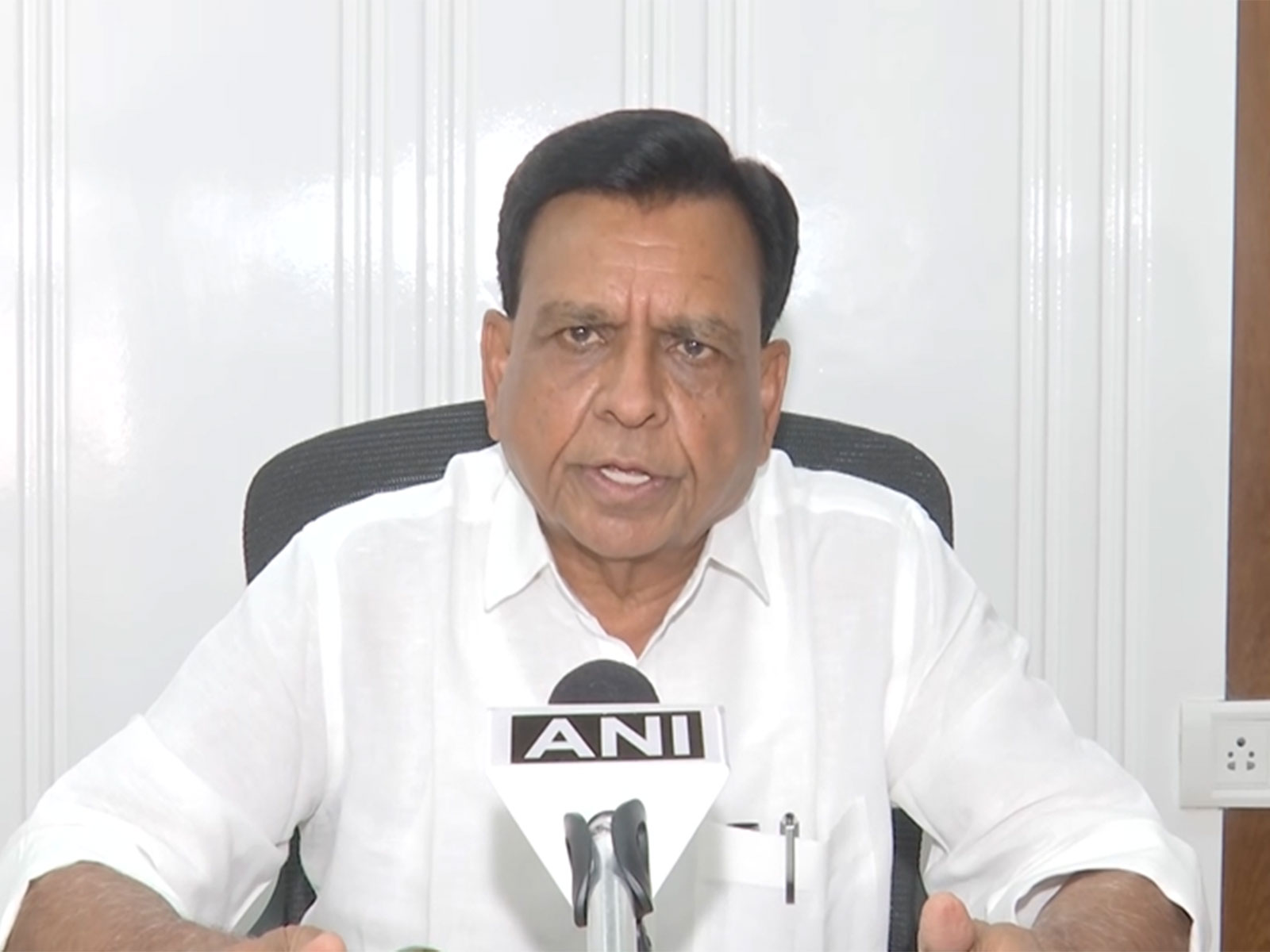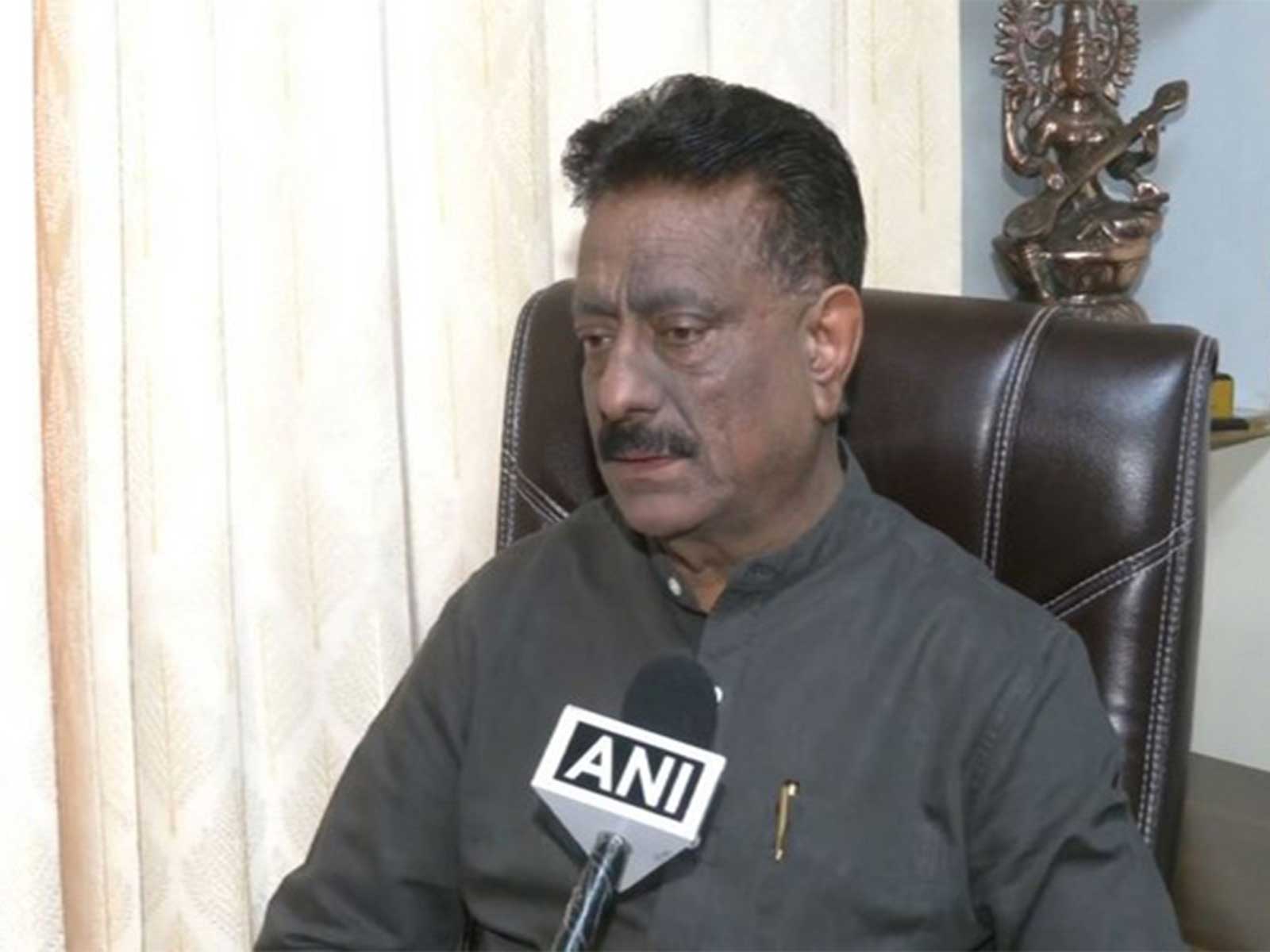
Shimla (Himachal Pradesh) [India], October 9 (ANI): Congress MLA from Theog and All India Congress Committee (AICC) spokesperson Kuldeep Singh Rathore on Friday accused the BJP-led Central Government of undermining democratic institutions and constitutional safeguards, alleging that the Special Intensive Revision (SIR) of electoral rolls could deprive more than 13 crore people of their voting rights.
Addressing the media in Shimla and later speaking with ANI, Rathore said the Congress had repeatedly warned that the Constitution, democracy and independent institutions were under threat, but the concerns raised by party leaders, including Rahul Gandhi, had not initially received adequate attention.
He alleged that the latest developments surrounding the Election Commission of India (ECI), particularly the reported differences among the three Election Commissioners over the decision-making process, had vindicated the Congress’ concerns.
“The country is witnessing a situation in which constitutional institutions and democratic rights are under threat. Rahul Gandhi has been warning the country for a long time that the Constitution and democratic institutions are in danger. His concerns were not taken seriously earlier, but the situation unfolding today has compelled the Congress to come out on the streets to defend the Constitution, democracy and justice,” Rathore said.
He claimed that the SIR exercise had raised serious questions about the inclusion and deletion of names from electoral rolls and alleged that the scale of the exercise could affect more than 13 crore voters.
“More than 13 crore voters is an enormous number. The population of many countries is smaller than this figure. You cannot take away the voting rights of such a large number of people through a single exercise,” he said.
Referring to an earlier press conference by Rahul Gandhi, Rathore said the Congress leader had presented documents to support his allegations that voters were being deleted in some constituencies while names were being added in others.
He alleged that voters perceived to be supportive of the BJP were being included, while those considered unlikely to support the ruling party were being removed. These allegations, however, were not independently established in Rathore’s remarks.
“The right to vote is fundamental to democracy. Under our Constitution, every citizen’s vote has equal value, whether the person is an industrialist, a senior political leader or an ordinary citizen. The situation has reached a point where the government appears to be deciding who should have the right to vote and who should not,” he added.
Rathore alleged that Chief Election Commissioner Gyanesh Kumar was taking decisions unilaterally and claimed that the other two Election Commissioners had raised concerns about not being taken into confidence.
He argued that the three Election Commissioners should have an equal role in the functioning of the Commission and that decisions should reflect collective deliberation.
“When the two Election Commissioners themselves raise objections and say they are not being taken into confidence, the matter becomes extremely serious. The BJP’s leaders are defending the Chief Election Commissioner, but who has authorised them to speak on behalf of the Election Commission? They are not its spokespersons,” Rathore said.
He challenged the Chief Election Commissioner to clarify the circumstances surrounding the reported differences and the decisions relating to SIR and Form 6, which is used for applying for inclusion of a name in the electoral roll.
Rathore alleged that the process for new voter registration had become unnecessarily complicated and claimed that the rules were making it difficult for eligible citizens to exercise their voting rights.
He also questioned the legal basis for certain changes in the electoral framework, alleging that provisions relating to the protection of the Chief Election Commissioner had been extended without the required constitutional amendment.
Referring to Article 361 of the Constitution, which provides specified protections to the President and Governors during their tenure, Rathore questioned the legal basis for comparable immunity provisions relating to the Chief Election Commissioner.
He argued that Parliament should have been involved wherever a constitutional amendment was required and alleged that the changes had been made without adequate constitutional safeguards.
His remarks constituted allegations about the legality and effect of the provisions; he did not establish a judicial finding that the changes were unconstitutional.
Rathore urged the Supreme Court to take cognisance of the controversy, alleging that the electoral process and the rights of citizens required judicial scrutiny.
He referred to reports concerning Form 6 and said the Chief Election Commissioner had claimed that the relevant process had the Supreme Court’s approval. Rathore alleged that the Chief Justice of India had disputed that assertion.
He said the Supreme Court should examine the matter and take appropriate action if any public authority had misrepresented the court’s position.
“If the country has been misled on such a serious issue, the Supreme Court should take suo motu cognisance and examine the matter. The judiciary cannot remain a mute spectator when citizens are allegedly being deprived of their constitutional rights,” he said.
Rathore also referred to a representation reportedly signed by around 400 advocates and submitted to the Chief Justice of India, seeking intervention over concerns about the protection of constitutional rights and the functioning of democratic institutions.
He cited the reported views of former BJP president and Union minister Murli Manohar Joshi, saying that transparency was necessary to protect democracy and that the concerns being raised were not confined to the Congress.
Rathore also questioned the manner in which the SIR exercise had been conducted in West Bengal and Bihar, alleging that the deletion of voters could undermine the legitimacy of electoral outcomes. He did not provide independently verified figures in his remarks to substantiate the specific allegations about those states.
Referring to the Opposition’s recent march to the Election Commission, Rathore said around 367 elected MPs led by Rahul Gandhi had sought to submit a representation to the Commission but were prevented from reaching the office.
He said elected representatives should have been allowed to present their concerns directly to the constitutional body responsible for conducting elections.
Rathore also criticised the restrictions imposed on protests at Jantar Mantar in New Delhi, alleging that Section 163 of the Bharatiya Nagarik Suraksha Sanhita (BNSS) had been invoked to prevent demonstrations.
He said the provision had replaced the earlier Section 144 of the Code of Criminal Procedure and questioned the restrictions in light of Article 19 of the Constitution, which protects several fundamental freedoms, including freedom of speech and expression and the right to assemble peacefully, subject to constitutionally permissible restrictions.
“Jantar Mantar is an authorised venue where protests are regularly held. If people are prevented from demonstrating even there, where can they raise their voice? Article 19 gives citizens the right to express themselves and assemble peacefully. Those rights cannot be undermined arbitrarily,” he said.
Rathore alleged that the deployment of more than one lakh Delhi Police personnel and around 30,000 paramilitary personnel reflected an attempt to prevent dissent. He questioned why such extensive security arrangements were necessary when citizens and elected representatives were seeking to raise democratic concerns.
He warned that continued restrictions on peaceful protests could deepen public dissatisfaction and called upon civil society organisations, non-governmental organisations, youth groups and citizens who believe in constitutional values to join the movement.
Rathore said Rahul Gandhi had emerged as a prominent figure in the campaign to defend democratic institutions and pointed to his Bharat Jodo Yatra from Kanyakumari to Kashmir and the Bharat Jodo Nyay Yatra from Manipur to Maharashtra as examples of his engagement with people across the country.
He contrasted the Congress leader’s grassroots outreach with earlier criticism from BJP leaders, who, he said, had portrayed Gandhi as a privileged politician disconnected from ordinary people.
“Which leader today is walking among people, travelling thousands of kilometres and spreading a message of love, brotherhood and unity? Rahul Gandhi has done that, and today the entire country has seen him fighting to protect democracy,” Rathore said.
He claimed that the live coverage of Gandhi’s recent visit to the Election Commission had attracted more than 56 crore viewers, although he did not cite independent data to substantiate the figure.
Rathore said the Congress was organising demonstrations at the national, state, district and block levels and asserted that the movement would expand in the coming weeks.
He said the party’s initial demand had been for the removal of the Chief Election Commissioner and argued that those supporting the Commission’s actions, including the Prime Minister and Union Home Minister, should also accept moral responsibility.
“The demand is no longer limited to the removal of the Chief Election Commissioner. Those who are supporting these actions at the highest levels of government should also take moral responsibility. The country is more important than any individual or political party,” he said.
Responding to the BJP’s argument that SIR had been conducted during earlier Congress governments as well, Rathore said the current controversy could not be dismissed by citing previous exercises.
He maintained that the reported objections raised by the two Election Commissioners made the present situation different and warranted a clear explanation from the Commission.
He also questioned the BJP’s defence of the electoral process, asking why the Congress had won the Himachal Pradesh Assembly elections by a substantial margin but lost all four Lok Sabha seats in the state.
Rathore alleged that the outcomes of Assembly and parliamentary elections raised questions that required examination, while reiterating that the Congress had not abandoned its concerns about EVMs.
“We won the Himachal Pradesh Assembly elections with a clear majority, but lost all four parliamentary seats. The BJP cannot simply use our Assembly victory to dismiss every question about the electoral process. We believe the issues require a transparent and evidence-based examination,” he said.
He alleged that the BJP had sought to create a political narrative favourable to Prime Minister Narendra Modi during the Lok Sabha elections and claimed that the party had failed to secure the overwhelming majority it had expected.
Rathore also referred to earlier political controversies, including the 2020-21 farmers’ agitation against the now-repealed farm laws and protests over the NEET examination paper-leak allegations, saying that public pressure had forced the government to respond to concerns.
He questioned the government’s handling of the Pulwama terror attack and the political use of national security, and alleged that issues concerning the Ram temple donations had not received adequate scrutiny. These were political allegations made by Rathore and were not independently substantiated during the interaction.
He accused the BJP of attempting to divide society along religious, caste and linguistic lines, while claiming that the Congress remained committed to social harmony and constitutional values.
Asked whether the electoral rolls in Himachal Pradesh could also be affected by irregularities, Rathore said the possibility could not be ruled out and that the matter required scrutiny wherever SIR was being conducted.
He reiterated that the controversy surrounding the reported objections of the two Election Commissioners should not be treated as an ordinary political disagreement.
“This is not merely a matter of political debate when two Election Commissioners have raised objections. The country deserves clarity on how decisions are being taken and whether the electoral process is functioning transparently,” he said.
On EVMs, Rathore said questions had been raised for years and that the Congress had not compromised on its concerns. He argued that several established democracies relied on paper ballots and called for a broader debate on electoral transparency and public confidence in the voting system.
He maintained that the Congress’s victory in Himachal Pradesh’s Assembly elections did not invalidate its concerns about the conduct of parliamentary elections.
Rathore said the Congress would continue its campaign alongside other Opposition parties and organisations supporting constitutional rights. He warned that the protests could spread further if the government and the Election Commission failed to address the concerns being raised.
He called for the removal of Chief Election Commissioner Gyanesh Kumar and urged the Prime Minister and other senior leaders to take moral responsibility for the controversy.
“The movement will not stop. Everyone who believes in the Constitution and democracy is watching what is happening. We will continue to fight to protect the Constitution and ensure that democracy is not undermined,” he said.
Rathore concluded that protecting democratic institutions was more important than the political fortunes of any individual party or leader.
“If the country survives, democracy survives, and the Constitution remains protected, only then can our judicial system and democratic institutions continue to function effectively. No individual is more important than the country,” he said. (ANI)
Related reading