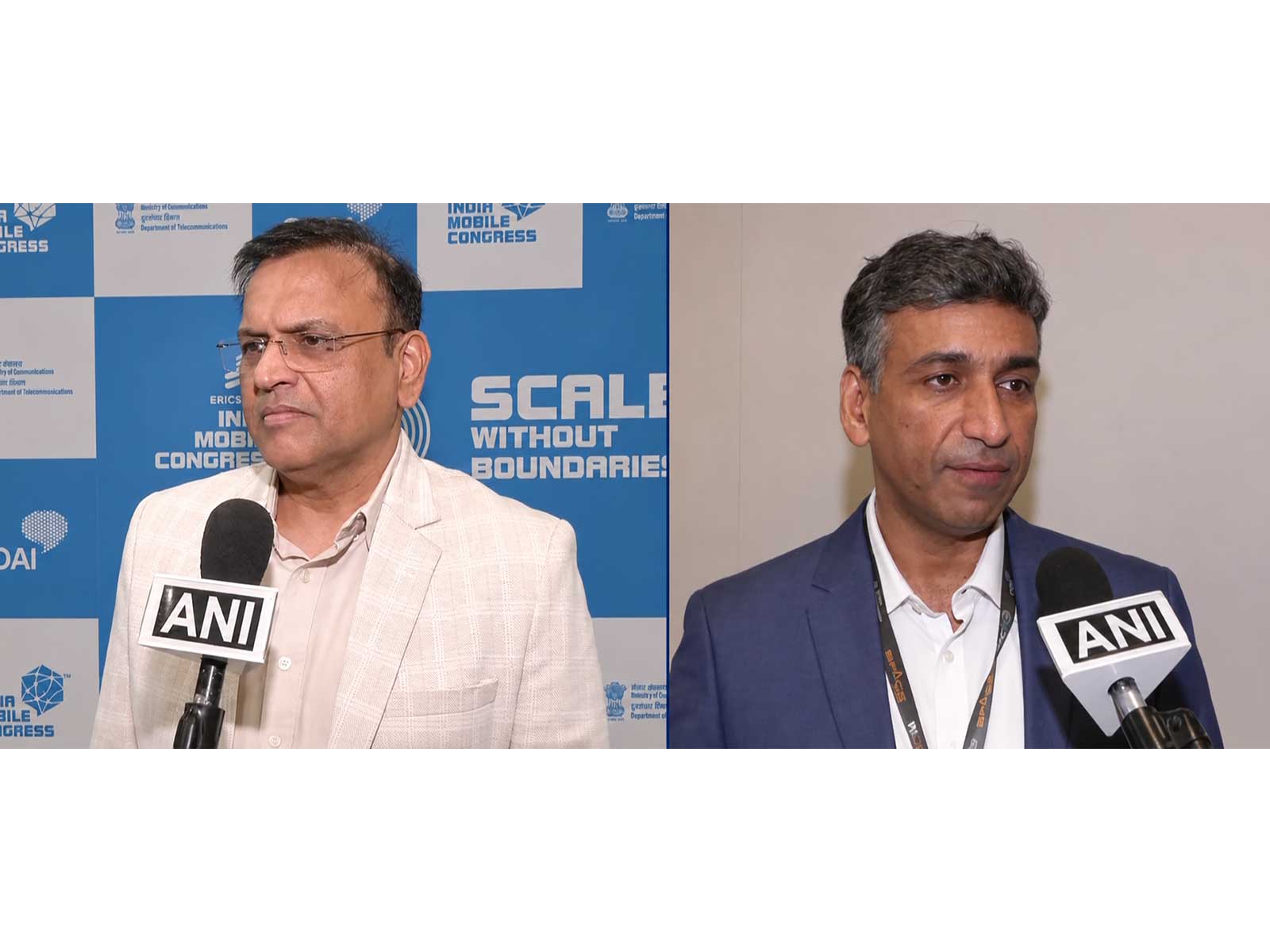
New Delhi [India], October 8 (ANI): India’s semiconductor ambitions and the rapid adoption of agentic artificial intelligence (AI) are set to reshape the country’s technology and telecom ecosystem, with industry leaders seeing opportunities across chip design, domestic manufacturing, autonomous networks, enterprise solutions and next-generation connectivity.
MediaTek India Managing Director Anku Jain said the growth of AI-enabled devices would be a major trend over the coming years, as consumers increasingly use AI agents to delegate tasks and seek outcome-based assistance on smartphones and laptops.
“I think one big trend I see is about AI itself. AI is a huge mega trend that we see going forward,” Jain said, adding that devices would become increasingly powerful and capable of handling larger large language models (LLMs) directly on the edge.
He cited MediaTek’s recently launched Dimensity 9600 Pro chipset, which features a dual neural processing unit (NPU), as an example of the company’s focus on accelerating AI processing on devices.
Jain also welcomed the momentum created by the government’s India Semiconductor Mission (ISM) 1.0 and 2.0, saying the initiatives were helping build a broader semiconductor ecosystem.
While MediaTek is a fabless chip design company and does not manufacture semiconductors itself, he said domestic manufacturing and the recently launched mobile phone manufacturing scheme could indirectly create opportunities for the company by strengthening India’s electronics ecosystem.
On India’s semiconductor manufacturing prospects, Jain said more indigenous fabs and plants would emerge, supporting the country’s objective of becoming more self-reliant. However, he cautioned that reaching advanced semiconductor nodes would take time.
“Right now, I think the work is happening on the legacy nodes, but I think with time… as a country, I mean we’ll be able to catch up with the latest nodes,” he said.
Meanwhile, Accenture India Managing Director and Lead for Communications, Media and Technology Berjesh Chawla said agentic AI could disrupt the telecom industry at multiple levels, from internal operations to enterprise offerings and sovereign AI.
He said AI agents could make network operations, IT operations and customer service increasingly autonomous, while telecom companies could build integrated solutions around connectivity for enterprises and micro, small and medium enterprises (MSMEs), including authentication and cybersecurity.
Chawla also said sovereign AI would create opportunities around local data residency, control and nationally focused AI applications.
According to him, telecom companies have a significant opportunity to move beyond connectivity by combining their existing enterprise relationships, billing capabilities and growing data-centre presence with AI-enabled solutions.
Looking further ahead, Chawla said 6G could make connectivity increasingly pervasive, with base stations potentially functioning as sensing centres alongside communication infrastructure.
He said India should play a role in defining 6G technology rather than merely implementing it, including identifying national priorities and promoting open technologies to avoid dependence on proprietary systems. (ANI)
Related reading