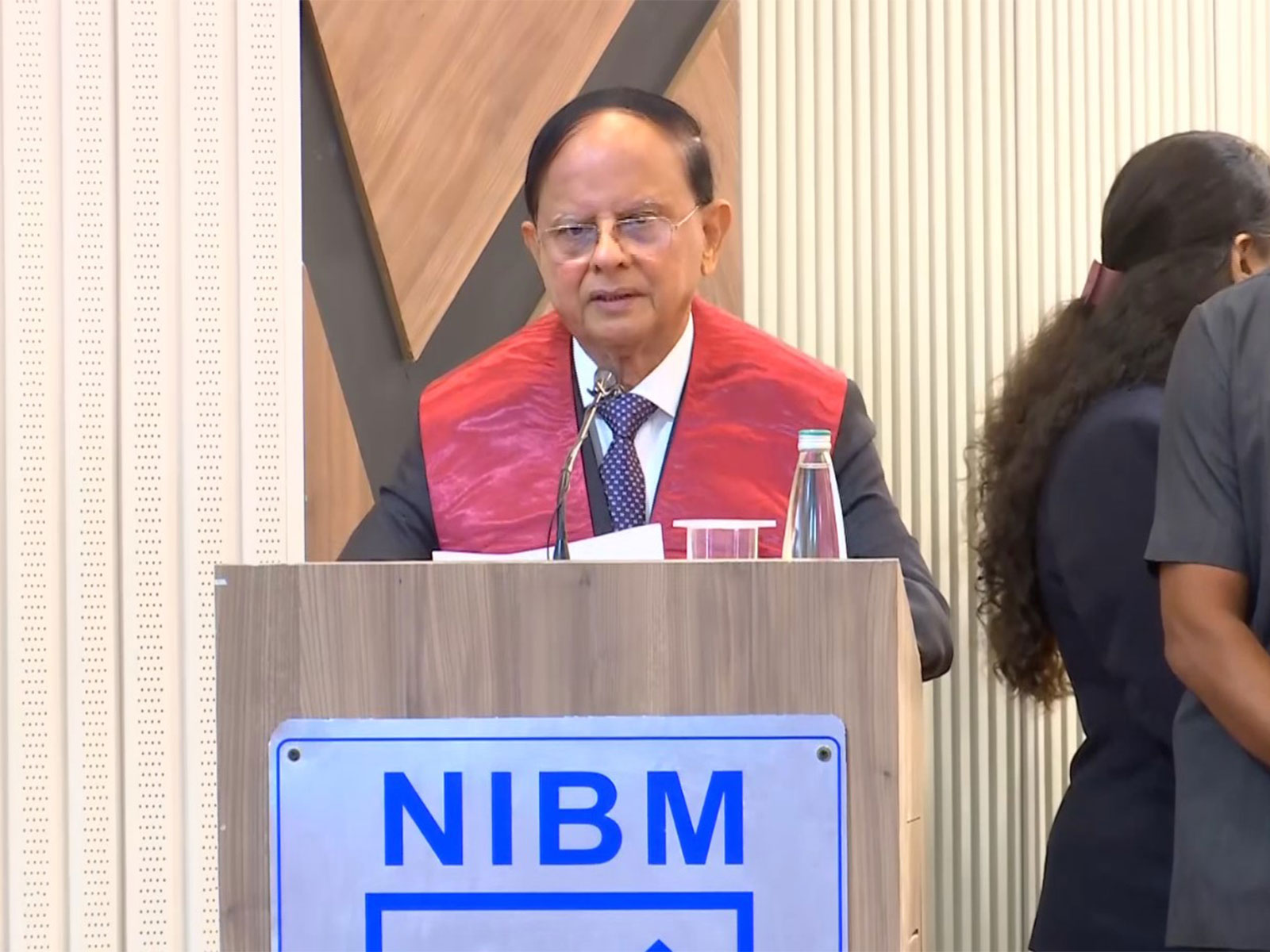
New Delhi [India], May 16 (ANI): Financial systems must remain connected to the real economy and the lives of ordinary citizens, Principal Secretary to Prime Minister Narendra Modi, PK Mishra, cautioned on Saturday while highlighting the risks posed by excessive speculation and instability in financial markets.
Addressing the 20th convocation of the National Institute of Bank Management (NIBM) in Pune, Mishra said, “Financial systems cannot become disconnected from the real economy and lives of ordinary citizens. Excessive speculation, irresponsible lending, unsustainable leverage and instability in financial markets can create disruptions.”
At the same time, he underlined how India’s digital public infrastructure has transformed financial inclusion by expanding access to banking, digital payments and formal credit across the country.
“In India, this convergence of finance and technology has enabled the creation of one of the world’s most ambitious and inclusive digital public infrastructures,” Mishra said.
He noted that the JAM trinity — Jan Dhan accounts, Aadhaar and mobile connectivity — has fundamentally reshaped the reach of the banking system.
“The Pradhan Mantri Jan Dhan Yojana brought crores of people, unbanked citizens, into the formal banking system. Aadhaar created a verifiable digital identity architecture at an unprecedented scale. Mobile connectivity provided the final layer of access,” he said.
Mishra highlighted the rapid growth of India’s digital payments ecosystem, particularly the Unified Payments Interface (UPI), which he described as one of the largest real-time digital payment systems globally.
“In less than a decade, India has built the world’s largest real-time digital payment ecosystem. From just 2 crore transactions in 2016-17, UPI now processes over 25,000 crore transactions annually,” he said.
According to Mishra, the most significant achievement of the digital payment revolution has been the “democratisation of access”, enabling both rural and urban citizens to participate in the formal financial economy through the same interoperable payment infrastructure.
“A small tea seller in a village or a professional in a metropolitan city can today transact through the same interoperable digital payment infrastructure,” he said.
He further said that digital transaction records are helping create formal credit histories for people who previously lacked collateral or banking relationships.
“Every payment made, every purchase recorded, every transfer completed, leaves behind a data trail. And that data trail over time can become the basis for a credit history, for those who have no formal credit record, no collateral to offer, and no prior relationship with the bank,” Mishra said.
The Principal Secretary stressed that financial inclusion should move beyond merely opening bank accounts and must generate meaningful economic opportunities.
“True inclusion must ultimately create productive economic opportunities,” he said.
Referring to the government’s Mudra loan scheme, Mishra said more than 57 crore loans worth around Rs 40 lakh crore have been sanctioned to micro, small and medium enterprises, benefiting a large number of women and people from marginalised communities.
“Behind every Mudra loan lies a human story, a tailoring business expanded, a small workshop modernised, a transport vehicle purchased, a family enterprise stabilised, and a first business opportunity created,” he said. (ANI)
Related reading