
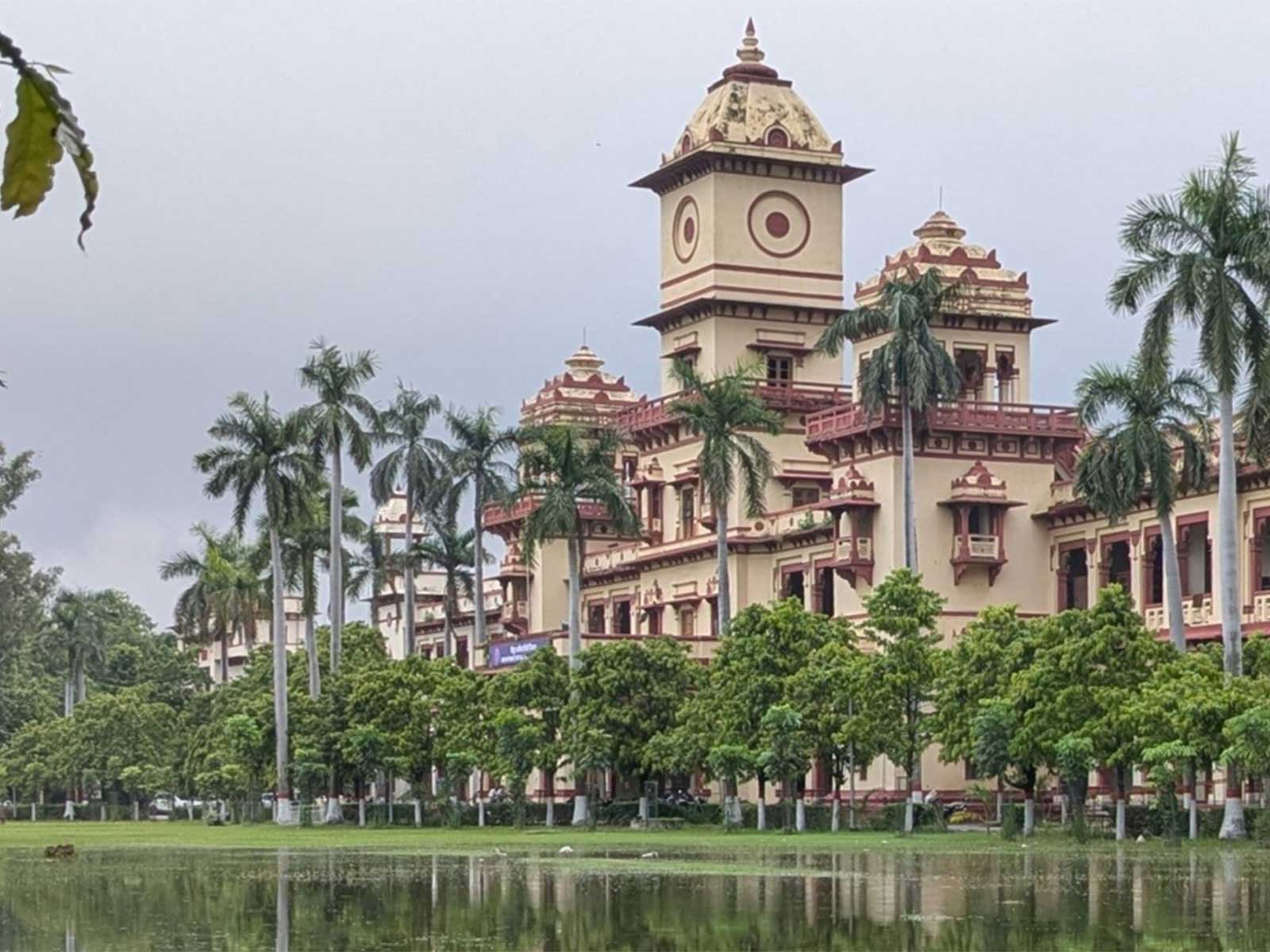
Varanasi (Uttar Pradesh) [India], October 8 (ANI): In a significant achievement, scientists at the Indian Institute of Technology, Varanasi (BHU) published their research on an innovative light-activated antibacterial technology in Communications Chemistry, a prestigious international journal of the globally recognised Nature Portfolio.
The research paper, titled “Green-light-activated Os(II) metallophotoantibiotics for antibacterial therapy and infected wound healing,” presents a promising scientific approach to addressing some of the major challenges in modern healthcare, including antimicrobial resistance, persistent bacterial infections and infected wound healing.
The research represents a collaborative effort between the research groups of Dr. Samya Banerjee, Associate Professor, Department of Chemistry, and Dr. Sudip Mukherjee, School of Biomedical Engineering, IIT (BHU), Varanasi.
The research team comprises Apurba Mandal, Debayani Chakraborty, Arif Ali Mandal, Rohit Pandey, Ashish Kumar Agrawal, Rashi Gautam, and Sweety Tiwari.
The study brings together expertise in chemistry, biomedical engineering and pharmaceutical engineering to explore new approaches for addressing complex biomedical challenges.
The publication of this research in the prestigious Nature Portfolio journal Communications Chemistry underscores IIT (BHU)’s commitment to interdisciplinary scientific research and innovation aimed at addressing pressing societal and healthcare needs.
The study demonstrates how specially designed chemical compounds, activated by green light, can effectively inhibit bacterial growth, disrupt protective bacterial layers known as biofilms and accelerate the healing of infected wounds in laboratory studies involving rats.
The publication in Communications Chemistry marks a notable research accomplishment for IIT (BHU), highlighting the institute’s interdisciplinary research capabilities and its contribution to developing innovative solutions to global healthcare challenges.
Another significant concern is the formation of bacterial biofilms, protective layers formed by bacteria on surfaces, including medical devices, which make infections difficult to eliminate.
To address these challenges, the research team developed three specialised chemical compounds known as osmium-based metallophotoantibiotics (Os1, Os2 and Os3).
These compounds become particularly effective when exposed to green light. Upon activation, they generate reactive oxygen species (ROS), highly reactive molecules that damage bacterial cells and interfere with their essential biological processes, ultimately inhibiting bacterial growth.
The researchers evaluated the compounds against three bacterial species: Escherichia coli (E. coli), Staphylococcus aureus and Bacillus subtilis. The findings demonstrated effective antibacterial activity under green-light exposure, with Os1 emerging as the most promising candidate among the three compounds.
One of the significant findings of the study is the ability of the developed compound to combat bacterial biofilms.
Biofilms are communities of bacteria surrounded by a protective layer that enables them to persist on surfaces and resist conventional antibacterial treatments. Their formation presents a particular challenge in managing infections associated with medical devices and other healthcare environments.
In laboratory experiments, Os1, when activated by green light, demonstrated approximately 85 per cent inhibition of biofilm formation in both E. coli and Bacillus subtilis. (ANI)
Related reading