New Delhi [India], October 7 (ANI): Parameswaran Iyer, former secretary of the Department of Drinking Water and Sanitation in the Indian government, said that the Gujarat model of water governance can be applied to Maharashtra to resolve the drought problem in the state.
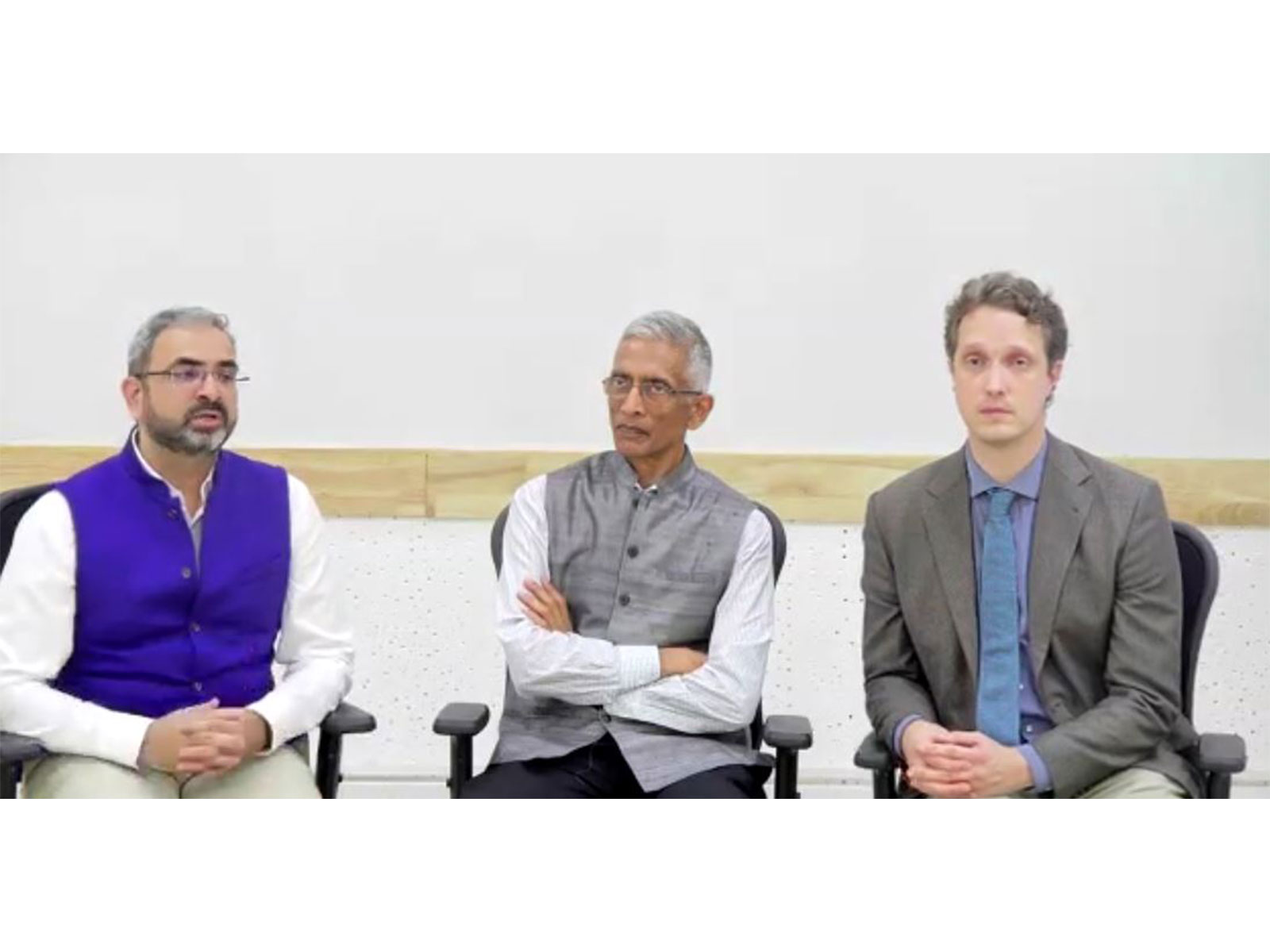
Daniel W Smith, assistant professor at George Mason University; Nitin Bassi, fellow at the Council on Energy, Environment and Water (CEEW); and Parameswaran Iyer, former secretary of the Department of Drinking Water and Sanitation, Government of India, have penned a new study launched at IIM Bangalore, which traces lessons from a 25-year water governance journey that began under the then Chief Minister of Gujarat, Narendra Modi, in 2001 in a water-scarce state.
The study highlights the Narmada-based water grid with institutions such as WASMO, while noting the reflection at a national level. In an interview with ANI, Iyer noted that PM Modi held 10 one-on-one meetings with Chief Ministers from drought-ridden states in 2016.
He said, “Many of the measures in Gujarat, which Chief Minister Modi took, would easily be applied, obviously contextualised to the Maharashtra situation. I remember in 2016, we referred to this in the case study; when I joined as Secretary in the Ministry of Water and Sanitation, it was one of the worst drought periods in India. And Prime Minister Modi held 10 one-on-one meetings with 10 chief ministers, including Maharashtra, to discuss in detail what approaches could be taken to deal with the drought situation.”
He noted that the approaches to deal with a drought situation include water conservation, river basin management like the then government did in the Narmada, and wastewater management.
“And this ranges all the way from water conservation, which is very important and done at the local level. Obviously, river basin management like the Narmada; every state will not have a Narmada situation or a group of states. But it’s also about effectively managing the resource and managing wastewater, which is another resource,” he said.
Parameswaran Iyer added, “So there are a number of ways, some are short term, some are medium term, some are long term. But I think you’ve got to address them all together. Because we must remember that water, 85 to 90 per cent of water is consumed by the agricultural sector. It’s a critical sector. And then there’s also about using more or less water-intensive crops. You’re talking of changing the behaviour, but of course, a farmer will only change behaviour if you get a better income… But I think the Maharashtra government is on top of it and they’re trying to deal with it. Certainly, lessons from Gujarat can kick in.”
Several talukas of Maharashtra have been affected by drought this year. Chief Minister Devendra Fadnavis today said he met Union Home Minister Amit Shah in New Delhi and discussed the drought situation in the state, seeking maximum assistance under the National Disaster Response Fund (NDRF).
In a post on X, Fadnavis said he briefed Shah on the measures being undertaken by the Maharashtra government and the overall situation in the drought-affected areas.
“Drought has been declared in more than 265 talukas in Maharashtra, and drought relief measures have been announced. In such a situation, a request was made to him to provide maximum assistance on behalf of NDRF,” the CM said.
Meanwhile, when asked about cleaning the Yamuna River in Delhi, author Nitin Bassi noted that it will be a time-consuming process due to the urban infrastructure.
Bassi said, “Any river which is passing through an urban area will have challenges around it because, you know, our cities are growing. We have to also ensure that infrastructure is growing, and for that to happen, for infrastructure to keep up pace with the city. It is a time-consuming process. Now with the time as we continue to build our sewage treatment plant, like what Delhi is doing. So now, the Okhla treatment plant is one of the biggest plants that you have in Asia, the biggest sewage treatment plant that you have in Asia. So with all these investments that are going, not only in the technology, but in treating that water, reusing it so that no used water or no wastewater flows to the river. I think that is going to make a big difference. And this is not only the case with Delhi. This is being done across the cities from where Ganga needs to be.” (ANI)
Related reading