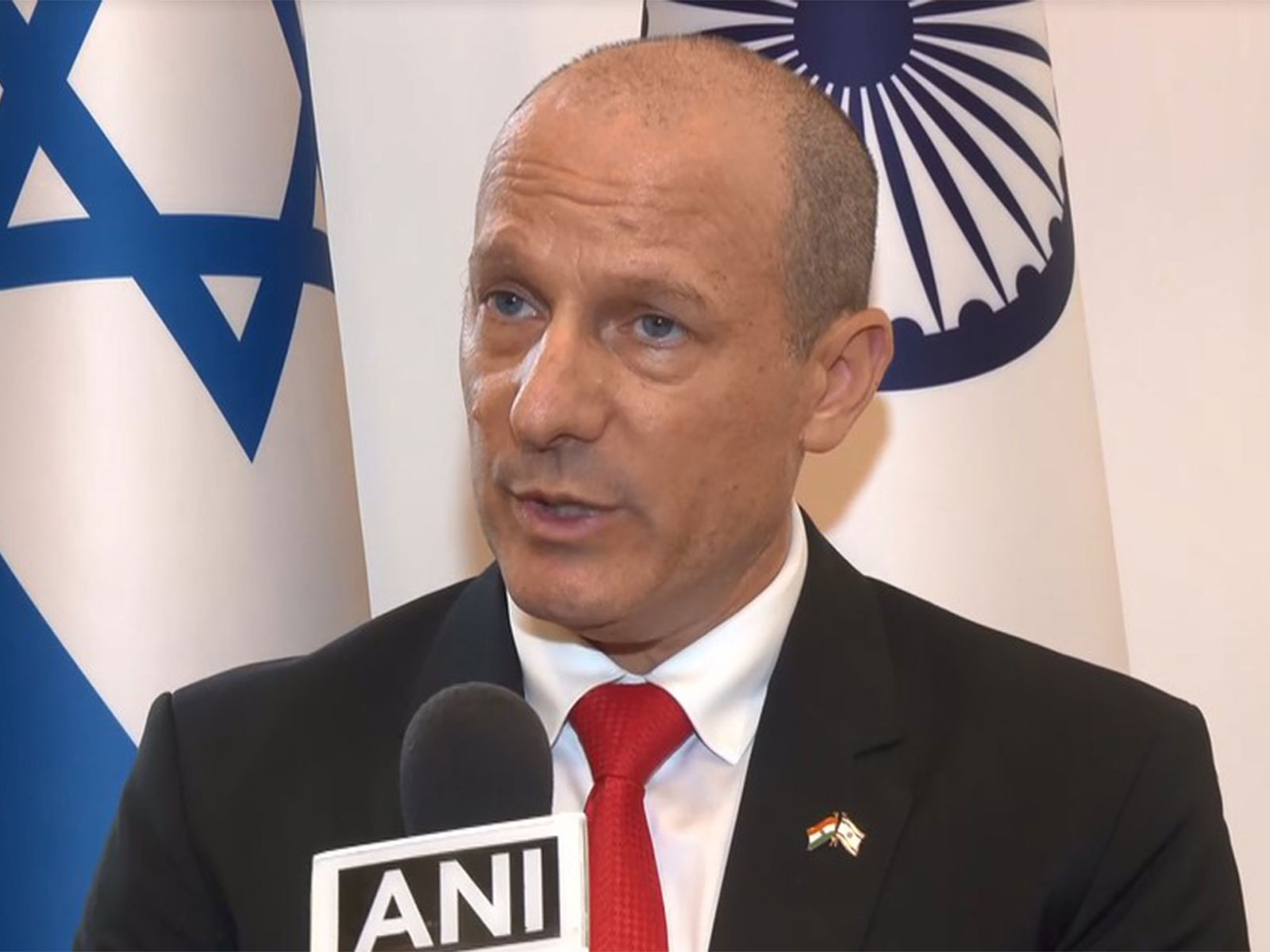
New Delhi [India], October 5 (ANI): Israel’s Ambassador to India Reuven Azar on Monday stated that Iran’s attempts to disrupt global shipping and hijack international trade through the Strait of Hormuz have failed, warning that Tehran must either come to terms with the United States or face direct military consequences.
Contextualising the ongoing friction between Washington and Tehran, Ambassador Azar highlighted Iran’s diplomatic stance and warned that its refusal to engage constructively will ultimately force a severe response, accusing Tehran of negotiating in “bad faith.”
“The Iranians have proven time and again that they are negotiating in bad faith. Eventually, they will have to face reality: either come to terms with the United States or face the consequences militarily,” Ambassador Azar stated.
Addressing Tehran’s efforts to trigger a global energy crisis by targeting maritime traffic in the Gulf, the envoy pointed out that oil shipments have stabilised back to pre-war levels despite continued Iranian attacks against passing vessels.
“We see right now that their attempt to hijack the agenda of the international community by closing the Strait of Hormuz hasn’t worked,” Ambassador Azar said. “Right now, the quantities of oil coming out of the strait are at pre-war levels, although it is not going smoothly because many companies are still not sailing there… From time to time, we still see that the Iranians are trying to shoot at ships that are passing, but they have failed.”
Framing the failure of Tehran’s maritime disruptions as a broader message to hostile regimes worldwide, the Ambassador emphasised that international extortion cannot be used to advance destabilising regional policies.
“In their quest to try to extort the international community, they have failed. And this is very important,” Ambassador Azar observed. “This is a very good lesson for all the tyrants in the world: they cannot simply try to advance their destructive policies by extorting others, policies of building weapons of mass destruction, taking over other countries, financing terrorist proxies and delivering weapons of mass destruction to them.”
Concluding with a stern warning to Iran’s military leadership, the Israeli envoy stressed that the Iranian public will bear the brunt of the hardship if the Islamic Revolutionary Guard Corps (IRGC) continues its aggressive path.
“All these things will have to stop. And the sooner, the better, because if they continue with this line, especially the Revolutionary Guards of Iran, the Iranian people will have to suffer the consequences,” Ambassador Azar concluded.
Earlier on Friday (local time), US President Donald Trump’s top national security aides held an unpublicised meeting at Camp David, conferring for several hours to discuss next steps in the war with Iran alongside the Saudi-backed campaign targeting Houthi rebels in Yemen, Axios reported, citing three US officials.
The administration made no public announcements regarding the gathering, which transpired as negotiations with Tehran remained deadlocked. Trump Administration is weighing whether to re-engage in major combat operations against Iran.
Vice President JD Vance presided over the discussions. He was joined by Secretary of State Marco Rubio, US War Secretary Peter Hegseth, White House envoy Steve Witkoff, CIA Director John Ratcliffe, and Joint Chiefs of Staff Chairman Gen. Dan Caine and other senior officials.
Commenting on the deliberations regarding the West Asia crisis, a US official noted that critical matters were determined or evaluated. The White House declined to issue a statement concerning the gathering.
The high-level session unfolded as President Trump approaches a decisive juncture regarding the trajectory of the American campaign against Iran.
“Now I have to make a decision: either Iran signs the deal, or it won’t exist any longer,” President Donald Trump had said on Thursday.
Such high-level strategy sessions at Camp David remain a rarity, with the most recent comparable meeting occurring in June 2025 shortly before the outbreak of war between Israel and Iran. (ANI)
Related reading