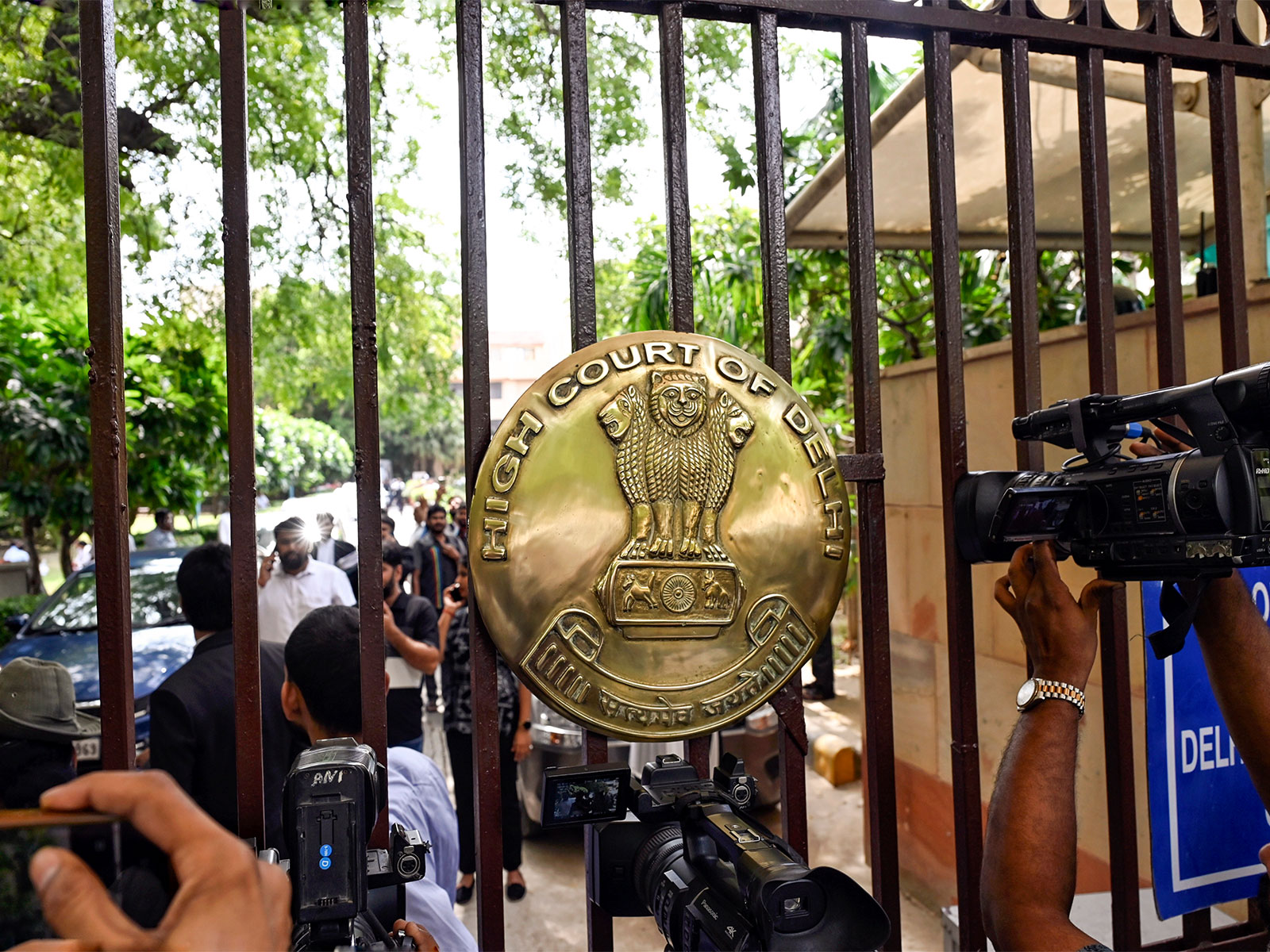
New Delhi [India], October 5 (ANI): The Delhi High Court has dismissed a batch of petitions seeking an independent probe into the 2020 North-East Delhi riots, holding that there was no material before it to establish that the Delhi Police investigation was so compromised, tainted or lacking in credibility as to warrant its transfer to an independent agency.
A bench of Justice Vivek Chaudhary and Justice Manoj Jain said that mere allegations of police misconduct during the riots could not automatically lead to a conclusion that the entire investigative machinery of the Delhi Police was incapable of conducting a fair investigation. The court stressed that transfer of an investigation can be ordered only in rare and exceptional circumstances where material demonstrates that the existing investigation itself stands compromised.
The court also declined to direct registration of FIRs against political leaders over alleged inflammatory or hate speeches, observing that much of the material relied upon by the petitioners consisted of transcripts, video recordings, newspaper clippings and media reports, with several speeches being placed before the court only in portions or excerpts.
The bench said the completeness, authenticity and context of the speeches had not been established, and therefore it could not proceed on the assumption that the material represented complete and accurate versions of the statements or record definitive findings about their contents and context.
The court further observed that there was an “element of political selectivity” in the manner in which certain individuals and particular speeches had been targeted for action by the petitioners. However, it clarified that it was not necessary to record any finding on the subjective motive of the petitioners.
The petitions arose from the communal violence that erupted in North-East Delhi in February 2020 following protests against the Citizenship Amendment Act and the proposed NRC. The court noted that the violence resulted in arson, vandalism, stone-pelting and destruction of homes, shops, vehicles and places of worship in several areas of North-East Delhi.
The petitions had sought, among other reliefs, registration of FIRs against political leaders, constitution of a Special Investigation Team or transfer of investigation to an independent agency, action against police personnel allegedly involved in misconduct, preservation of CCTV and other electronic evidence, and compensation and rehabilitation for victims.
The court noted that the criminal justice process had substantially progressed during the more than six years since the petitions were filed. According to the judgment, 757 criminal cases were registered, 65 cases had been transferred to the Crime Branch, charge-sheets had been filed in 369 cases, proceedings in 212 cases were pending before criminal courts and investigation continued in 249 cases as of February 19, 2026. Criminal courts had meanwhile recorded 22 convictions, 108 acquittals and 16 discharges.
Against this backdrop, the bench held that ordering a wholesale transfer of investigation at this stage could unsettle investigations already completed, charge-sheets filed and trials pending before competent courts. It said the extraordinary jurisdiction under Article 226 could not be exercised in a manner that disrupted an ongoing criminal process in the absence of compelling constitutional necessity.
The court also rejected the plea for a general inquiry into allegations of police inaction, complicity and misconduct, as well as a roving departmental inquiry against police officials.
At the same time, the bench made it clear that this did not mean police personnel had immunity from criminal or departmental action. It said that where credible material discloses misconduct, dereliction of duty or commission of a criminal offence, competent authorities could proceed in accordance with law and individuals could pursue appropriate remedies in individual cases.
On the report of the Delhi Minorities Commission, relied upon extensively by the petitioners, the court said it could not be disregarded merely because it was a fact-finding report. However, the court noted that the report principally recorded accounts of affected persons and material gathered during its fact-finding exercise and did not constitute an investigation into the entirety of the incidents, competing versions, evidence collected in individual criminal cases or the subsequent manner of investigation.
The bench held that the report could not by itself be treated as a conclusive determination of the culpability of any individual police officer or as establishing that investigations conducted by the Delhi Police as a whole were tainted.
The court also noted that much of the other material relied upon by the petitioners consisted of unauthenticated video recordings, newspaper clippings and excerpts from print and electronic media. It held that competing factual assertions could not appropriately be adjudicated in Article 226 proceedings, particularly where investigations had culminated in charge-sheets and matters were pending before competent criminal courts.
On alleged violations of statutory safeguards concerning arrest, detention and inquest, the bench observed that the safeguards under Sections 41B, 41C, 41D and 174 of the CrPC are mandatory and protect personal liberty and accountability in the exercise of police powers. However, it said any violation in an individual case could be examined in proceedings relating to that particular case.
The court also declined to issue a blanket direction for preservation of CCTV footage and other electronic evidence. It acknowledged that CCTV footage, mobile phone recordings and other digital material can constitute valuable evidence, particularly when events are contemporaneously recorded. However, since investigations had substantially progressed and charge-sheets had been filed in numerous cases, questions relating to custody, preservation and production of such evidence would fall within the jurisdiction of the concerned criminal courts.
The court further said that the petitioners had not pointed to any specific instance showing that relevant CCTV footage or electronic records had been destroyed, tampered with or deliberately withheld. A general apprehension, without concrete material in a particular case, could not justify a blanket direction.
On compensation and rehabilitation, the court noted that a mechanism for assessment of individual claims had already been established through a Claims Commissioner and had substantially operated, with compensation awarded in a large number of cases. The petitioners had not demonstrated any systemic failure of that mechanism requiring further general directions.
In its concluding observations, the bench said the events leading to the petitions were “undoubtedly of grave concern”, as the violence resulted in loss of human lives, displacement of families and destruction of public and private property.
However, the court held that there was no exceptional circumstance warranting further exercise of its extraordinary jurisdiction to direct registration of additional FIRs, constitute an independent investigative mechanism, order wholesale further investigation into allegations against police officials, issue blanket directions concerning preservation of evidence or grant further general directions on compensation and rehabilitation. (ANI)
Related reading