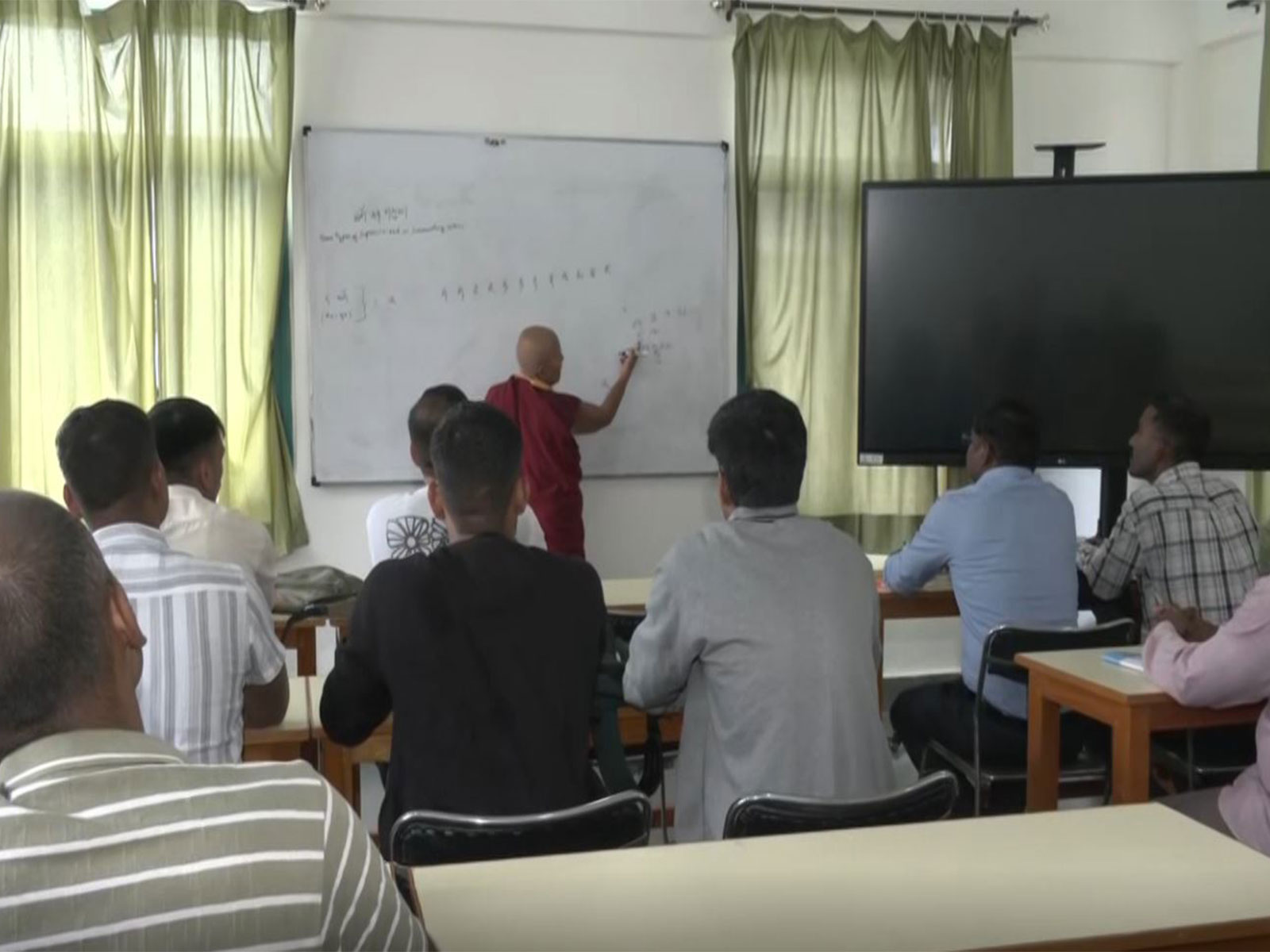
Dharamshala (Himachal Pradesh) [India], October 5 (ANI): More than 15 personnel of the Indo-Tibetan Border Police (ITBP) are learning the Tibetan language in Dharamshala as part of a three-month training programme aimed at helping them communicate better with people living in border areas and understand Tibetan culture.
The programme, being conducted with teaching assistance from the Library of Tibetan Works and Archives (LTWA), began on September 28 and marks the return of the initiative after a gap of nearly two decades.
According to Geshe Lhakdor, Director of the Library of Tibetan Works and Archives, the Director General of the ITBP, under the Union Ministry of Home Affairs, had approached the institution to provide training in basic Tibetan language, including reading, writing and speaking, to its personnel.
“This is the seventh batch here. Before this, we had organised six batches, and the last one was in 2006,” Geshe Lhakdor told ANI, adding that the latest batch comprises around 15 personnel at a time from different states.
He said the training was being organised at the request of the ITBP and would continue for three months.
The programme is aimed at providing ITBP personnel with basic knowledge of Tibetan so that they can communicate with local people in border areas, particularly those who may not be familiar with Hindi or English.
Norzom, a Tibetan nun and teacher of the Tibetan language, said knowledge of the local language, culture, food habits and traditional practices was important for personnel deployed along the border.
“Sometimes they have to deal with people who do not know English or Hindi and speak only their own language. If the personnel know Tibetan, they can at least speak a few words and communicate with them,” she told ANI.
Explaining the structure of the course, Norzom said the trainees were initially being taught the basics of Tibetan script, including vowels, superscribed letters and spelling, before moving on to words and sentences.
She said that with regular practice, students could acquire a strong foundation in reading within three to four months and subsequently progress to intermediate-level courses to improve their vocabulary, understanding and spoken Tibetan.
Geshe Lhakdor said the programme was particularly relevant for the ITBP given its role in guarding India’s borders adjoining Tibet.
“ITBP means Indo-Tibetan Border Police, so at the border they should know Tibetan,” he said, underlining the practical importance of language skills for personnel dealing with local communities.
The LTWA has been teaching Tibetan to learners from India and several other countries for decades. According to Norzom, the institution has trained people from across the world, with students going on to pursue different fields, including translation and studies of Tibetan Buddhism.
The latest initiative is expected to give ITBP personnel not only basic language skills but also a better understanding of the cultural environment in which they may be required to serve. (ANI)
Related reading