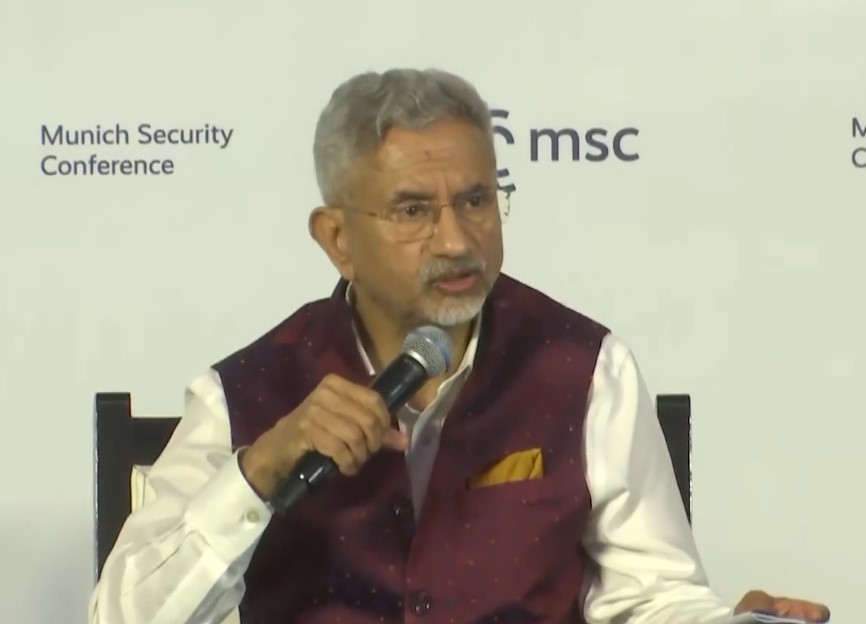
New Delhi [India], October 4 (ANI): Highlighting that the adoption of state-backed industrial policy was initiated under US President Donald Trump and carried forward under his successor Joe Biden, External Affairs Minister S Jaishankar emphasised that fundamental shifts in American foreign policy are not merely temporary administrative behaviours, but deep-seated structural changes.
Speaking at the Munich Leaders Meeting on the long-term strategic trajectory of Washington, Jaishankar cautioned against viewing American policy changes solely through the lens of individual presidencies.
“On the question of the United States, some of it may be passing or may be limited to a particular administration. But there are deeper changes going on in the United States,” Jaishankar observed.
He highlighted the persistence of key economic and trade policies as evidence of this deeper strategic realignment, noting how industrial policy shifted from an unconventional approach to a bipartisan staple in Washington.
“Many policies which President Trump initiated in his first administration continued under Biden,” he explained. “I mean, the very idea of the United States having an industrial policy, which historically Americans were very uncomfortable with, actually persisted under Biden.”
Jaishankar concluded by stressing the need for global powers to adapt to both short-term political nuances and fundamental systemic trends in Washington.
“It is important here to distinguish the more structural trends from the behavioural ones and take both of them seriously,” he noted.
His remarks come as the negotiations on the bilateral trade agreement between India and the United States are nearing their final phase, though a final announcement is not imminent, US Trade Representative Jamieson Greer said on Thursday (local time).
Responding to a question from ANI at the 2026 G20 Trade Ministers Meeting, Greer said talks were in the “short strokes”, an American expression for the final stretch of a task. “I think we’re toward the end of it,” he said.
Greer said Prime Minister Narendra Modi and US President Donald Trump had a “very constructive call” on Wednesday morning, US time, and may speak again soon to assess progress.
“My sense is that the President and the Prime Minister may have another call very soon on this just to assess progress and where we are,” he told ANI.
He cautioned against expecting a quick announcement, but said both sides had mapped out the core issues. “I don’t think there’s something imminent, but we truly have identified the universe of items that are sticking points, and we’re working diligently toward them,” Greer said.
Describing his meeting with Commerce and Industry Minister Piyush Goyal, Greer said, “We had a very constructive conversation, Minister Goyal and myself. Our staff is meeting right now, since they’re in the country and we’re here. We are continually trying to finish the trade deal with India.”
Goyal met Greer on Wednesday on the sidelines of the G20 Trade Ministers’ Meeting in Milwaukee. Sharing details on X, Goyal said he “had a productive discussion with USTR Greer towards early conclusion of a mutually beneficial interim agreement under the India-US Bilateral Trade Agreement”.
The meeting coincided with a phone call between Modi and Trump, in which the leaders reviewed progress across trade, defence, energy, critical technologies and other areas of mutual interest.
Ahead of the visit, the Commerce Ministry said Goyal would engage bilaterally with his US counterpart “to advance a balanced and mutually beneficial India-US Bilateral Trade Agreement (BTA) and finalise an interim deal in line with the Joint Statement of 7 February 2026”.
India and the US announced the finalisation of the framework for the first phase of the BTA in February, but subsequent shifts in the US tariff landscape have prolonged negotiations.
On September 24, Goyal said the deal was “done and dusted” and would be executed once the US gives India the right competitive advantage over its rivals in the American market. India’s main competitors there include China, Bangladesh and ASEAN member states. (ANI)
Related reading