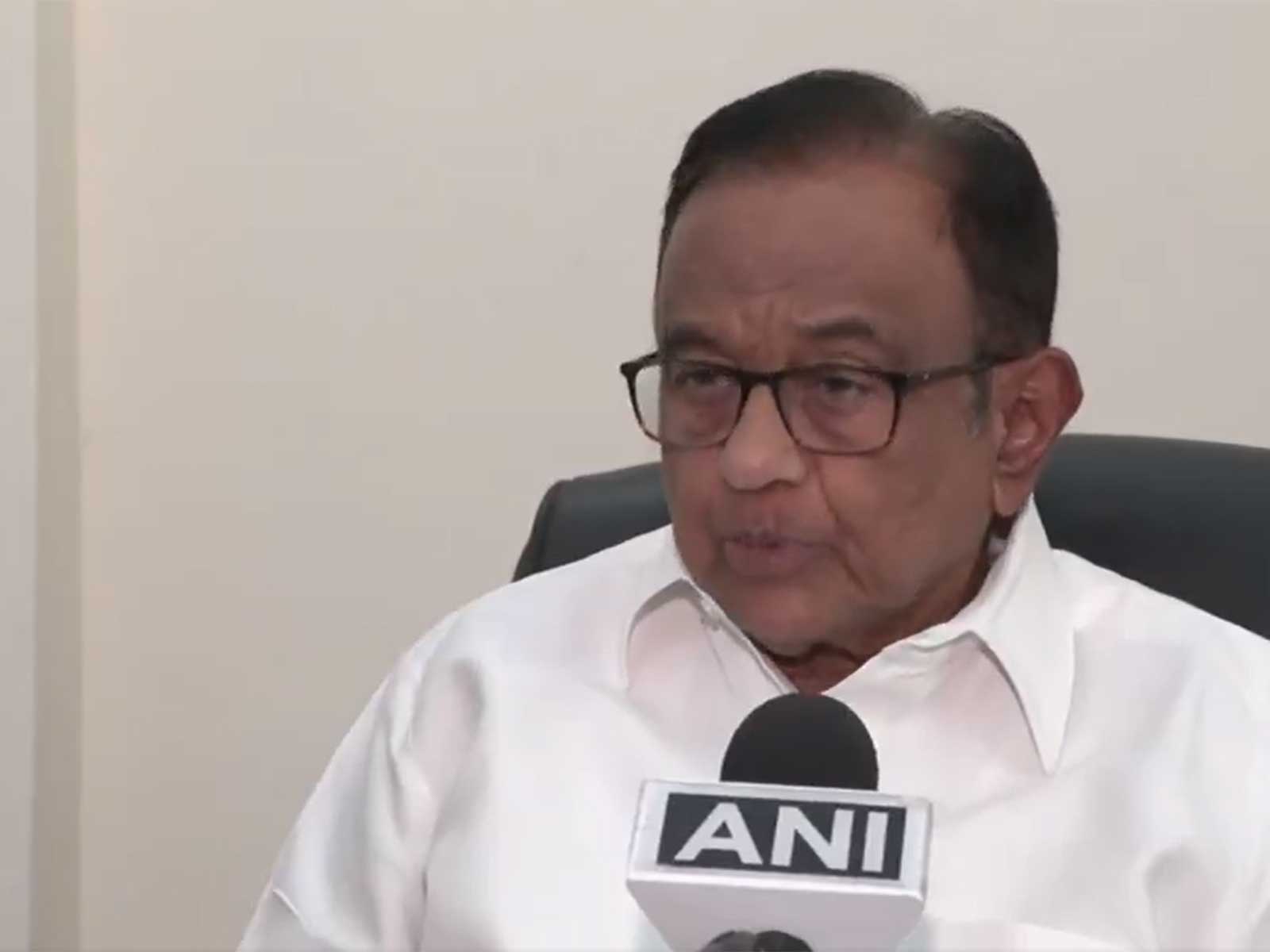
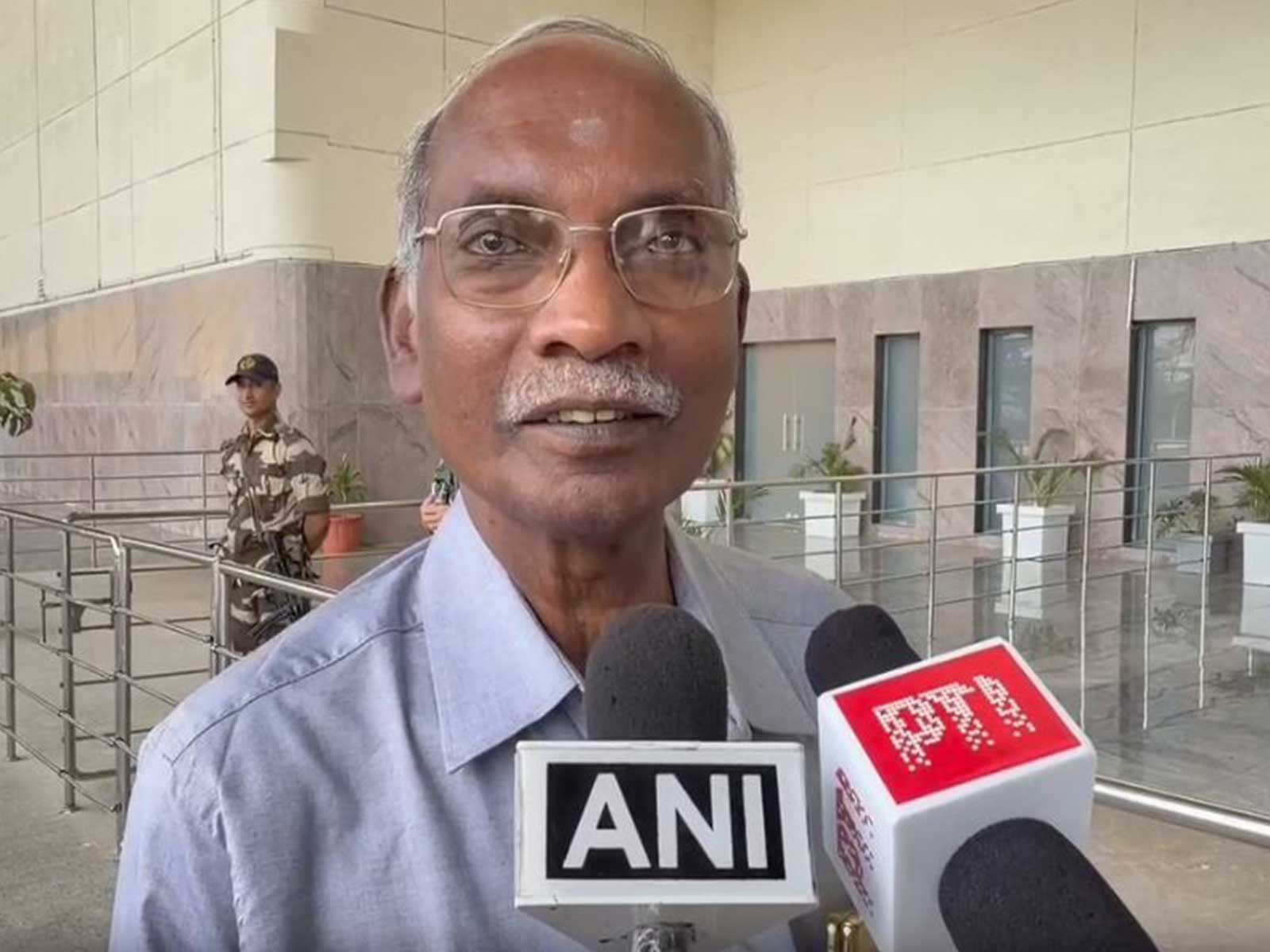
Tiruchirappalli (Tamil Nadu) [India], October 3 (ANI): Former ISRO Chairman K Sivan on Saturday said that the Gaganyaan human spaceflight programme requires technologies and operational systems that place human safety, reliability and quality above optimum performance, describing it as a combination of conventional aircraft and space technologies.
Explaining the objectives of the Gaganyaan mission, Sivan said the programme is aimed at sending humans to a low Earth orbit of around 400 kilometres and bringing them back safely to Earth.
He said the mission requires significant technological preparation before astronauts can be sent into space.
“Gaganyaan is actually a programme aimed mainly at sending humans to a lower orbit, around 400 kilometres, and bringing them back safely to Earth. Before sending humans into space, first of all, we have to make the rocket ready for that, as well as ensure that the required thrust is available to carry humans. It is a combination of conventional aircraft technology and space technology. Otherwise, in space technology, we look for optimum performance and the best performance. Here, more than optimum performance, human safety, reliability and quality are more important. There are a lot of operational requirements for this Gaganyaan project, which is a human spaceflight project,” he said.
Sivan said the conditions involved in human spaceflight can be severe and change rapidly, requiring technologies beyond those used for conventional satellite launches.
He further stated, “It will be very, very severe and will change very fast. So, in that way, new technology development is required. It is not like a conventional launch; it is not like a conventional satellite. It requires entirely new technology. For that, ISRO has undertaken a lot of technology development. Now, ISRO is going to have one mission called G1, which is a technology demonstrator for all the new technologies. Whatever is developed, once it is successful, then G2 and G3 will be made, similar to the Gaganyaan mission. Subsequently, the actual human spaceflight will happen.”
On the possible impact of a Super El Niño, Sivan said improved climate and atmospheric modelling could help provide advance predictions and enable authorities and people to prepare for its potential effects.
Sivan said, “Super El Niño will actually have a lot of impact on the climate and other things. A lot of models are being evaluated, and people are going to have better predictions. Based on these predictions, they will be able to assess the impact on the atmosphere, environment, climate and other things, and they will be able to predict and tell us in advance so that people can prepare in advance to handle a particular situation.”
Highlighting the broader relevance of space research and aerospace education for young people, Sivan said space technology should not be viewed only through the lens of rockets, spacecraft or missions, but as a means of developing advanced technologies for wider public use.
“People are thinking that space technology is only about rockets or spacecraft, or going to space or planning missions. Actually, all these things are only the vehicles or the missions. The actual purpose of space systems is mainly to make advanced technology available to common people efficiently,” he added.
The Gaganyaan human spaceflight programme was approved in January 2019. Its scope was expanded and revised in September 2024 to a total outlay of Rs 20,193 crore encompassing 8 total missions, including precursor flights for the Bharatiya Antariksh Station (BAS-01).
It aims to launch a crew of 3 Indian astronauts to a 400-km orbit for a three-day mission. The first uncrewed experimental mission to validate various technologies, including Vyommitra half-humanoid, is targeted in Q4 of 2026. The crewed mission is targeted by 2027.
India’s planned five-module space station is the Bharatiya Antariksh Station (BAS). It is targeted for operationalisation by 2035, with BAS-01 planned for launch by 2028. It will support long-duration human spaceflight, microgravity research and advanced space operations. (ANI)
Related reading