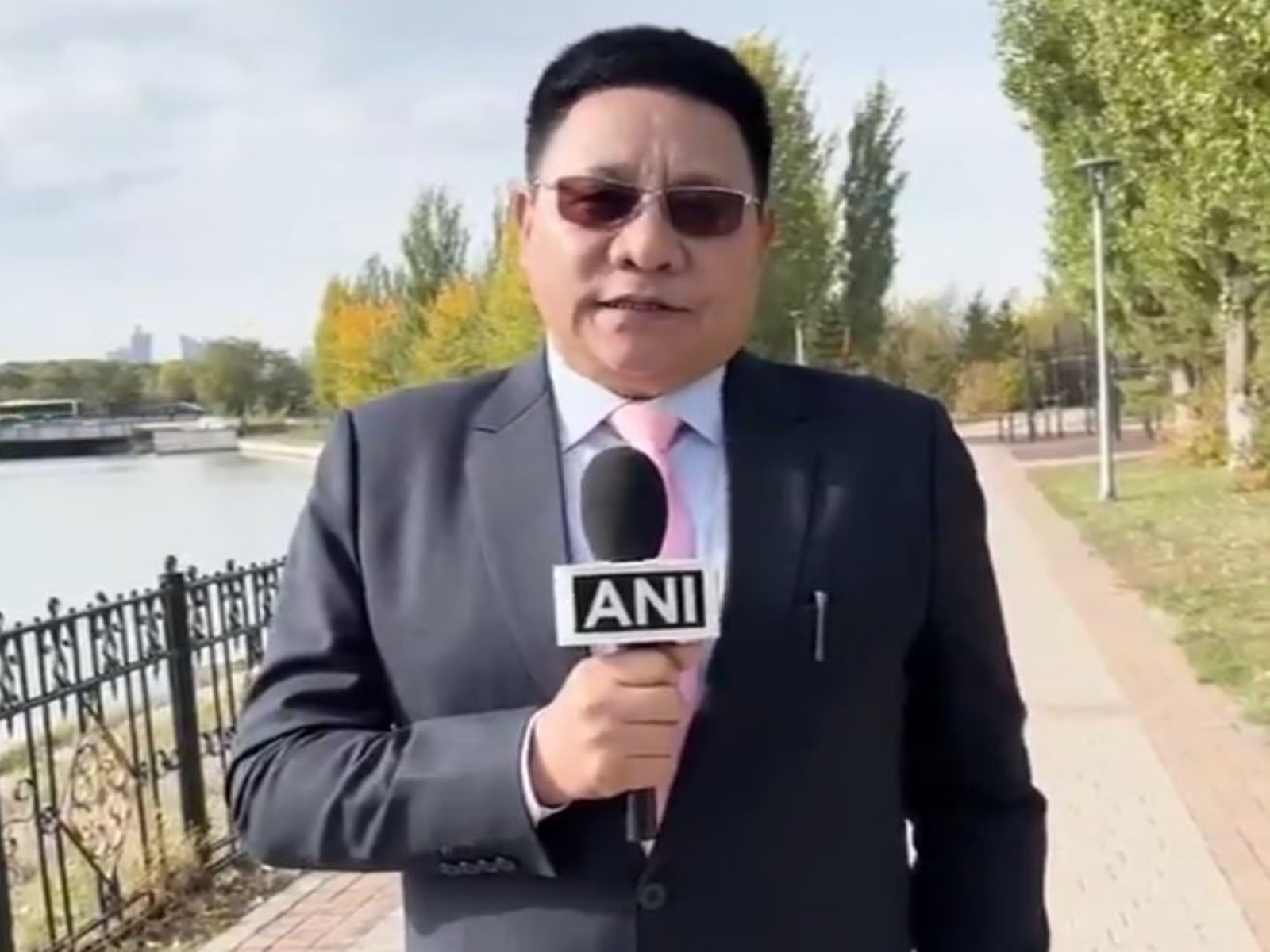
Astana [Kazakhstan], October 3 (ANI): India and Kazakhstan should move beyond discussions and translate their growing strategic partnership into concrete cooperation in artificial intelligence, digital infrastructure, trade, investment and connectivity, Indian Ambassador to Kazakhstan YK Sailas Thangal has said, stressing that “connectivity in its true sense” should define the next phase of bilateral relations.
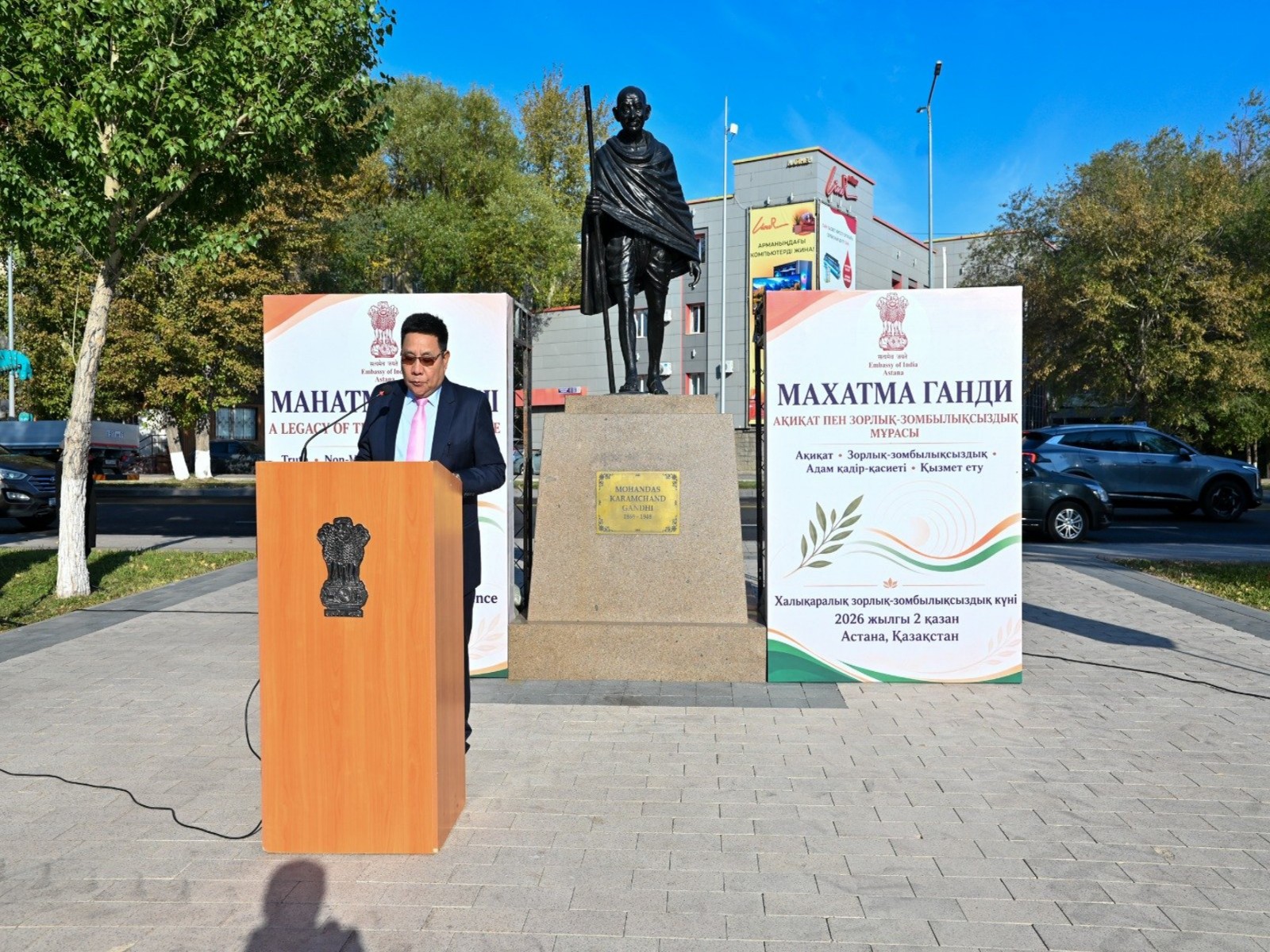
Speaking to ANI on the sidelines of the commemoration of Mahatma Gandhi Jayanti and the International Day of Non-Violence in Astana, Thangal said Gandhi’s message of peace and non-violence remains particularly relevant at a time of geopolitical tensions and conflicts across the world.
The Ambassador’s remarks came as Kazakhstan hosts the AI & Digital Bridge 2026 in Astana from October 1 to 3, following India’s hosting of its AI summit earlier this year.
Kazakhstan’s flagship technology forum is bringing together technology companies, entrepreneurs, investors, researchers and governments to discuss artificial intelligence and the digital economy.
On cooperation in artificial intelligence, Thangal said India and Kazakhstan possess complementary strengths that could be brought together to develop practical solutions.
“India has a large pool of AI talents,” he said, highlighting India’s technology ecosystem, startups and digital public infrastructure. Kazakhstan, he added, has emerged as a regional technology hub with strategic connectivity and growing AI infrastructure.
However, he said the two countries needed to translate these strengths into actual projects.
“We should move from the tabletop discussions on these things to the actual practical joint cooperation,” Thangal said.
He proposed cooperation in sectors including healthcare, agriculture and infrastructure, as well as the creation of joint research and innovation centres.
“I would like to see India and Kazakhstan coming together and launching a joint co-pilot of AI projects for research and innovations,” he said, adding that such cooperation could help transform discussions into innovations that improve the lives of ordinary people while contributing to economic growth and mutual prosperity.
Asked whether India’s experience with digital public infrastructure, including digital identity, payments and government platforms, could be adapted for Central Asian markets, Thangal said there was considerable scope for cooperation.
He pointed to India’s digital public infrastructure as well as Kazakhstan’s own digital ecosystem, particularly its widely used Kaspi payment platform.
“Kaspi is a payment system where it is universal. The vegetable sellers and the vendors – everyone has this possibility of paying in Kaspi,” he said, comparing its widespread use with India’s UPI and digital-payment ecosystem.
Thangal said India and Kazakhstan could combine their respective experiences to develop stronger and more secure digital public infrastructure, potentially benefiting not only the two countries but also the wider Central Asian and Eurasian region.
“Two eyes or four eyes – four eyes can better see things [from] a wider angle, wider scope than two eyes,” he said, underlining the potential gains from combining the two countries’ digital capabilities.
On Kazakhstan’s strategic position between China, Russia, Europe and Central Asia, Thangal said India viewed the country not merely as a transit destination but as an important partner in its broader Eurasian engagement.
He noted that both India and Kazakhstan maintain independent and mature relations with major powers and said this created space for the two countries to deepen their own strategic partnership.
“We should not see Kazakhstan not only as a destination or a connectivity thing, but we should see it as an important partner who will also help us in reaching out to many other parts of the world,” he said.
He added that India-Kazakhstan cooperation could develop not only bilaterally but also through multilateral platforms.
Despite what he described as deep-rooted and excellent political relations, Thangal said economic and trade ties had not yet reached their potential.
India-Kazakhstan bilateral trade stood at about USD 974.9 million in 2024, according to the Indian Embassy in Astana, while Kazakhstan’s official investment promotion agency reported a trade turnover of USD 923 million in 2025.
“Our bilateral trade continues to be below one billion dollars, which I think is a serious anomaly because we have the perfect combination for successful economic cooperation,” Thangal said.
He argued that the two economies were complementary rather than competitive and identified opportunities across manufacturing, technology, automobiles, green energy, IT, pharmaceuticals, agriculture and food processing.
The Ambassador recently led efforts to deepen business-to-business engagement between the two countries, including the India-Kazakhstan Trade and Investment Forum in Chennai in September.
According to the Embassy, the forum was aimed at translating the strong political relationship into deeper commercial engagement while addressing structural issues affecting bilateral trade such as connectivity, logistics, customs, payments, market access and regulatory barriers.
Thangal said the Chennai initiative brought around 120 Kazakh businesspeople representing around 70 companies to India, where they visited manufacturing and research facilities before participating in business-to-business meetings.
He said such interactions could help bridge the information gap between Indian and Kazakh markets and ultimately generate greater investment and trade.
Against the backdrop of geopolitical disruptions to global supply chains, Thangal said India and Kazakhstan could emerge as complementary partners linking South Asia, Central Asia and Europe.
“We have all the wherewithal to overcome these challenges and build one important supply chain,” he said.
He described the two countries as “natural partners”, arguing that Kazakhstan possesses resources and strategic connectivity while India has capabilities in engineering, innovation and industrial development.
Thangal specifically pointed to Kazakhstan’s energy resources, uranium and reserves of critical minerals, alongside India’s engineering capabilities, innovation ecosystem and industrial capacity.
“If both of us combine together, these processes are put together, then I think we can create not only for our two countries but also form an important supply chain for the entire world,” he said.
Asked what should constitute the defining new pillar of India-Kazakhstan relations over the coming decade — connectivity, energy, technology, defence or another area — Thangal offered a broader definition of connectivity.
“The pillar of our future cooperation would be defined by connectivity in its true sense,” he said.
The Ambassador stressed that connectivity should not be understood only in terms of roads, ports and physical infrastructure.
“It is not only physical connectivity by road, port and other things, but connectivity in the sense [of] digital connectivity. You have your air connectivity, you have your physical connectivity, and you have your customs connectivity,” he said.
According to Thangal, stronger connectivity would ultimately facilitate economic cooperation, defence cooperation, trade and investment.
More importantly, he said, connectivity could strengthen people-to-people relations.
“Then we will also have the connectivity between hearts, between people,” he said.
Thangal said stronger “meeting of minds” and “meeting of hearts” could provide the foundation for deeper cooperation across multiple sectors.
His comments come amid intensified efforts by India and Kazakhstan to strengthen the economic dimension of their strategic partnership. The two countries have also stepped up business delegations, sectoral forums and institutional engagement during 2026. (ANI)
Related reading