By Reena Bhardwaj
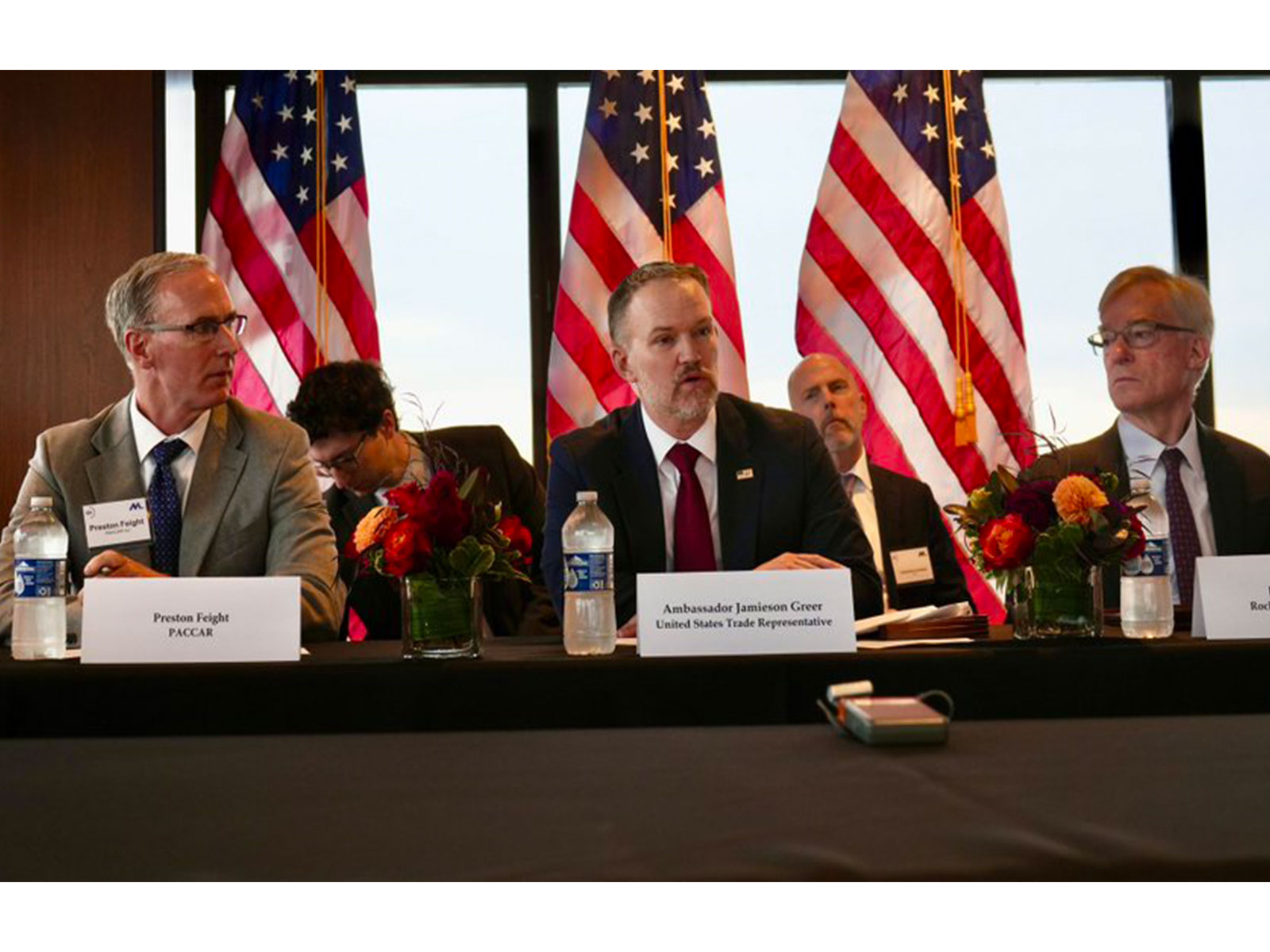
Milwaukee [US], October 1 (ANI): Highlighting that legacy global trade frameworks are failing to counter modern economic challenges, United States Trade Representative Jamieson Greer has called upon G20 economies to help forge a “new international economic order” to address issues including structural excess capacity, forced labour, and economic coercion.
Delivering the opening address at the G20 Trade Ministerial meeting in Milwaukee on Wednesday (local time), Greer emphasised that the international trading architecture established decades ago is obsolete. He outlined four core areas requiring frank discussion: the weaponisation of food, structural excess capacity and production, the Most-Favoured-Nation principle, and forced labour within global supply chains.
“Here in Milwaukee, we gather as possible architects of a new international economic order,” Greer told attending ministers and international delegates.
“The topics we will talk about at our meetings — weaponisation of food, structural excess capacity and production, MFN and forced labour — are ongoing challenges, the solutions to which expose the overall problem: we are trying to meet 21st century challenges with an architecture designed for another era,” he added.
Detailing Washington’s proactive approach, Greer noted that the United States has already initiated steps to restructure its commercial partnerships through targeted tariffs and bilateral agreements.
“This is why, starting last year, the United States took action, using a combination of tariffs and bilateral deals to reduce our trade deficit, make our supply chains more resilient, and bring fairness, reciprocity, and balance to the global economy,” he stated.
The US Trade Representative also challenged the unconditional application of the Most-Favoured-Nation principle, questioning whether it continues to serve contemporary trade dynamics.
“Many consider MFN to be the cornerstone of the global trading system. But even a cornerstone should be examined from time to time to ensure it is still supporting the structure we need,” Greer remarked.
“The MFN principle, particularly when applied unconditionally, constrains economies’ ability to effectively respond to distortive policies and adapt to changing market conditions,” he further noted.
Addressing industrial overcapacity, Greer warned that non-market policies driving production far beyond domestic consumption generate severe cross-border repercussions, squeezing producers and workers in foreign markets. He additionally characterised forced labour as both a profound humanitarian crisis and a trade distortion, pointing out that goods manufactured under such conditions enter global markets with artificial price advantages.
Urging delegates to tackle contentious matters directly rather than deflecting responsibility, Greer cautioned against sidelining discussions to international bodies.
“Typically, and too often, when difficult questions and topics arise in the G20, many around the room suggest that such discussions belong elsewhere. That they should take place in Geneva at the WTO. But Geneva is just another city on a lake. And so is Milwaukee. So, let’s talk candidly and constructively here,” he urged.
During his address, Greer lightened the atmosphere by singling out Indian Commerce and Industry Minister Piyush Goyal while illustrating the prolonged nature of structural economic reform.
“Just as Antonio Gaudi started the ongoing work to build the Sagrada Familia in Barcelona in 1883, work to establish a trading system that is more balanced and fair will continue long after our tenures in office — maybe except for Piyush who is trade minister for life!” Greer quipped.
Clarifying that systemic reform does not necessitate discarding all historical frameworks, Greer argued that legacy concepts must not remain immune to revision simply because they have governed international commerce for decades. He reminded attendees that although G20 leaders formally committed to resolving excess industrial capacity back in 2016, the decade since has seen the issue become an even more profound distortion within the global economy.
The Milwaukee ministerial forms a key component of the United States’ G20 presidency agenda, leading up to the upcoming G20 Leaders’ Summit, which Washington is hosting for the first time since 2009. Greer noted that the two-day diplomatic trade conference is designed to foster urgency and a collective acknowledgement that immediate policy action is imperative.
Framing Milwaukee, a city renowned for its industrial heritage, as an ideal backdrop for the negotiations, Greer highlighted a prior delegates’ tour of a local Rockwell Automation production facility. He observed that the visit exemplified the production-focused economic model championed by the administration, which aims to generate widespread prosperity through a balanced, fair, and reciprocal global trading architecture. (ANI)
Related reading