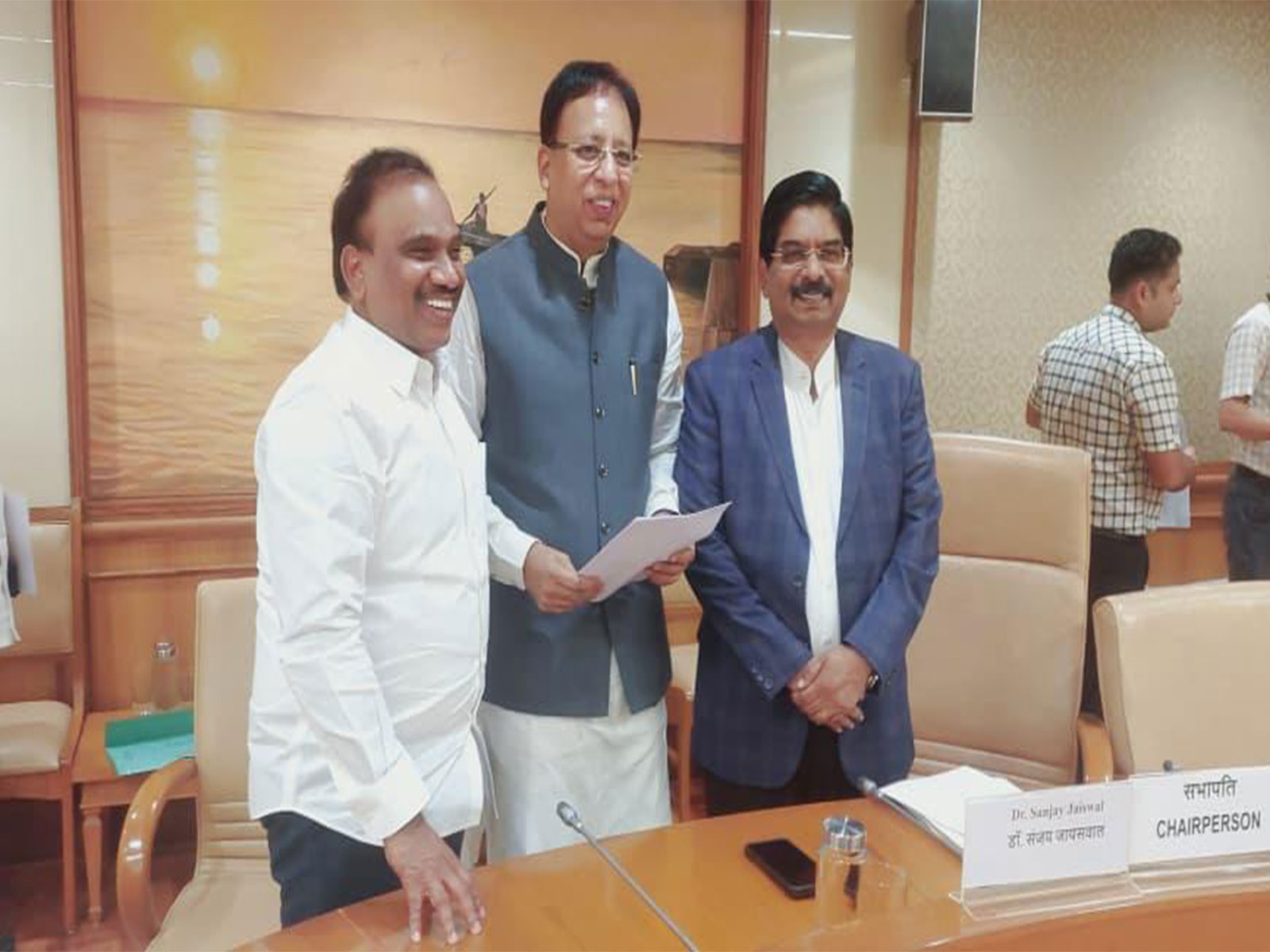
New Delhi [India], September 29 (ANI): Opposition members of Joint Committee on the FCRA Amendment Bill, have written to Chairman Sanjay Jaiswal, seeking postponement of the JPC meeting scheduled for October 12 to enable detailed examination of the legislation. They have also said that time period to receive public opinion and comments should be extended to four weeks.
The Opposition MPs said that considering the importance and wide-ranging implications of the proposed legislation, they require adequate time to study the Bill and related documents thoroughly and in depth before proceeding with its examination. They requested that October 12 meeting be postponed by at least four weeks.
They also requested that the period for receiving comments, suggestions and representations from the public and stakeholders be kept open for a minimum of four weeks, so that concerned organisations, experts and members of the public have sufficient opportunity to examine the provisions and submit their considered views.
Adequate time would also enable Members to properly consider the representations received and the Committee can undertake a more comprehensive and informed examination of the Foreign Contribution (Regulation) Amendment Bill, 2026, the MPs said.
DMK MP P Wilson wrote a separate letter to the Committee Chairman, referring to a press communique issued by the panel, and said objections, and not merely suggestions should be invited from the public and stakeholders.
He sought extending the time granted for this purpose to not less than four weeks and ensuring wide and continuous publicity of this process across the press, digital platforms and social media, so that all stakeholders have ample and equal opportunity to participate.
He said seven days have been given for experts, institutions, trusts, societies, firms, organisations, NGOs and other stakeholders to be submitted their views from the date of publication of advertisement.
Noting that the Press Communique invites only “views/suggestions” on the specific clauses of the Bill, Wilson said the legislation will have wide-ranging and far-reaching implications for charitable organisations, educational institutions, hospitals, religious institutions of every denomination, and numerous other stakeholders across the country.
“I submit that the Committee should explicitly invite objections as well as suggestions. Many a stakeholder who is affected by a proposed statutory provision may not necessarily wish to suggest an alternative drafting formulation. Such stakeholder may, instead, wish to place before the Committee a fundamental objection to the provision itself, including its principle, scope, operation, consequences or constitutional and legal implications and the present wording of the Communique may inadvertently discourage, or be read as foreclosing, such objections,” he said.
“The time of seven days granted for this purpose is, with respect, grossly inadequate. The Bill contains several provisions which require careful examination not merely by individual experts but also by institutions, governing bodies, legal advisers, auditors, finance professionals, trustees, administrators and other persons responsible for compliance with the statutory framework,” he added.
The DMK leader said that many of the organisations likely to be affected are not centrally administered institutions capable of preparing detailed clause-wise submissions within a few days.
“Numerous charitable organisations, educational institutions, hospitals, religious institutions, societies, trusts and other bodies operate through governing committees and require internal consultations before a formal representation can be finalized…a seven-day period effectively places the burden of responding within an extremely compressed timeframe upon precisely those stakeholders who may have the greatest difficulty in mobilising legal and institutional resources at short notice,” he said.
“Further, it does not allow experts, institutions and other stakeholders sufficient time even to study the Bill carefully, let alone to consult internally and prepare considered, clause-wise submissions. Therefore, I submit that a period of not less than four weeks should be granted, so that this process is a meaningful and substantive exercise in public consultation rather than a mere formality,” he added.
He said the notice, together with the text of the Bill, be prominently and continuously displayed on the Parliament and Lok Sabha websites, rather than being referred to only by way of a link in a one-time advertisement.
“I would request the Hon’ble Chairperson to kindly consider: (a) explicitly inviting objections, and not merely suggestions, from the public and stakeholders; (b) extending the time granted for this purpose to not less than four weeks; and (c) ensuring wide and continuous publicity of this process across the press, digital platforms and social media, so that all stakeholders have ample and equal opportunity to participate,” the letter said.
JPC members on Tuesday heard the views of domain experts and stakeholders – Challa Sreenivasulu Setty, Chairman, SBI; Chetan Sharma, Additional Solicitor General of India (High Court of Delhi); Gursimran Kohli, AZB & Partners; and Tushaar Nair, Advocate, Supreme Court of India
The members were given clause-wise briefing on various provisions of Foreign Contribution (Regulation) Amendment Bill, 2026 by representatives of Ministry of Home Affairs and Ministry of Law and Justice.
Officials informed the panel that there are 14,440 active FCRA accounts. (ANI)
Related reading