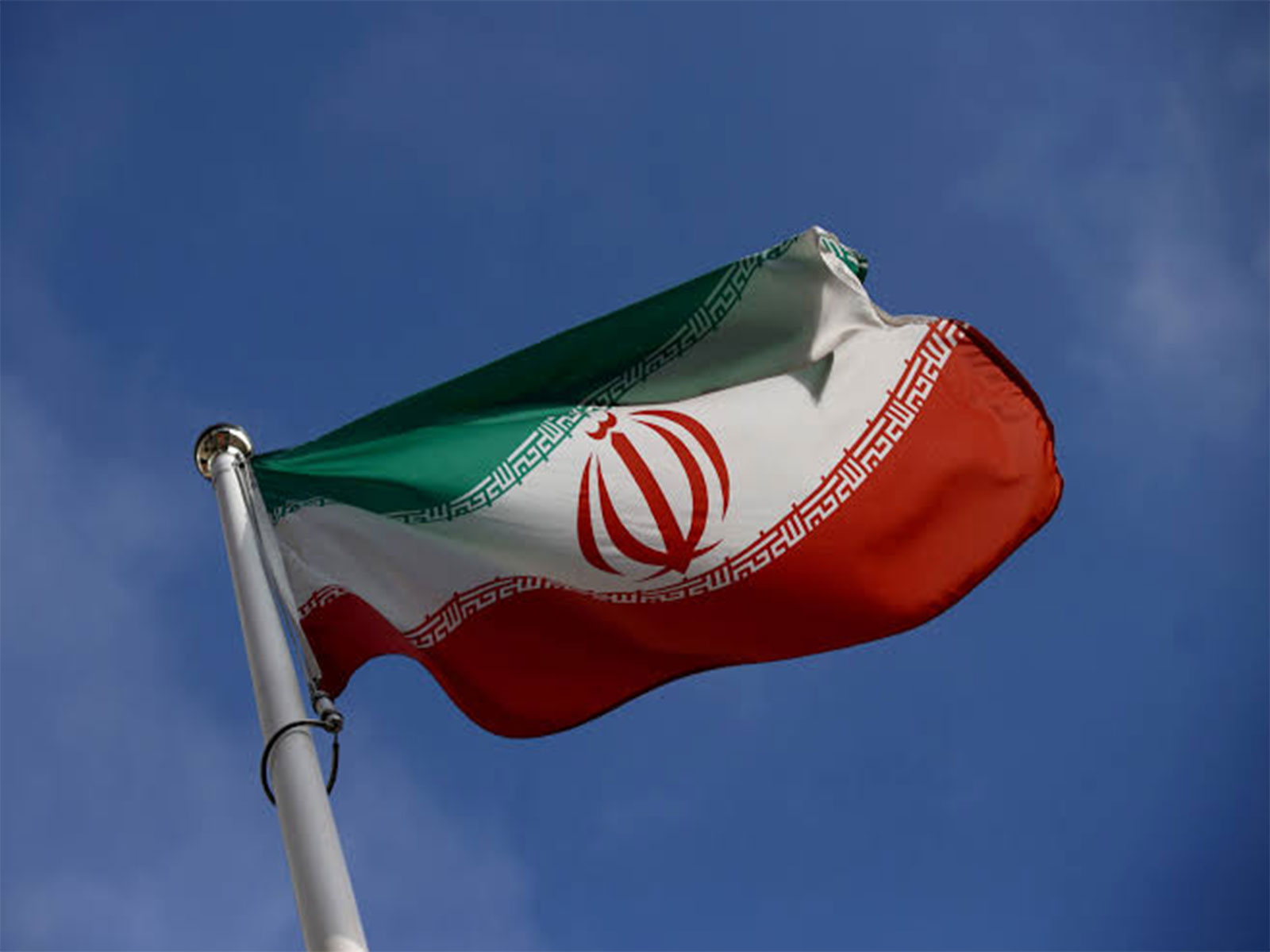
Tehran [Iran], September 29 (ANI): Iran’s Islamic Revolutionary Guard Corps (IRGC) spokesperson Sardar Hoseein Mohebbi on Tuesday said that the military bases in the region had failed to provide security and had instead become a source of instability, while saying Iran would continue maintaining ties with its neighbouring countries despite US economic restrictions, as reported by IRNA.
According to Iranian state news agency ‘Islamic Republic News Agency’ (IRNA), Mohebbi made the remarks during a press conference.
Addressing neighbouring countries, Mohebbi said that governments and people in the region had come to realise that the presence of US military bases did not provide security.
“In a message to neighbours, I believe that the governments and nations of the region have come to realise that US Bases not only fail to provide security, but are themselves a source of insecurity,” he said.
Mohebbi said that the United States had invested heavily in military infrastructure and weaponry in the region while claiming to safeguard regional security.
He said, “By pouring trillions of dollars into the region and stationing extensive military infrastructure and weaponry there, the United States claimed to be safeguarding regional security. In reality, these bases not only failed to do so, they turned into a source of instability.”
“These bases couldn’t even defend themselves; most are damaged, unusable, and not worth rebuilding for the US,” he added.
Mohebbi also referred to the “Mecca Joint Defence Agreement” between Saudi Arabia, Pakistan and Turkey, saying it represented an approach in which regional countries themselves could provide security.
He said, ” In our view, the ‘Mecca Joint Defence Agreement’ concluded between Saudi Arabia, Pakistan, and Turkey is an effective step toward providing security by the regional countries themselves and cutting off the hands of foreigners.”
On the US attempts of “economic blockade”, Mohebbi said that Iran had already taken measures to prevent “serious harm” and would remain passive.
“Under any circumstances, we won’t be idle or indifferent. We have multiple measures, and we’ve already implemented some to prevent serious harm”, he said.
Mohebbi further said that US restrictions could not completely sever Iran’s relations with neighbouring countries, pointing to their long-standing exchanges and common ties.
He said, “The US can never sever our ties with our neighbours. It may impose restrictions, but it can never fully block them. Iran has 15 neighbouring countries, with whom it shares thousands of years of exchanges, as well as deep generational, religious, and cultural commonalities.”
His remarks come on the same day that Iranian Parliament Speaker Mohammad Bagher Ghalibaf warned the US and other countries over the Strait of Hormuz, saying that if Iran’s security is not ensured, “no infrastructure will be safe”.
Ghalibaf made the remarks during a public video conference on Tuesday, referring to recent statements by US President Donald Trump regarding the Strait of Hormuz and the passage of ships through it.
Reacting to the US President’s remarks, Ghalibaf said they were a repetition of previous claims and that their nature was known to everyone.
“The delusional US president recently made rhetoric about the Strait of Hormuz and the passage of ships through it that is a repetition of previous claims, and the truth of these delusional positions is known to everyone,” he said.
Ghalibaf then warned the US and other countries that Iran would not allow its security to be compromised, linking security in the region to the movement of oil.
“Both Americans and other countries should know: As we said before, in a region where we do not sell oil, no one will sell oil, and if our security is not ensured, no infrastructure will be safe,” he said.
The remarks came as Iranian Foreign Minister Abbas Araghchi left New York for Tehran after concluding his programs and intensive diplomatic consultations, according to IRNA.
Meanwhile, a US official on Monday (local time) told CNN, said that US President Donald Trump is willing to give Iran sanctions relief and release frozen funds as part of a final deal, but only if Tehran offers “concrete progress” on the nuclear issue as mediators sought to bring both countries back to the negotiating table.
The United States is having “positive and constructive discussions through the mediators,” the official said, while noting that there would be no deal unless nuclear issues were addressed. Trump on Saturday (local time) rejected Iran’s latest proposal to reopen the Strait of Hormuz, calling it “unacceptable.”
According to the official, Iran has indicated that it is flexible on nuclear issues, but the two sides have not reached an agreement on the timing of the commitments.
Meanwhile, Iranian Foreign Minister Abbas Araghchi said on Monday (local time) that Tehran had held further indirect talks with the United States through Qatari mediators in New York, as reported by Al Jazeera. He said Iran was awaiting an official response from Washington, which he “hopefully” expected by Tuesday (local time). (ANI)
Related reading