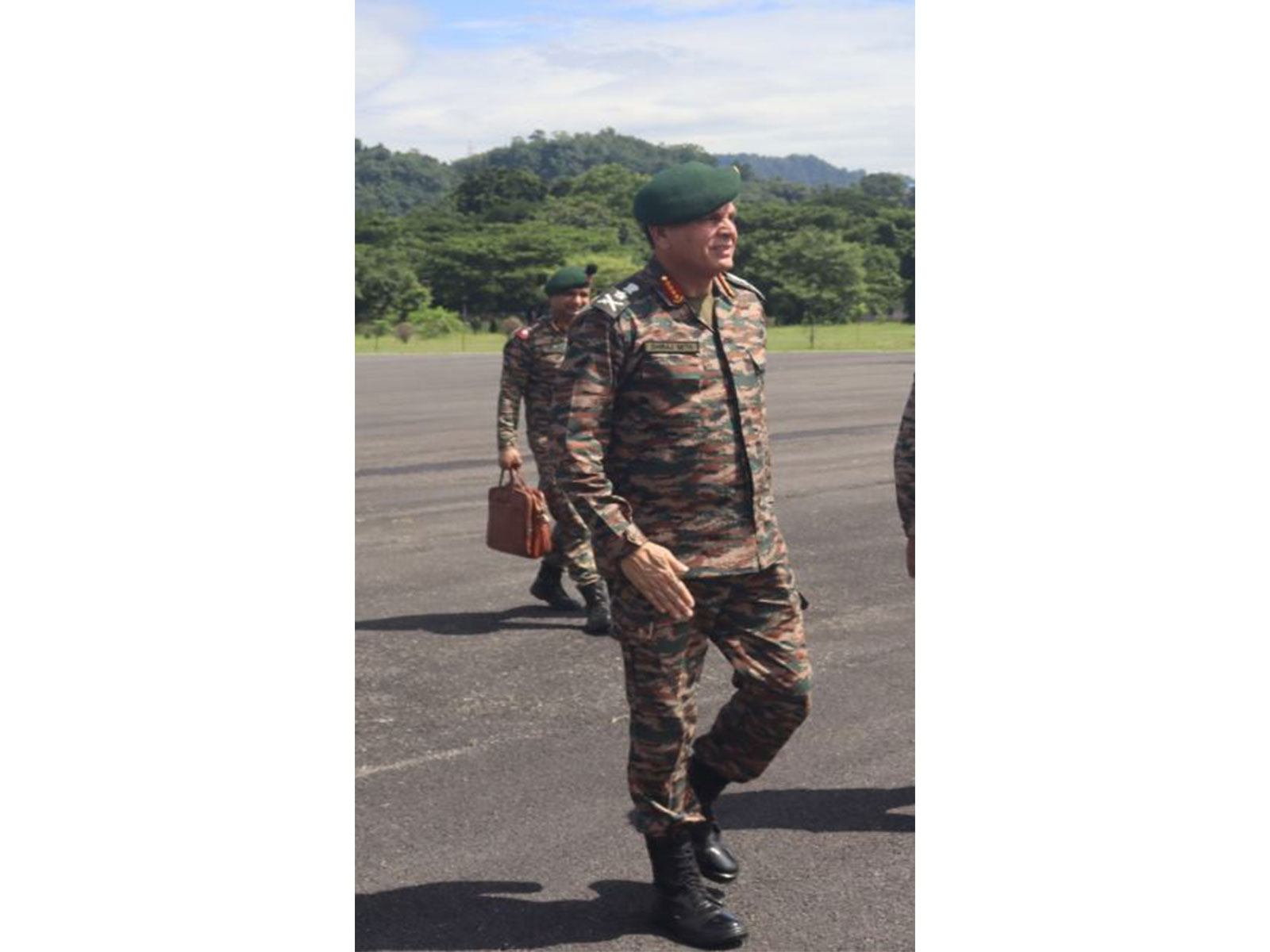
New Delhi [India], September 27 (ANI): Chief of the Army Staff (COAS) General Dhiraj Seth on Sunday emphasised the critical need for self-reliance in defence production and said that land will always remain the “only tangible” factor of success since victory is measured in territorial terms.
During his address at the NDTV Defence Summit 2026, the COAS underscored the strategic imperative behind self-sufficiency. He also said that technology was shortening the battles, but not war since conflict timelines are becoming “increasingly indefinite”.
“Atmanirbharata must be about ensuring that we have the capability to endure without being constrained by what others can or cannot provide. That gives us a good reason to take a hard look at the very pathways of our indigenous capability,” General Seth said.
“Aatmanirbharta must mean design in India, develop in India, manufacture in India, sustain in India, upgrade in India, and also make for the world,” he added.
Addressing the evolving nature of modern warfare, General Seth noted that digital disinformation and global social media narratives often obscure realities on the ground.
“We see salvo after salvo in today’s social media covering warfare across the globe, where information narratives and warfare are being fired to fog the real battle picture, creating uncertainty and confusion,” he said.
Despite modern technological disruptions, the Army Chief maintained that physical territorial control remains the ultimate measure of military triumph and stated that land will always be the one and only tangible and useful factor of success.
“However, I strongly feel, through all this clutter, one reality that does not change: land will always be the one and only tangible and useful factor of success. Victory was, is, and will always be measured in territorial terms, and that territory will be occupied, secured, and defended only by the force,” he said.
Highlighting that every technological advancement must directly empower frontline troops, he added, “Every capability must address one question: how does it help that soldier who puts his boots or tracks on the ground? That is why I would place him at the heart of the capability development that you’re looking at.”
Analysing contemporary conflict timelines, General Seth observed that modern wars are characterised by strategic pauses rather than swift conclusions.
“Conflict timelines are becoming increasingly indefinite, with intermittent spikes of intense fighting. Technology is certainly shortening the battles, but it is not necessarily shortening the war. These millennium wars can best be described as wars with pause. Pause, in fact, is becoming a part of military strategy, with the pause representing not the domination of conflict but merely a change in its intensity and manifestation.”
He further cautioned domestic developers about timelines, noting, “The challenge is not just to reduce dependencies on others but also to ensure that what we develop indigenously does not become outdated by the time it is dumped.”
“I would like to term it as indigenous obsolescence or that kind of a trap that can get created,” General Dhiraj Seth said. (ANI)
Related reading