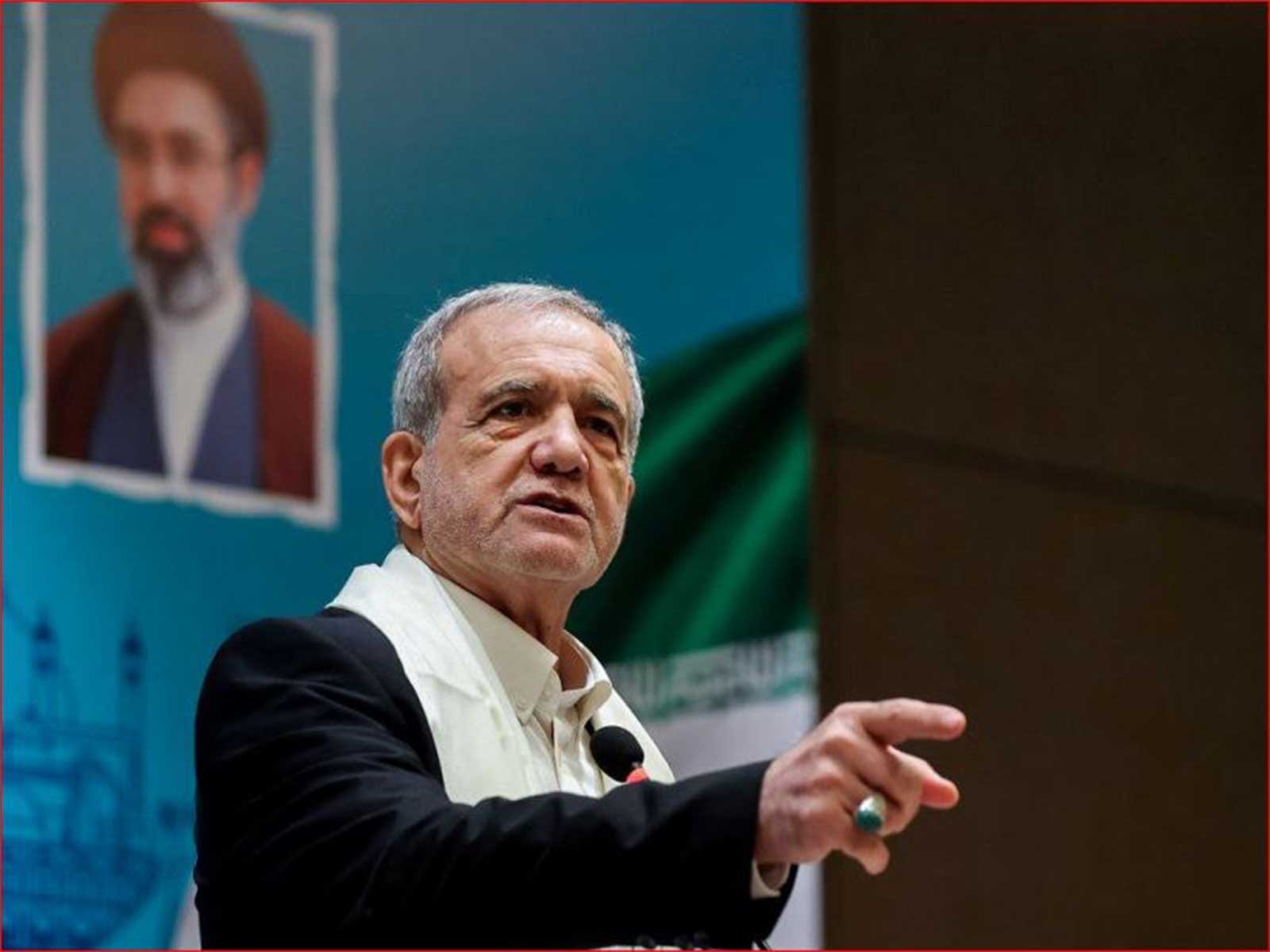
Tehran, September 27 (ANI): Iranian President Masoud Pezeshkian said that Iran will remain resolute and not retreat in the face of the United States and Israel, as US President Donald Trump rejected Iran’s proposal for a seven-day ceasefire and reopening of the Strait of Hormuz.
Addressing people who had gathered at the airport to welcome him after his return from the United Nations General Assembly in New York, Pezeshkian said, “We stand firm with strength, we are at the service of our people, we will stand until our last breath, and we promise that as long as we have life in our bodies, we will be honest servants to the people; you have put us to shame, I do not consider myself worthy of your presence, I am your servant.”
In another assertion, this time from the Iranian Military, the Senior Spokesperson of the Iranian Armed Forces, Brigadier General Abolfazl Shekarchi said in an interview with Iranian state television that Iran had resolved “to have not the slightest retreat in the face of the enemy and to suppress him.”
Shekarchi said that Iran was “the most experienced country in the world in asymmetric warfare” and warned the United States against interfering in the management of the Strait of Hormuz.
“The Americans should not dream of interfering in the management of the Strait of Hormuz, and if they interfere, they will receive a slap from the Iranian Armed Forces; they must leave our region,” he said.
He further warned, “Any ship that passes through the Strait of Hormuz outside the route designated by Iran will not have security.”
General Shekarchi also advised neighbouring Muslim countries, “Get your act together; you’re not getting any warm water from America.”
Earlier, in an interview with Al Jazeera aired on Saturday (local time), the Iranian President said that Iran no longer trusted negotiations with the United States after previous rounds of talks were followed by “attacks” and sanctions.
“We have no trust in the American side and do not know on what basis an understanding can be reached with it,” Pezeshkian told Al Jazeera.
Pezeshkian and Iranian Foreign Minister Abbas Araghchi had earlier visited the US this week for the United Nations gathering of world leaders and proposed a seven-day roadmap aimed at ending the fighting and reopening the Strait of Hormuz. Under the proposal, Washington is expected to lift its naval blockade of Iranian ports, waive sanctions on Iranian oil sales, release an estimated USD 12 billion in frozen Iranian assets and observe a ceasefire covering the region, including Lebanon and Yemen.
In return, Iran would reopen the Strait of Hormuz, while talks with the US on a final agreement concerning Iran’s nuclear programme would begin on the seventh day. Araghchi had said the initial steps would take four to five days and the waterway would reopen on the sixth day.
Separately, Pezeshkian told Al Jazeera on Saturday (local time) that Qatar and Pakistan were conveying Iran’s messages to Washington. He said the negotiations were based on a Memorandum of Understanding (MoU) reached by the two sides in June and that the US needed to clarify its position on the agreement, which had lapsed.
Pezeshkian also denied that Iran was responsible for blocking the Strait of Hormuz, saying the US “closed the routes before us”. He described the closure as “a natural response when routes are cut off to Iran”.
He said the crisis could be resolved through negotiations rather than force and that the waterway would reopen to commercial shipping if talks resulted in an end to the war.
Pezeshkian called the US the “aggressor” in the conflict and said Iran “has not attacked any country in 200 years”. He said the US and Israel had dragged regional countries into the war believing that the Iranian system “would collapse within days”.
US President Trump had rejected Iran’s proposal for a seven-day ceasefire.
Speaking to reporters on Saturday, Trump forcefully stated, “I reject this agreement. They want an agreement to be made under which the Strait of Hormuz is immediately opened, because they are severely failing,” he added.
“They want an agreement to be made under which the Strait of Hormuz is immediately opened, because they are severely failing,” he added.
With the Iranians holding firm in the face of Trump’s threat of annihilation and him rejection of the peace overture the heat in West Asia is likely to get more intense once the US mid-term elections get done and dusted. (ANI)
Related reading