Mumbai (Maharashtra) [India], September 26 (ANI): Hospitals, residential schools, a science college and an upcoming university: the institutions that have turned Dharampur from a place people left for care and education into a place people come to
On a night this May, a 40-year-old man from a village in Vansda taluka was rushed to the emergency department of a hospital in Dharampur, in Gujarat’s Valsad district, with a severe brain haemorrhage. Despite the ICU team’s efforts, he was declared brain dead. His family chose to donate his organs.
Within hours, his heart was on its way through a green corridor to Daman airport and then flown to Ahmedabad. His kidneys went by ambulance to a kidney institute in Ahmedabad. Three patients received a new lease of life. It was the first organ donation facilitated by Shrimad Rajchandra Hospital and Research Centre, and a first for the region. Not long ago, the idea that a charitable hospital in South Gujarat’s tribal belt could coordinate something like this would have seemed far-fetched.
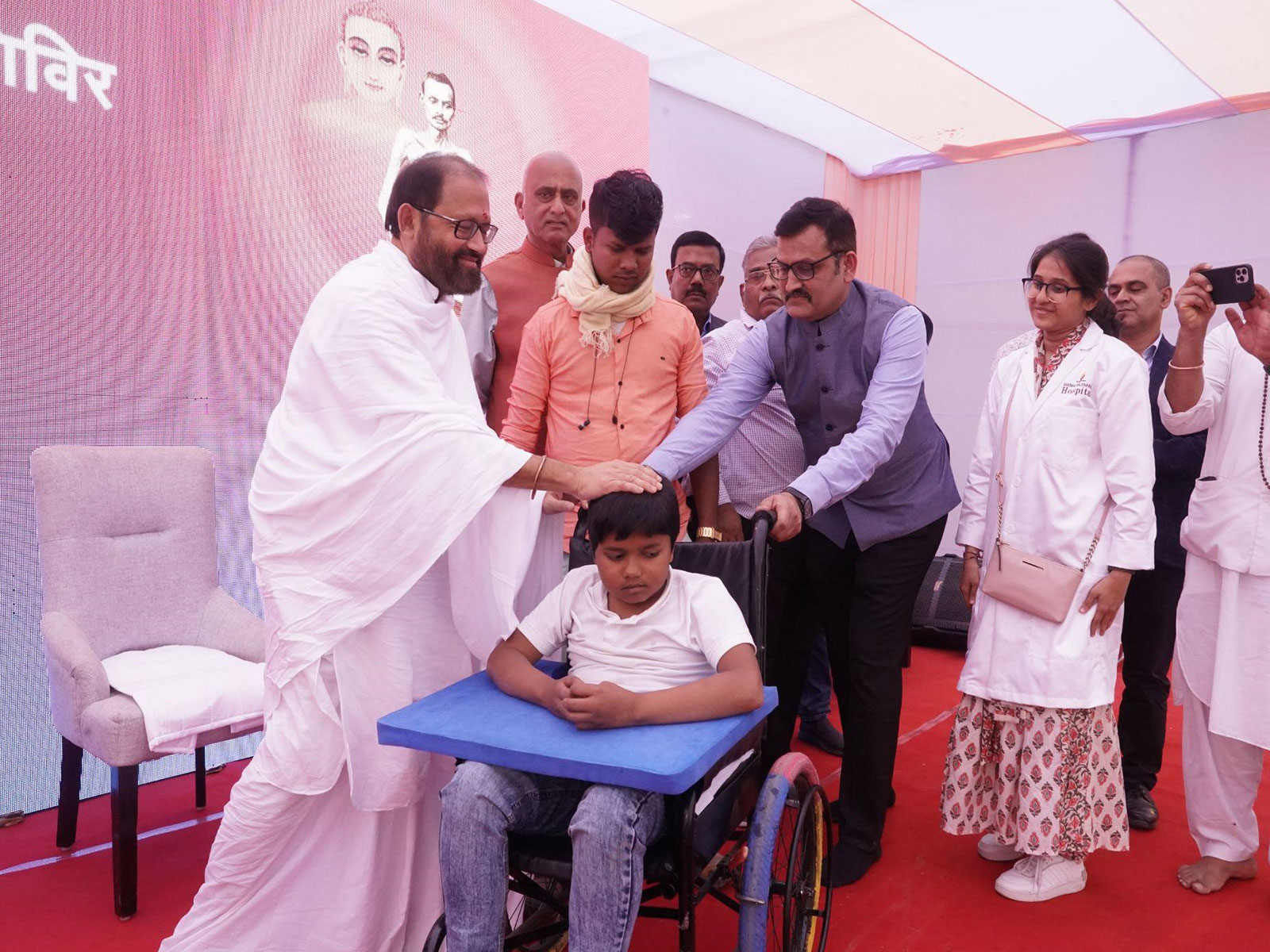
The hospital is one of several institutions built in and around Dharampur by Shrimad Rajchandra Mission Dharampur (SRMD), founded by Gurudevshri Rakeshji, whose 60th birth anniversary is being celebrated this week.
The rural population of South Gujarat is among the poorest in the country, and Dharampur sits at the heart of one of its major tribal belts. Access to healthcare and education has long been limited, and for many families, a serious illness or a child’s ambition to study further meant an expensive, exhausting journey out of the district. The Mission’s response has been to build enduring institutions rather than offer one-off relief, covering health, schooling, higher education, skills, livelihoods and animal welfare.
At the centre of this medical transformation is the Shrimad Rajchandra Hospital Network, which has grown to 2,000 beds on the occasion of Gurudevshri’s 60th year. The flagship multi-speciality hospital in Dharampur serves more than 500 villages, providing care free or at highly subsidised rates. It is the only hospital in the area performing paediatric open-heart surgeries, its neonatal intensive care unit has treated thousands of newborns, and its District Early Intervention Centre has supported over 1.1 million children who are dealing with developmental delays and neurological conditions.
Now, the healthcare infrastructure is taking another major leap. The Mission has officially announced the Shrimad Rajchandra Sarvamangal Cancer Hospital in Dharampur, designed to provide comprehensive cancer care to over 11 lakh tribals with 10,000 chemotherapy sessions, 1,000 surgeries annually, and state-of-the-art Da Vinci robotic surgical capabilities. Alongside it, the Shrimad Rajchandra Kidney and Eye Hospital will open its doors to bring regular dialysis, transplants, and advanced ophthalmology to the region. These facilities are linked to a national network of Love and Care Centres serving as primary emergency mini-hospitals across rural pockets.
In education, the Mission has built something rare in a rural district: a complete ladder from primary school to university. It begins with Shrimad Rajchandra Vidyavihar, a residential school for tribal children from remote hamlets. Shrimad Rajchandra Gurukul provides secondary and higher secondary education, and is launching a new campus for 700 students alongside the Shrimad Rajchandra Chhaatralay hostel accommodating over 200 youths.
The next step is Shrimad Rajchandra Vidyapeeth, a modern science college that was the first science college established across 238 villages, giving tribal youth a chance at tertiary education without leaving home. The final milestone, Shrimad Rajchandra Sarvamangal University, is currently under construction to bring multidisciplinary higher education and research directly to the rural landscape. Beyond formal degrees, the Shrimad Rajchandra Skill Development Centre offers tribal youth vocational training free of charge.
Economic empowerment is closely tied to these educational gains. The Shrimad Rajchandra Centre of Excellence for Women provides training and employment through Raj Uphaar, an initiative whose locally produced handcrafted products are now exported to 26 countries and distributed across 750 stores. To replicate this success, 10 new satellite centres have been established across rural India, reaching from Waada to Darbhanga, and Chengalpattu to Purulia.
Care in Dharampur extends equally to animals. Shrimad Rajchandra Jivamaitridham operates a 44-acre campus nursing over 5,000 animals at a time, and features the first private-sector blood bank for animals in the country. This model is supported across India by 10 Shrimad Rajchandra Animal Care Centres, which cater to more than 200,000 animals each year.
All of this traces back to Pujya Gurudevshri Rakeshji, who was born in Mumbai on September 26, 1966, earned a doctorate in philosophy from the University of Mumbai, founded the Mission in 1994, and established the Dharampur Ashram in 2001. His guiding philosophy, to realise one’s true self and serve others selflessly, treats service and inner realization as inseparable. As devotees from 214 cities and 24 countries gather at Mumbai’s Jio World Convention Centre for ‘Aho Gurudev’, the reality being honoured is tangible in the tribal hills of South Gujarat: an enduring institutional network that continues to transform lives every day. (ANI)
Related reading