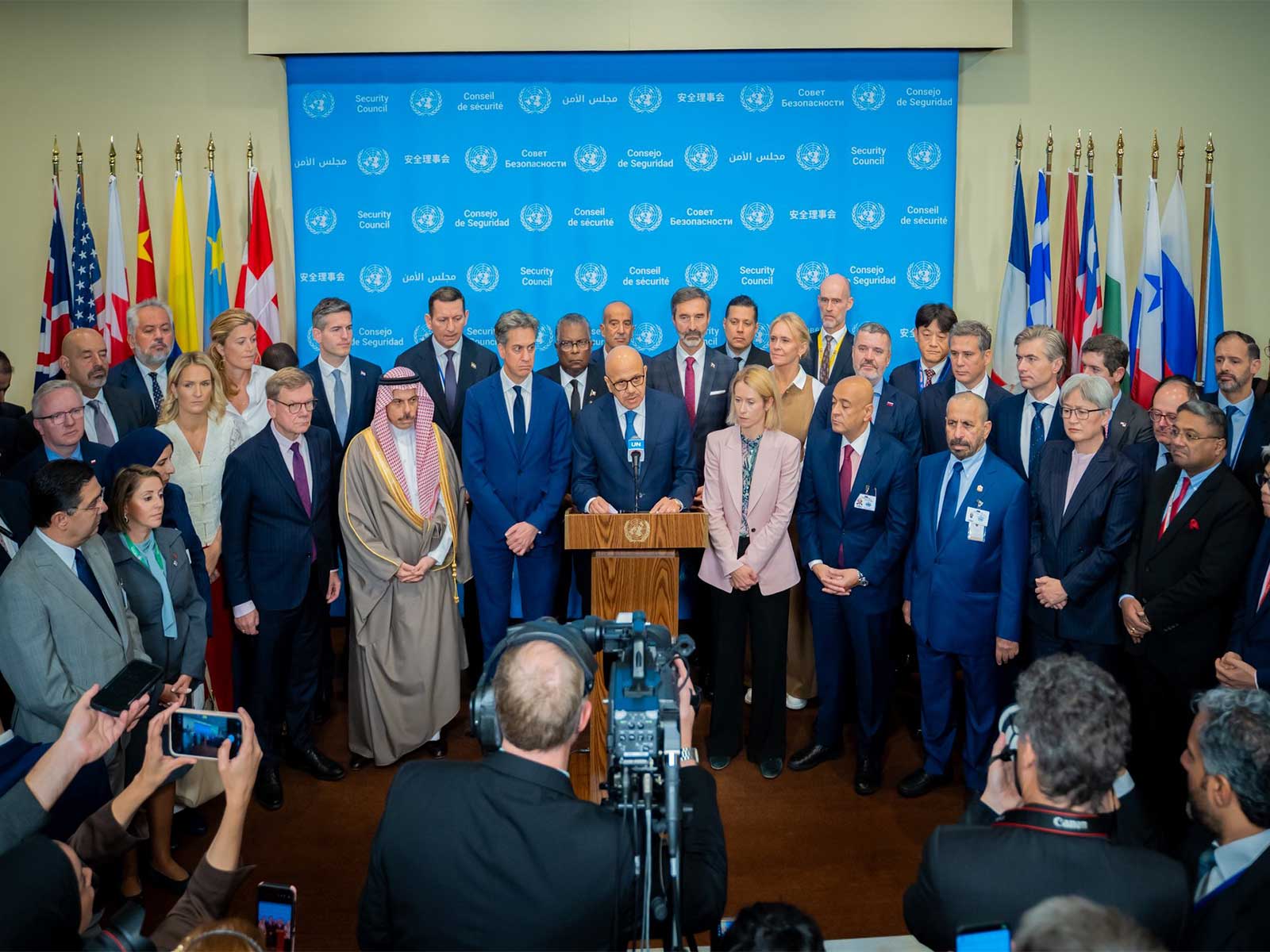
New York [US], September 25 (ANI): Bahrain has led a group of 80 United Nations member states in calling for the urgent and complete reopening of the Strait of Hormuz, with the countries demanding safe, secure and unimpeded passage for vessels through the strategic waterway amid continuing tensions in West Asia.
Bahrain’s Foreign Minister Abdul Latif Al-Zayani made the appeal during a media briefing organised by a group of countries at the UN headquarters in New York on the sidelines of the 81st United Nations General Assembly (UNGA), where participating states expressed condemnation of Iran’s attacks in the region and what they described as disruption to international trade and threats to energy security.
According to a statement issued by the Bahrain Ministry of Foreign Affairs, Al-Zayani also called for the full implementation of UN Security Council Resolution 2817, which was adopted in March and condemned attacks by Iran against Gulf countries and Jordan, as well as actions or threats aimed at closing or obstructing international navigation through the Strait of Hormuz.
The Bahraini Foreign Minister said the situation remained serious and had deteriorated further since an earlier joint press statement on the issue.
“We are meeting again, five months after our last press statement on this same issue, and the threat we face is still very real and is even getting worse,” he said, as per the Foreign Ministry.
Al-Zayani referred to an attack on a ship off the coast of Oman that resulted in the death of an Indian national, as well as an earlier attack involving six ballistic missiles launched towards Saudi Arabia by Houthi forces.
“The Foreign Minister expressed his sincere condolences to the Republic of India, to the family of the victim, and to all those who have lost innocent lives as a result of this ongoing threat, reiterating full solidarity with the Kingdom of Saudi Arabia in the face of these attacks,” the statement read.
Al-Zayani subsequently read out a joint statement on behalf of the 80 participating UN member states.
According to the Bahrain Foreign Ministry, the statement reaffirmed support for Resolution 2817 and condemned what the signatories described as Iran’s continuing attacks against neighbouring countries, disruption of international trade and threats to energy security and the global economy.
The countries also said that actions affecting the Strait of Hormuz constituted a threat to international security and freedom of navigation.
“The countries that adopted the statement called for the urgent and complete reopening of the Strait of Hormuz, and for ensuring the safe, secure and unhindered passage of ships, without imposing transit fees, conditions or any illegal burdens, in accordance with international law, as reflected in the United Nations Convention on the Law of the Sea, and in a manner that prevents further disruption to global trade,” the Bahrain statement said.
The joint statement also raised concerns over the Houthis’ renewed hostilities in Yemen and attacks against Saudi Arabia, as well as attacks in the Red Sea.
The participating countries warned that further Houthi advances towards the Bab al-Mandab Strait could add to risks facing international navigation, maritime security and global trade.
“The statement indicated that strangling global trade arteries and putting pressure on the global food system will lead to higher prices, increased hunger, reduced crop yields, and increased suffering, especially among the most vulnerable groups around the world,” the Bahrain Foreign Ministry said.
The renewed call from Bahrain and the 80 participating countries comes as Tehran has presented its own diplomatic proposal for ending the conflict and addressing the status of the strategic waterway.
Iranian Foreign Minister Seyed Abbas Araghchi, according to a report by the New York Times, has proposed a seven-day framework under which the Strait of Hormuz could be reopened after certain conditions were met, followed by broader negotiations over Iran’s nuclear programme.
“We have introduced a plan to the United States through the intermediators that if certain conditions are met, the Strait of Hormuz would be open on the end of the seventh day and talks would restart,” Araghchi was quoted as saying.
“It would be better, if a deal was reached before the U.S. midterm elections,” he added.
The Iranian Foreign Minister has also maintained that Tehran has conveyed what it considers reasonable conditions to Washington for the resumption of diplomacy.
Iran has disputed the characterisation of its actions as the cause of insecurity in the Strait and has instead blamed the United States and Israel for the escalation.
In an interview with Fox News, Iranian President Masoud Pezeshkian said Tehran remained prepared to pursue an agreement with Washington and attributed the breakdown of the earlier understanding to US military action. Pezeshkian also said Iran was willing to permit international verification of its nuclear programme.
“We have no problems. We did reach an agreement with your president,” Pezeshkian said, referring to US President Donald Trump.
“That agreement was signed, and based on that, we are willing and still wish to move forward,” he added.
“And the framework was agreed upon. We had not closed the Strait of Hormuz; it was open, without any legal justification or framework. They attacked us. They assassinated and martyred our esteemed supreme leader, our scientists are military commanders and government,” the Iranian President further stated.
Pezeshkian told Fox News that Tehran remained willing to reach an agreement but argued that Washington would have to decide whether it wanted to end the conflict.
The latest joint call therefore places the reopening of Hormuz and unrestricted maritime passage at the centre of the diplomatic efforts, while Iran’s separate proposal indicates that Tehran is linking the reopening of the waterway to broader negotiations over the conflict and its nuclear programme. (ANI)
Related reading