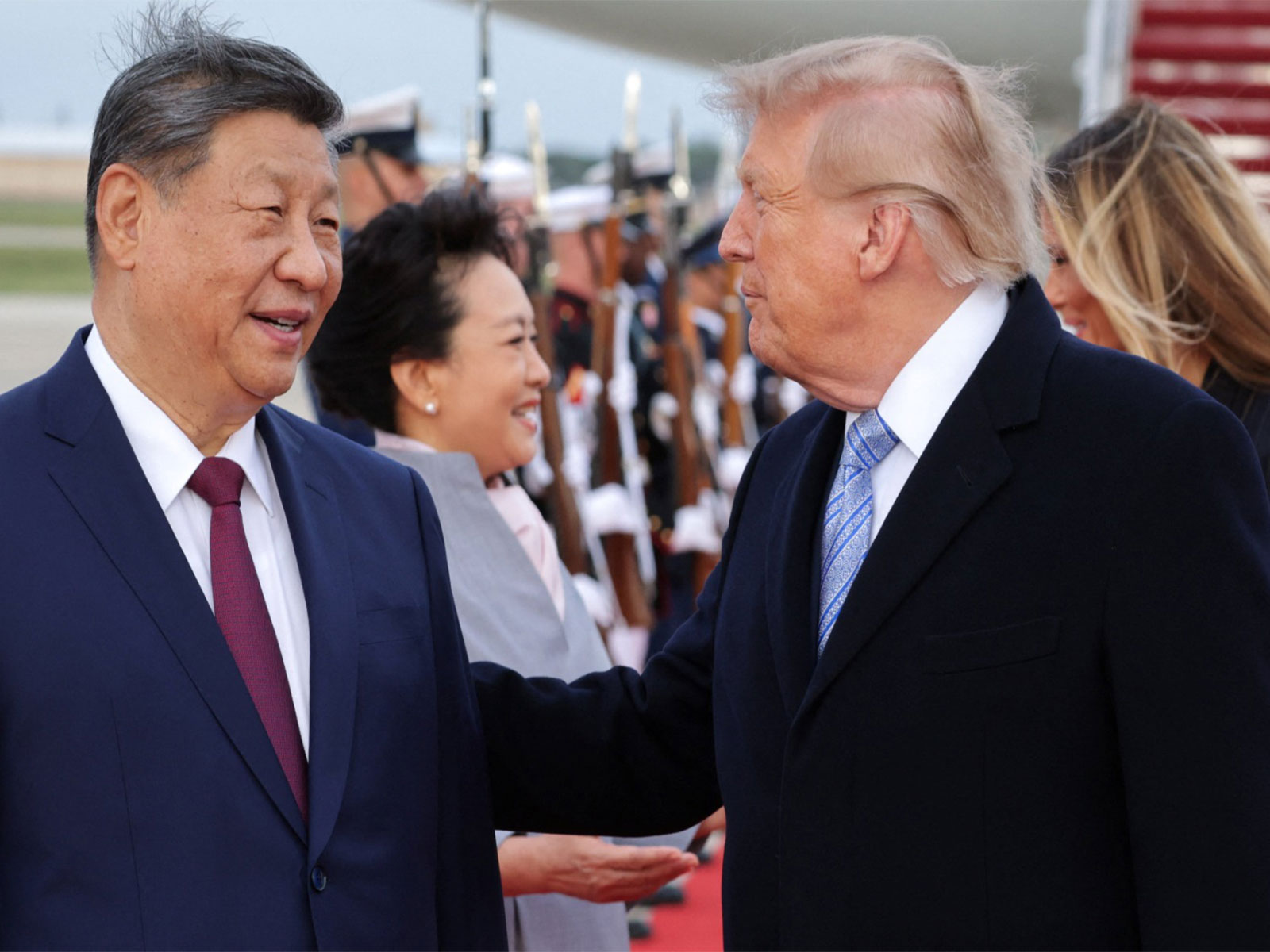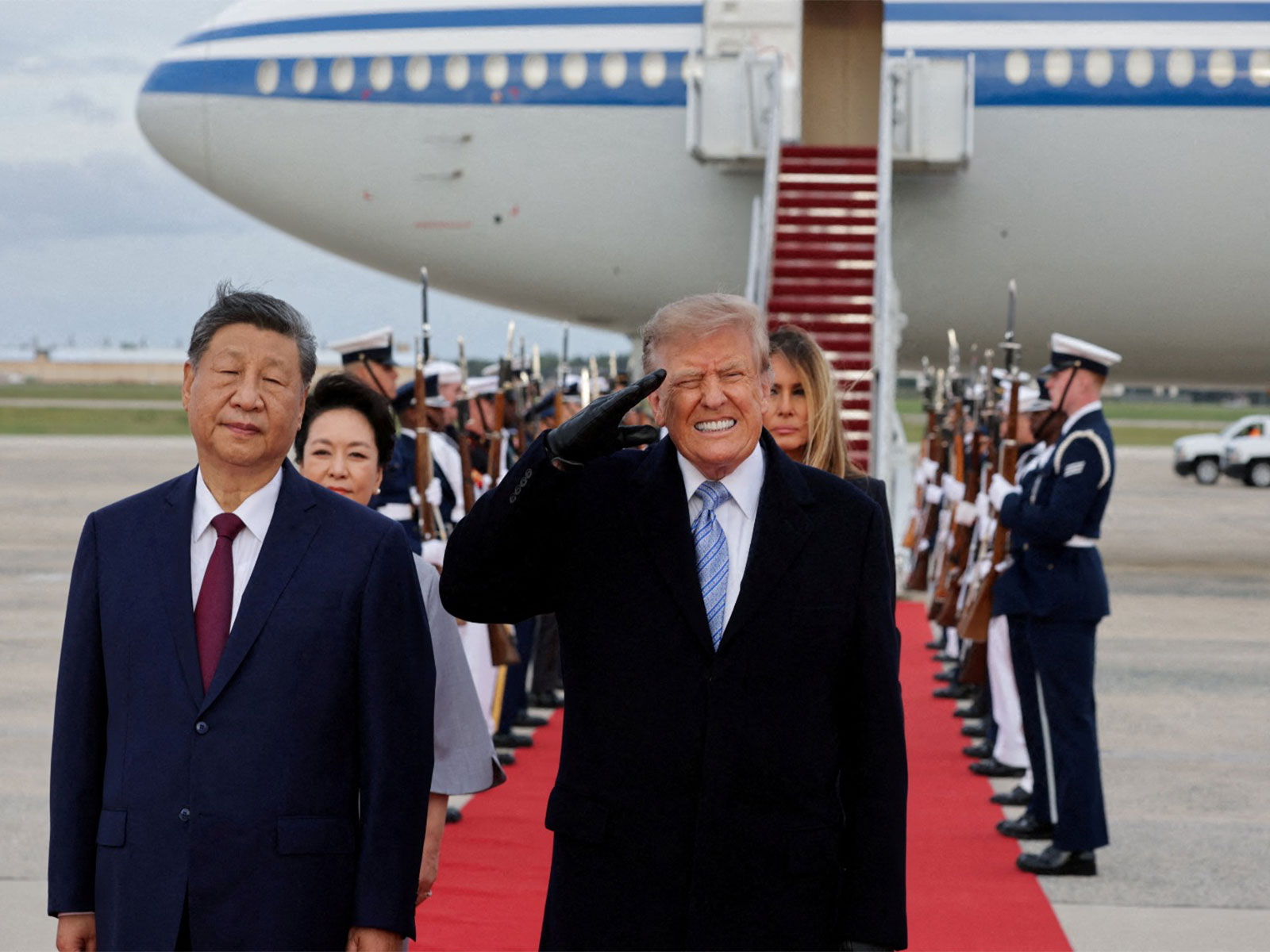
Washington, DC [US], September 24 (ANI): US President Donald Trump hosted a grand welcome for Chinese President Xi Jinping, yet beneath the surface fanfare, an investigation published by The Wall Street Journal has revealed how Beijing has maintained military-industrial support for Tehran throughout the ongoing war against the United States.
While Beijing heavily publicised its diplomatic outreach, highlighting dozens of foreign ministry calls and personal proposals from Xi aimed at halting hostilities when a temporary truce was brokered this summer, customs documentation evaluated by the Journal indicates that a Chinese cargo aircraft touched down in Tehran on the exact day the ceasefire was signed. The manifest reportedly contained electronic hardware destined for Iran’s Ministry of Defence, with analysts noting certain components suited for drone architecture and missile navigation systems.
The arrival was far from an isolated occurrence. Trade tracking reviewed by the Journal uncovered approximately 1,300 shipments involving dual-use hardware dispatched from China to Iranian defence entities leading up to the end of June. Just two days following the truce-day delivery, more than a dozen supplementary consignments arrived carrying parts valued at upwards of USD 6 million applicable to unmanned aerial vehicles.
With Xi currently visiting Washington for bilateral discussions covering commerce, artificial intelligence, and Taiwan, Beijing’s entanglement with Tehran has surfaced as an awkward complication overshadowed by the official summit agenda.
Data compiled from Iranian customs logs, American officials, and individuals close to the transactions outline a steadily expanding aerial logistics bridge between the two nations. Records spanning January 2025 through June 2026 demonstrate thousands of consignments routed to Iranian military agencies and commercial entities, encompassing global positioning tracking gear, electric motors, and aircraft powerplant elements, frequently invoking Article 119 of Iranian customs statutes, which grants tariff exemptions for defence procurement.
This transactional flow accelerated after the US Navy clamped down on Iranian maritime commerce. According to FlightRadar24 data cited by the Journal, blacklisted Iranian carrier Mahan Air ramped up its flight frequencies linking Beijing, Shanghai, and Guangzhou to Tehran, surging from four weekly rotations in early March to approximately 27 per week by late April.
By the opening week of September, Mahan Air had executed 39 flights along these routes, roughly double pre-war volumes, with monitoring indicating many operated primarily as cargo carriers rather than passenger services.
Trade researchers tracking regional flows informed the Journal that numerous Chinese suppliers involved are lesser-known commercial entities interfacing directly with Iranian buyers. Kate Koren, deputy director of the economics programme at the Center for Strategic and International Studies, told the Journal that specific traded components align with those utilised in Iranian Shahed drones, noting that a forthcoming CSIS assessment identified Chinese firms openly marketing sensitive electronics throughout the year.
The evaluation further indicated that Chinese enterprises supplied chemical inputs such as sodium perchlorate, a necessary precursor for solid ballistic missile propellants. Consequently, Washington has penalised multiple Chinese and Hong Kong-based entities over alleged procurement networks attempting to acquire shoulder-fired missile systems for Iran via intermediaries like Belarus.
The bilateral dynamic operates as a symbiotic partnership. China has consolidated its position as the principal consumer of Iranian petroleum, supplying Tehran with vital fiscal inflows despite sweeping American sanctions.
Financial networks and front companies based in China have consistently aided Iran in bypassing restrictions and channelling capital through Beijing’s banking architecture. Following the expansion of the Trump administration’s 2018 maximum pressure campaign, both nations formalised their alignment through a 25-year strategic cooperation pact in 2021.
US Senate Foreign Relations Committee statements drawing on Treasury metrics indicate that China currently absorbs roughly 90 per cent of Iranian crude exports.
Although Washington has levied hundreds of penalties against participating entities since the war broke out, the executive branch has exercised caution to avoid a direct diplomatic collision with Beijing, mindful of past tariff standoffs that demonstrated China’s retaliatory leverage.
Insiders familiar with internal White House deliberations disclosed to the Journal that maintaining stable rapport with Xi remained a paramount priority for Trump prior to the summit, leading certain high-ranking officials to downplay Beijing’s material support for Tehran.
This posture generated internal friction across Washington departments. US Secretary of War Pete Hegseth openly blamed China for sustaining the Iranian war effort, a perspective dismissed by Trump, who stated, “I trust them.”
According to US officials cited by the Journal, Tehran utilised satellite intelligence procured from Chinese commercial entities immediately preceding and following a July 17 strike that resulted in the deaths of three American service members.
The administration had previously penalised three Chinese satellite imagery providers in May over intelligence sharing that facilitated targeting against US positions.
The developments prompted intensified domestic pressure for a firmer stance, culminating in late August when Trump and Treasury Secretary Scott Bessent unveiled “Operation Economic Outcast” to dismantle financial networks propping up Tehran.
While the initiative yielded sanctions against a China-owned petroleum tanker and associated facilitators, the administration stopped short of sweeping penalties targeting major Chinese financial institutions.
Meanwhile, maritime tracking via Kpler showed roughly four million barrels of Iranian crude reaching Chinese terminals in the immediate wake of the operation’s launch, alongside the continued operation of Mahan Air cargo routes. (ANI)
Related reading