By Sahil Pandey
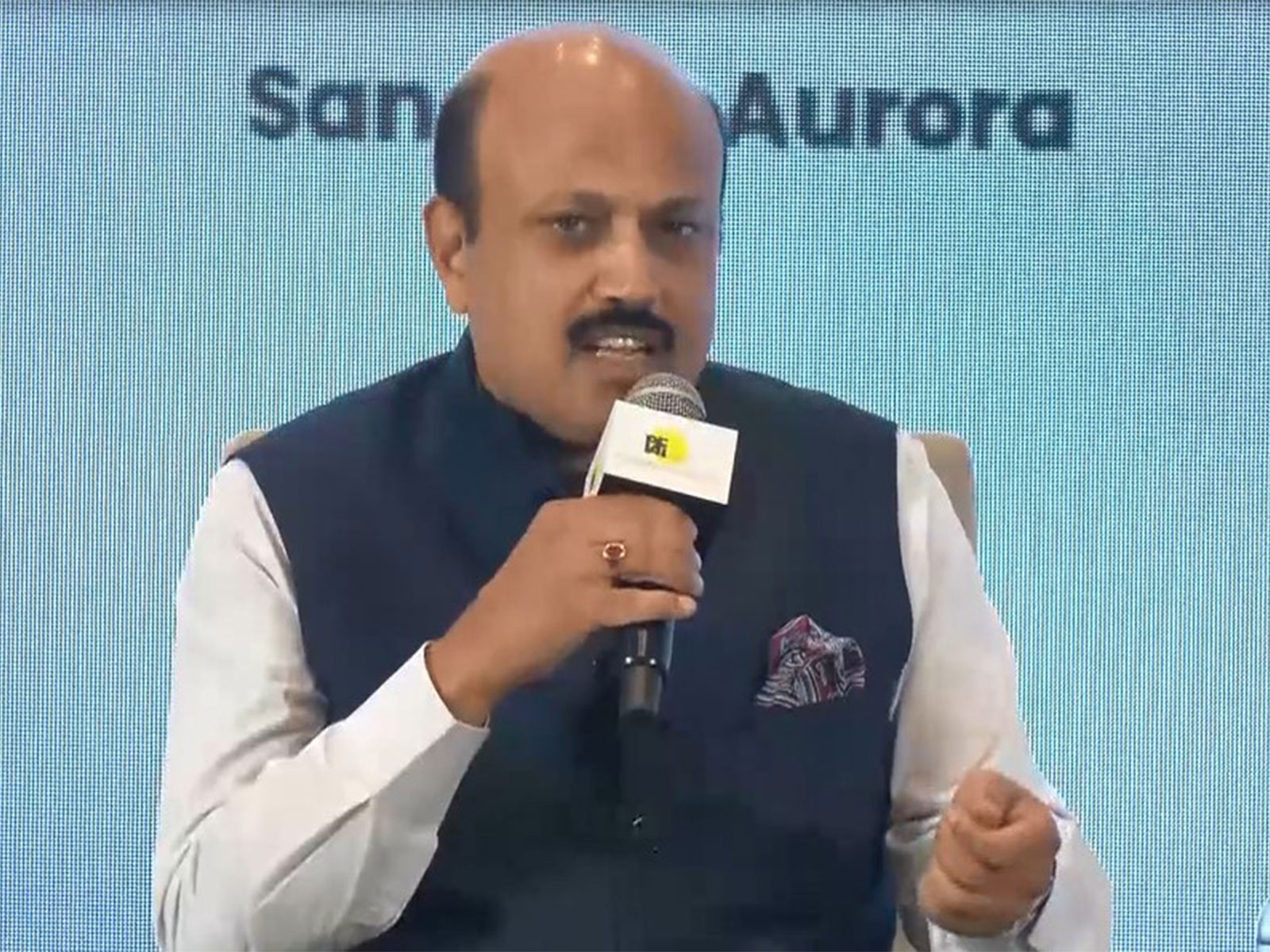
New Delhi [India], September 24 (ANI): India’s expanding network of free trade agreements (FTAs) can help de-risk export supply chains by enabling Indian exporters to diversify across multiple markets, while predictable tariffs and processes can make the country more attractive for global supply-chain investments, Commerce Secretary Rajesh Agrawal said on Thursday.
Agrawal said the changing global trade environment, including geopolitical disruptions and lessons from the COVID-19 pandemic, has made resilience and diversification increasingly important alongside the traditional consideration of comparative advantage.
“Exports, because they are looking at a market which is distant from you, always look risky. But when you diversify your export supply chain, your basket is wide enough, I think you are de-risking,” Agrawal said.
He said FTAs create an environment in which Indian exporters can access multiple markets using similar supply chains, thereby reducing dependence on a single geography.
“If I am an exporter and I am reaching into a geography which is in ASEAN, I can also now go to Australia, and now with New Zealand FTA I can go to New Zealand also, because it’s the same region, same supply chain, but now I have that duty arbitrage, which helps me take risk,” he said.
“Since I am reaching the same product in ten markets, I am de-risking. So that is one way you can de-risk your exports, and that’s important for exports to grow sustainably,” Agrawal added.
On attracting investment, the Commerce Secretary said predictability was a key requirement for companies operating global value chains.
“Investments need predictability. And investments today, because you are living in the world of global value chains, need predictability in terms of flow of goods also,” he said.
Agrawal said investors need clarity on tariffs and processes when they import inputs from one geography, add value in India and subsequently export to another market.
“I think the FTAs provide that predictability,” he said, adding that India’s modern FTAs were being designed to provide greater comfort to long-term investors seeking to integrate India into global supply chains.
“The new FTAs, the modern FTAs that we have seen over the last five, six years, all of these are designed in a manner that gives comfort to long-term investors to invest in a global supply chain in India,” Agrawal said.
“From India you can invest in a global supply chain, yet you can access maybe a 16 trillion market across the world, sitting back in India with maybe a much rising market back home. That’s the strength that it provides,” he added.
On export competitiveness, Agrawal cited the India-UK FTA and said duty elimination could provide a significant advantage to Indian textile and apparel exporters.
“India is also facing a 12 per cent duty in the UK market. With the FTA now coming into force, textiles and apparel can go duty-free. That means the 12 per cent tariff advantage comes into play, which gives Indian exporters a significant benefit. That is one way to make your products globally competitive,” he said.
However, he stressed that tariff advantages alone would not be sufficient for sustained export growth and that reducing the cost of doing business remained an ongoing priority.
“We also need to reduce the cost of doing business or cost of doing exports,” Agrawal said.
He said the Commerce Department was moving towards making trade-related services faceless, with most services increasingly available online without physical interfaces.
“We are also trying to reduce the timeline in all services that we provide, because we believe time is also cost. If I can reduce a day in my approval, I can save some cost for my exporter,” he said.
Agrawal said the government was working wherever it could improve the government-exporter interface and deliver better outcomes for exporters.
“Cost competitiveness, ease of doing business, is something which will always be an ongoing agenda. This has not got over for any country in the world. This will not get over for any country in the world,” he said.
On state-wise export data, Agrawal said the government was working to make trade statistics more granular and useful for states and industry.
He explained that existing trade statistics are largely collected at the points from where goods are shipped, creating difficulties in identifying the state where a product was actually manufactured.
“Many a time the product may have been manufactured in Punjab. It has been exported through Gujarat. So the data will show that the exports have taken place from Gujarat,” he said.
Citing basmati rice, Agrawal said the crop is grown across Punjab, Haryana and western Uttar Pradesh, while major exports may take place through Gujarat and Maharashtra.
“So how do you collect that data and how do you disseminate? So we are trying now to go granular, collect data in a state-specific manner, clean it up as much as we can, and produce state-wise data metrics also,” he said.
Agrawal said the government’s Intelligence and Analytics portal already provides data along with analytics, and state-level data would be expanded as the Centre engages more closely with states.
He cautioned that state-wise data would carry disclaimers as much of it would initially be based on declarations by exporters.
“We don’t want it to become a compliance burden or an added burden. We want it on a self-declaration basis,” he said.
He also pointed to the complexity of assigning exports to a particular state when production is spread across multiple states.
“You can have a vehicle which is getting exported from Tamil Nadu, but there might be 50 per cent of its value coming from some other states,” he said.
“There will be some amount of gaps in terms of which state is supporting how much of the export supply chain. But that much we will have to live with, because we don’t want to bring in a rules-of-origin kind of character within our export supply chain,” Agrawal said.
On the broader global trading order, Agrawal said India continued to support multilateral institutions such as the World Trade Organisation (WTO) and a rules-based trading system.
He said geopolitical changes, the COVID-19 pandemic and supply-chain disruptions had altered the global trade environment, making resilience and diversification important factors alongside comparative advantage.
“The world is looking at not only sourcing from the most efficient quarters, but they are also looking at trying to build resilience by multiple sourcing, diversifying, creating the right domestic environment or domestic manufacturing ecosystem,” he said.
Agrawal said comparative advantage would remain at the core of international trade, but several other factors were now influencing trade and investment decisions. (ANI)
Related reading