New Delhi [India], September 23 (ANI): India has categorically nullified the Organisation of Islamic Cooperation’s (OIC) authority to comment on matters internal to the country following references to it in the Joint Communiqué issued by the “so-called” OIC Contact Group on Jammu & Kashmir on the sidelines of the UN General Assembly in New York.
In a sharply worded response, the Ministry of External Affairs strongly rebuked both the 57-member bloc and Islamabad, stating that the continuous endorsement of “politically motivated propaganda” severely undermines the credibility of the organisation.
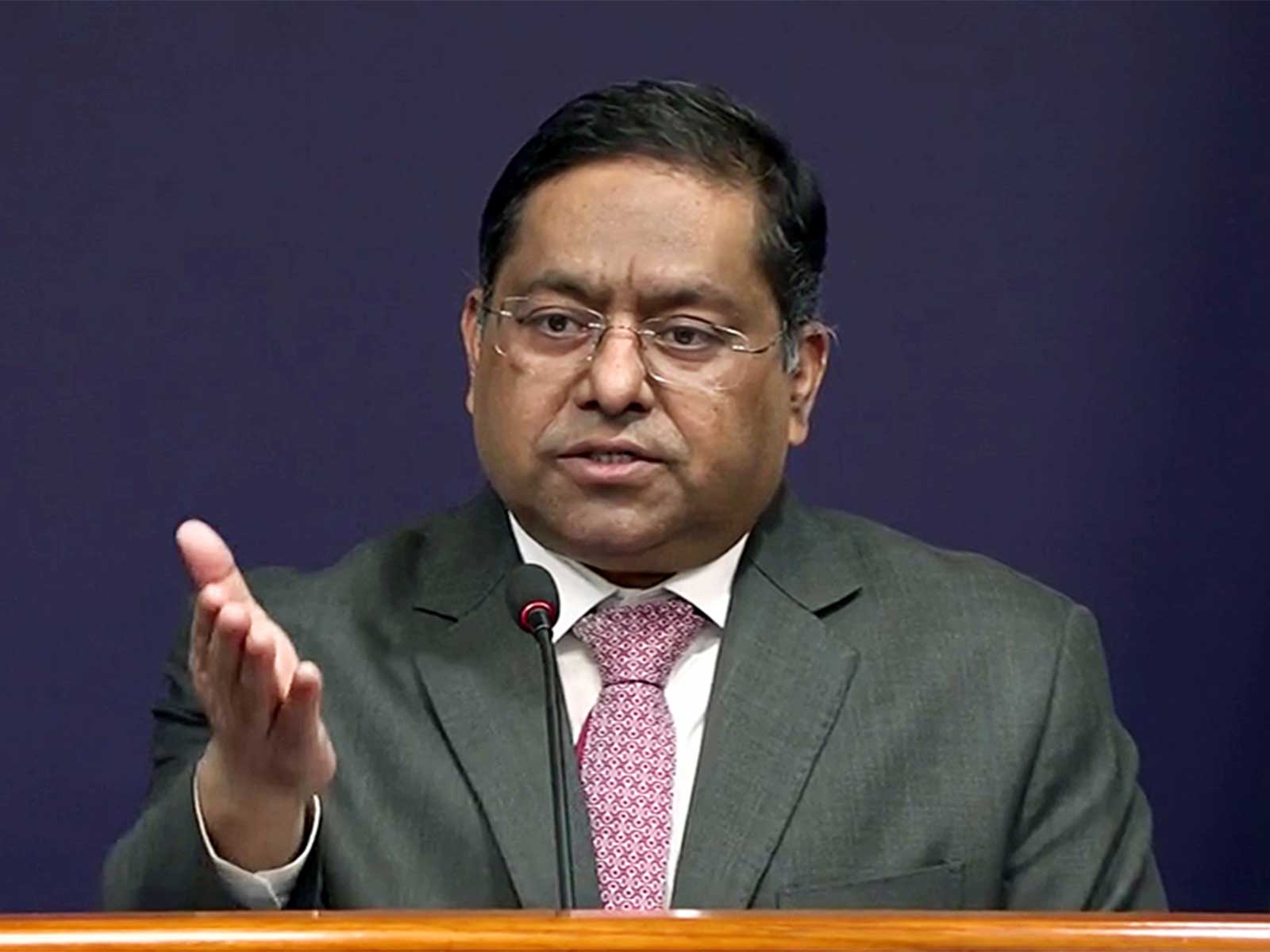
“India categorically rejects the unwarranted and factually incorrect references to India in the Joint Communiqué of the so-called OIC Contact Group on Jammu & Kashmir,” MEA spokesperson Randhir Jaiswal said.
Reiterating New Delhi’s long-standing position on sovereign territorial integrity, the official stressed, “The OIC has no locus standi to pronounce on matters that are strictly internal to India. The entire Union Territories of Jammu & Kashmir and Ladakh are an integral and inalienable part of India, and no amount of repetition of politically motivated propaganda can change this reality.”
The Ministry warned that by echoing such positions, the bloc risks eroding its standing on the world stage, noting that the “repeated endorsement of such motivated narratives only raises serious questions on the credibility of OIC.”
Turning its focus directly to Islamabad’s role in driving the resolutions within the bloc, New Delhi urged the OIC to refrain from letting its platform be utilised for anti-India campaigns and instead address the root cause of instability in the region—cross-border terrorism.
“Instead of offering a platform to Pakistan to peddle its fabricated and motivated propaganda, OIC will be better advised to counsel Pakistan, which has a well-documented record of supporting and sponsoring terrorism, to look inwards and address the continuing threat of terrorism emanating from territories under its control,” the MEA stated.
India has consistently maintained that Jammu and Kashmir and Ladakh are integral parts of the country, dismissing all joint statements and resolutions by the OIC on the dispute as unacceptable interventions in India’s domestic affairs.
The response comes after the OIC Contact Group’s (Pakistan, Azerbaijan, Turkey, Saudi Arabia and Niger) statement, acting as a blatant mouthpiece for Islamabad’s propaganda machine, parroted fabricated narratives while turning a blind eye to cross-border terrorism.
In its biased rhetoric, the grouping hypocritically “expressed solidarity with the government and people of Pakistan” and condemned India’s May 2025 counter-terrorism military operation, which was launched directly in response to the horrific Pakistan-backed terror attack in Pahalgam that claimed 26 innocent lives.
Furthermore, the grouping also claimed a “threat to regional peace”, alleging “Indian leaders’ unwarranted claims and irresponsible statements” about Pakistan-occupied Jammu & Kashmir and Pakistan-occupied Gilgit-Baltistan.
Notably, Pakistan-occupied Jammu and Kashmir (PoJK) faces growing economic and social pressures as rising fuel prices, weak tourism activity and prolonged connectivity restrictions affect residents, businesses and students.
Saad Hameed, a resident of PoJK, said the situation had become increasingly difficult, with government employment and tourism remaining the region’s major sources of jobs.
“The situation is getting worse day by day. There is a lockdown, and inflation is also increasing,” Hameed said, adding that a recent increase in petrol prices had further pushed up the cost of living.
“It has been more than 90 days, and there is still no internet service in PoJK,” Hameed said, adding that disruptions to mobile services had also made it difficult for people to make calls.
The economic pressures have coincided with repeated protests in PoJK since June, with residents raising concerns over prices, electricity costs, education and other basic issues.
The Human Rights Council of Pakistan-occupied Jammu & Kashmir (HRC-PoJK) recently expressed serious concern over what it described as 100 days of continued protest and unrest, particularly in Rawalakot and the districts of Poonch and Sudhnooti.
According to the Council’s post, the prolonged situation has created uncertainty and is having a wider impact across PoJK.
HRC-PoJK said that 100 days of continued unrest should be considered sufficient and warned that further delays in meaningful dialogue could deepen public frustration, mistrust and instability.
HRC-PoJK questioned how much longer people would have to live amid an atmosphere of uncertainty and unrest, while stressing that the time for dialogue is now. (ANI)
Related reading