By Amrashree Mishra
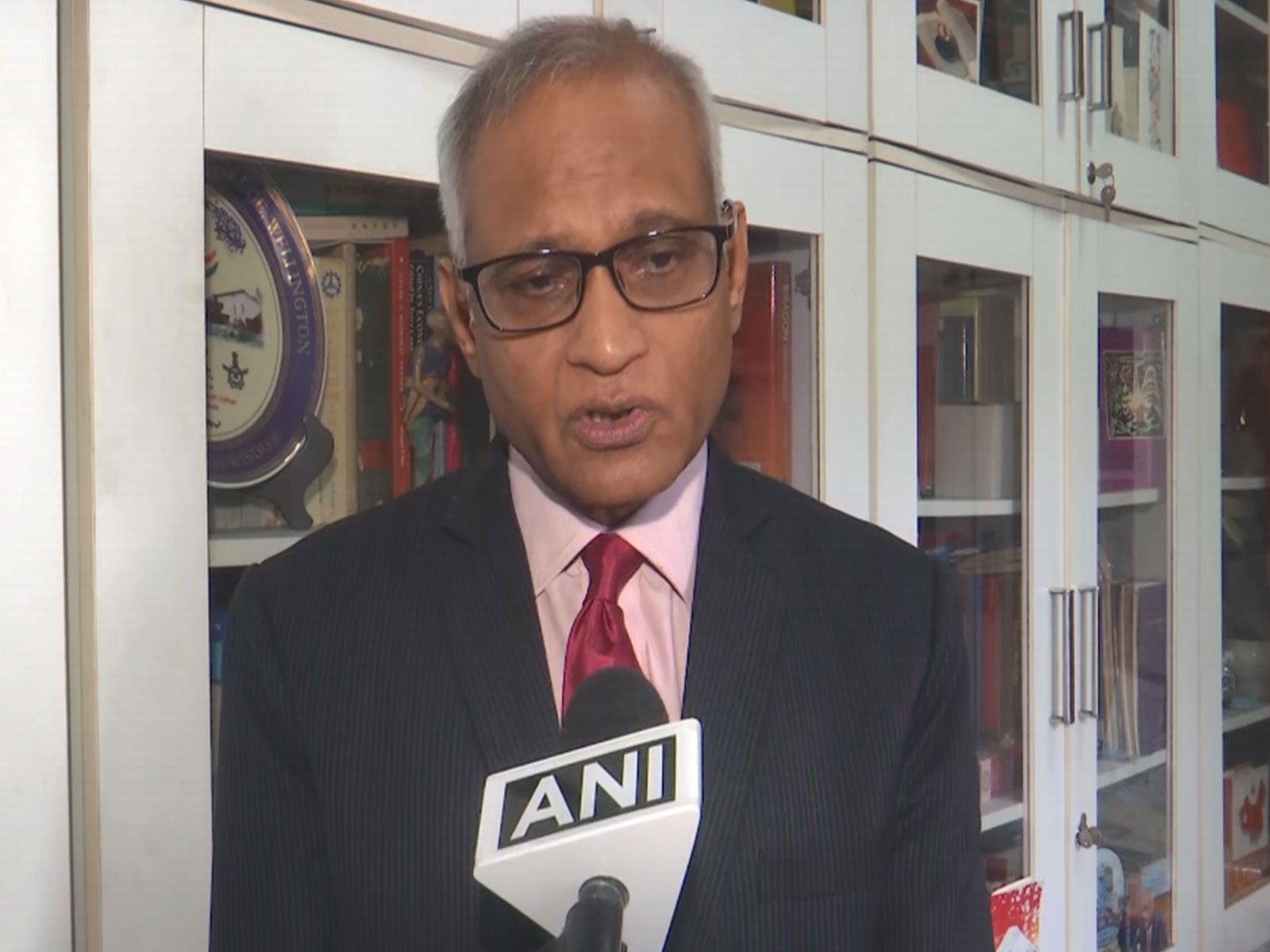
New Delhi [India], September 23 (ANI): Professor of Chinese Studies at Jawaharlal Nehru University (JNU), Srikanth Kondapalli, on Wednesday, said that US President Donald Trump’s backing of the India-Middle East-Europe Economic Corridor (IMEC) comes as an effort to revive trade and stabilise the West Asian situation amid the ongoing conflict, as well as to utilise investments committed by Saudi Arabia and the UAE to Washington, and address growing European interest in the region.
Speaking to ANI, while outlining the rationale behind the renewed push for IMEC, Kondapalli said, “The IMEC project is being talked about because: Number one, they want to resurrect trade and stabilise the West Asian situation. Number two, how to properly utilise the investments that Saudi Arabia and UAE have committed to. Thirdly, there is also the European interest. Increasingly, because India signed an FTA with the European Union, with the Scandinavian [EFTA] countries; India also signed an FTA with Oman, and then there is the I2U2 project.”
On the sidelines of the G20 Leaders’ Summit in New Delhi in 2023, key global powers came together to work on developing a new India-Middle East-Europe Economic Corridor.
The IMEC will comprise two separate corridors, the east corridor connecting India to the Gulf and the northern corridor connecting the Gulf to Europe. The corridor intends to enhance connectivity, increase efficiency, reduce costs, secure regional supply chains, increase trade accessibility, generate jobs and lower greenhouse gas emissions, resulting in a transformative integration of Asia, Europe and Middle East, the Ministry of External Affairs noted in a prior statement.
On US President Trump endorsing New Delhi’s IMEC initiative aimed at shifting energy infrastructure away from Iranian checkpoints, Kondapalli recalled that the project traces back to the 2023 G20 Summit.
“When the US President was present in the G20 meeting in 2023, there was an agreement between Saudi Arabia, UAE, and India and other partners on initiating the IMEC–India-Middle East-Europe Economic Corridor. So this is a multi-billion-dollar initiative, a multimodal project as well, in terms of sea and land–within land, road as well as railway networks–to be built up to Europe,” he said.
Kondapalli underlined how the corridor could gain from the convergence of India’s expanding trade architecture. “So as a broader project to combine all of these–the FTAs, the trade agreements, the transportation projects–the IMEC could benefit by initiating some construction work and going ahead with it,” he said.
Pointing to upcoming developments on the trade front, Kondapalli said, “In the background of the FTAs, by March, it is expected that many EU countries would endorse the FTA that India signed with the EU. So this is a preparatory stage for leapfrogging into the IMEC–utilisation of the IMEC projects.”
He also noted that the Gaza conflict and tensions involving Iran had slowed momentum on the corridor, even as diplomatic efforts continued.
“Because of the Gaza conflict and the Iranian conflict, the project has taken a back seat. We have had a few meetings in between; for example, Prime Minister Modi went to Italy to trigger the IMEC project construction—two months ago, he had been to Italy for this purpose. And there is also Saudi Arabian and UAE interest on the infrastructure projects and investments. So there is traction on this, but due to the West Asian conflict, this has taken a back seat,” Kondapalli said.
He added that Trump’s explicit endorsement signals potential forward movement, particularly on segments of the project insulated from the ongoing regional conflict.
“The fact that the American President has given consent to this, and openly, indicates that we may see some progress on the project. Especially those which are not very controversial, or those which are not coming under the West Asian conflict, they could be initiated. For example, between India and West Asia, there is a lot of work that needs to be done in the maritime domain: undersea cables, undersea transportation networks. These are beyond the conflict area right now, because the conflict is located in the Red Sea, Bab-el-Mandeb, and Iran, and Israel. So we could possibly see some work to be completed before the conflict could be addressed more concertedly,” he said.
Speaking about the significance of the timing, he said, “The American President’s suggestion and support to the IMEC is crucial because investments, markets, trade–the United States has huge leverage. So the fact that this has been mentioned indicates that there is a positive direction that is made for the IMEC.”
His insights come as Trump said on Tuesday that his administration strongly supports the IMEC corridor, underlining the need to shift energy infrastructure away from Iranian checkpoints amid multiple strikes on West Asian countries during the conflict with Tehran. (ANI)
Related reading