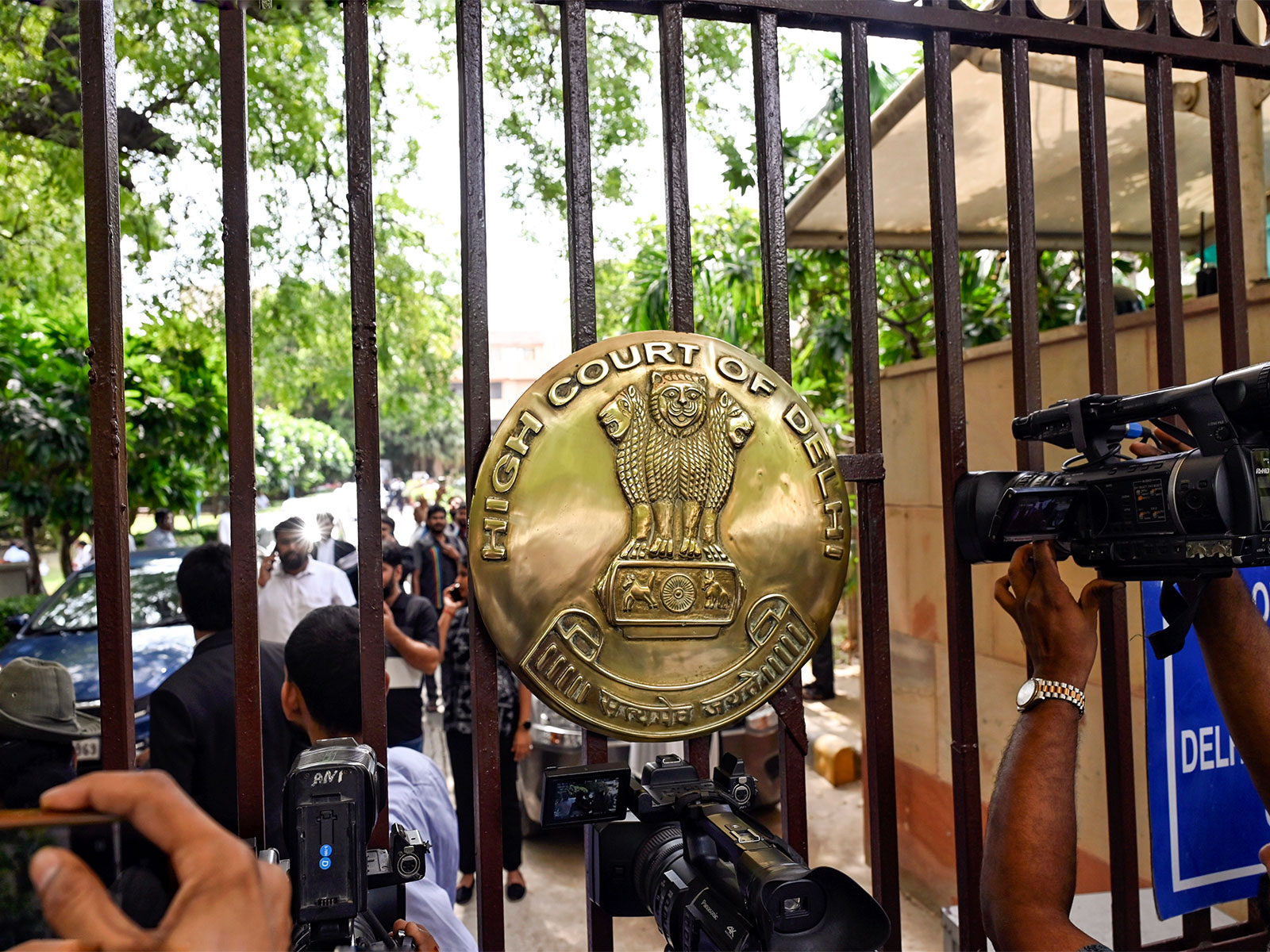
New Delhi [India], September 16 (ANI): The Delhi High Court on Wednesday issued notice to the Centre and the Indian Railway Catering and Tourism Corporation (IRCTC) in a Public Interest Litigation (PIL) seeking an online facility for pregnant women to book lower berths under the existing railway reservation policy.
A division bench comprising Chief Justice Devendra Kumar Upadhyaya and Justice Tejas Karia sought clarification from the Centre and IRCTC on their policy in view of the issues raised in the petition. The matter has been posted for September 30.
The PIL, filed by advocate Anunay Sahay, seeks directions to the Railway authorities and IRCTC to provide pregnant women with an effective online mechanism through the IRCTC website and mobile application to seek allocation of a lower berth, subject to availability and reasonable verification.
The petition questions why pregnant women are required to approach a physical Passenger Reservation System (PRS) counter to avail the lower-berth facility, while corresponding reservation facilities for other eligible categories can be accessed through IRCTC’s digital platform.
According to the plea, the existing railway reservation policy recognises pregnant women as eligible for consideration for lower berths, subject to availability. However, the petitioner alleges that an eligible pregnant woman seeking the facility is required to produce a pregnancy certificate issued by a registered medical practitioner at a PRS counter.
The petitioner has contended that this creates an additional physical barrier for pregnant women despite railway reservation services having been substantially digitised.
The plea further points out that IRCTC’s own terms and conditions recognise a “Lower Berth/Senior Citizen” quota on its e-ticketing platform. It argues that the digital platform, being a mode of implementing the underlying railway reservation system, should not result in exclusion of pregnant women from a facility available under the reservation policy.
The petitioner has alleged that the arrangement is arbitrary, unreasonable and discriminatory and has invoked Articles 14, 15(3), and 21 of the Constitution.
The plea says that the authorities could instead introduce mechanisms such as online self-declaration, uploading of a certificate issued by a registered medical practitioner, or booking subject to subsequent verification by the Ticket Examiner during the journey. It has also suggested modifying the existing lower-berth allocation algorithm to recognise pregnant women as an eligible category, subject to availability.
Before approaching the High Court, the petitioner said he had raised the issue with the Railway Minister, Railway Board and IRCTC on August 30, 2026.
According to the petition, IRCTC responded on September 1 that the suggestion had been noted for future enhancements and that it would give it “very serious thought”.
The petition seeks a direction to the authorities to devise a reasonable, non-discriminatory and technologically feasible mechanism for verification of pregnancy without making a visit to a physical reservation counter mandatory merely for availing the lower-berth facility. It also seeks disclosure by the respondents, through an affidavit, of the steps being taken to implement such a mechanism along with the proposed timelines. (ANI)
Related reading