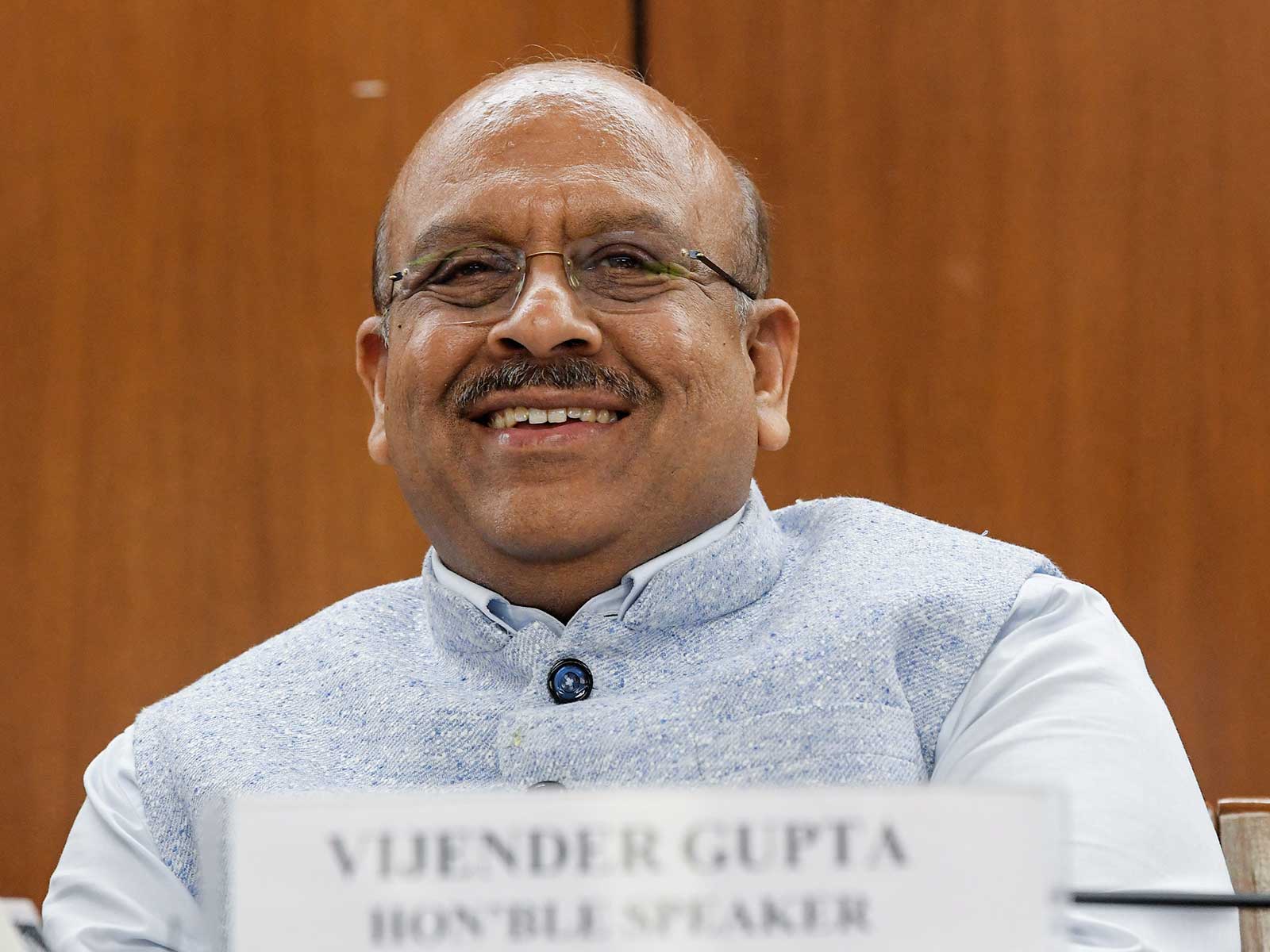
New Delhi [India], September 15 (ANI): Delhi Legislative Speaker, Vijender Gupta, while chairing the Joint Network Workshop on “Delivering Inclusivity Measures in Capacity Strained Parliaments” at the 69th Commonwealth Parliamentary Conference in Cape Town today said, “capacity may be unequal across our legislatures; democratic dignity cannot”.
Calling for a shift from representation to meaningful participation, he said resource constraints may slow reform but cannot limit members’ and citizens’ right to participate in parliamentary life with dignity and equality.
The workshop featured interaction with panellists including Yvonne Clarke, Speaker of the Yukon Legislative Assembly, Canada; Akierra Missick, Member of Parliament and Minister of Home Affairs, Turks and Caicos Islands; and Brian Bernard Caesar, Clerk of the House, Parliament of Trinidad and Tobago, according to a release.
The deliberations examined how legislatures with limited financial, staffing, technological and specialist capacity could advance gender sensitivity, disability inclusion and wider accessibility through practical reforms, institutional partnerships, shared expertise and adaptable digital tools. The discussion also considered how capacity constraints affect large and small legislatures differently, how priorities should be determined, how lower-cost alternatives could replace resource-intensive interventions, and how parliamentary staff could sustain inclusion through administration, procurement and procedure, as stated in the release.
Highlighting the scale of the challenge, Gupta noted that women held only 27.5 per cent of seats in national Parliaments as of January 2026, while only about one fifth of parliamentary Speakers were women. He also referred to the World Health Organisation estimate that 1.3 billion people, or one in every six persons, experience significant disability.
He said representation alone was insufficient if women remained outside leadership and committee influence, Members with disabilities could not independently access proceedings and papers, or first-time Members from rural, remote and marginalised communities lacked adequate research and procedural support. Inclusion, he stressed, was not an additional burden on parliamentary capacity but a means of using capacity more intelligently.
Gupta said legislatures must examine the entire pathway through which power is exercised, from election and induction to committee assignments, speaking opportunities and leadership. Referring to the Commonwealth Women Parliamentarians’ Gender Sensitising Parliaments: Standards and Checklist, he said it provided a practical basis for examining equality of participation, infrastructure, parliamentary culture and gender responsive policy. Such assessments, he underlined, should not end with another report but must identify barriers, assign institutional responsibility and establish a defined period for reviewing progress.
He further added that meaningful reform need not always require major expenditure, pointing to gender neutral rules, predictable sitting schedules, accessible documents circulated in advance, reasonable accommodation, anti harassment mechanisms, induction support and remote participation where constitutionally permissible.
Placing India’s experience before the Commonwealth, Shri Gupta highlighted the constitutional guarantees of equality, non-discrimination and equal opportunity and the Constitution (One Hundred and Sixth Amendment) Act, 2023, which provides for one-third reservation for women in the Lok Sabha and State Legislative Assemblies.
He noted that approximately 1.4 million women constitute nearly 46 per cent of elected representatives in Panchayati Raj Institutions, with Bihar pioneering 50 per cent reservation for women across all three tiers and Rajasthan, Madhya Pradesh, Kerala and several other States adopting similar measures. Delhi’s municipal framework also reserves half of its seats for women, including seats reserved for Scheduled Castes.
On disability inclusion, he referred to the Rights of Persons with Disabilities Act, 2016 and said accessibility must extend beyond ramps and lifts to captioning, sign language interpretation, Braille and easy read formats, audiobooks, DAISY (Digital Accessible Information System) resources, online documents, live broadcasting, optical character recognition based digitisation, screen reader compatible websites, accessible voting systems and accessible communication.
On technology, Gupta said the National e Vidhan Application was strengthening standardised digital legislative workflows, while BHASHINI offered possibilities for making parliamentary content accessible across Indian languages. He highlighted the Delhi Legislative Assembly’s Vidhan Saathi, its AI-enabled legislative research assistant providing access to verified legislative information, along with the modernisation of the Assembly library and parliamentary records, stronger committee research support and the move towards gender neutral and more inclusive legislative language.
He cautioned, however, that digitisation must not reproduce exclusion in a new form, observing that a website incompatible with screen readers, an AI system unable to recognise diverse accents or a remote proceedings platform dependent on high-speed connectivity could widen existing gaps. Technology, he said, should therefore be assessed by its accessibility, affordability, reliability and contribution to meaningful participation rather than by novelty alone, with suitable human alternatives and institutional accountability retained.
Calling for greater sharing of institutional capacity across the Commonwealth, Gupta proposed periodic inclusion audits, limited cost and time-bound reforms, measurable common indicators and a shared repository of tested parliamentary practices.
Referring to the National Legislative Index, originally conceived by the Delhi Legislative Assembly as an evidence-based framework for assessing legislative performance, constitutional responsibility, transparency and technological innovation, he said clear benchmarks could help legislatures identify gaps and direct scarce resources towards measurable institutional reform.
He further called for greater use of the CPA’s Commonwealth Women Parliamentarians, Commonwealth Parliamentarians with Disabilities and CPA Small Branches to share model rules, accessibility templates, training, open technical standards, peer reviews and procurement expertise, noting that more than 40 CPA Small Branches serve jurisdictions with populations below one million and may particularly benefit from shared solutions.
He underlined that the true measure of an inclusive Parliament was “not simply who is present in the Chamber, but who can participate with dignity, independence and influence.” (ANI)
Related reading