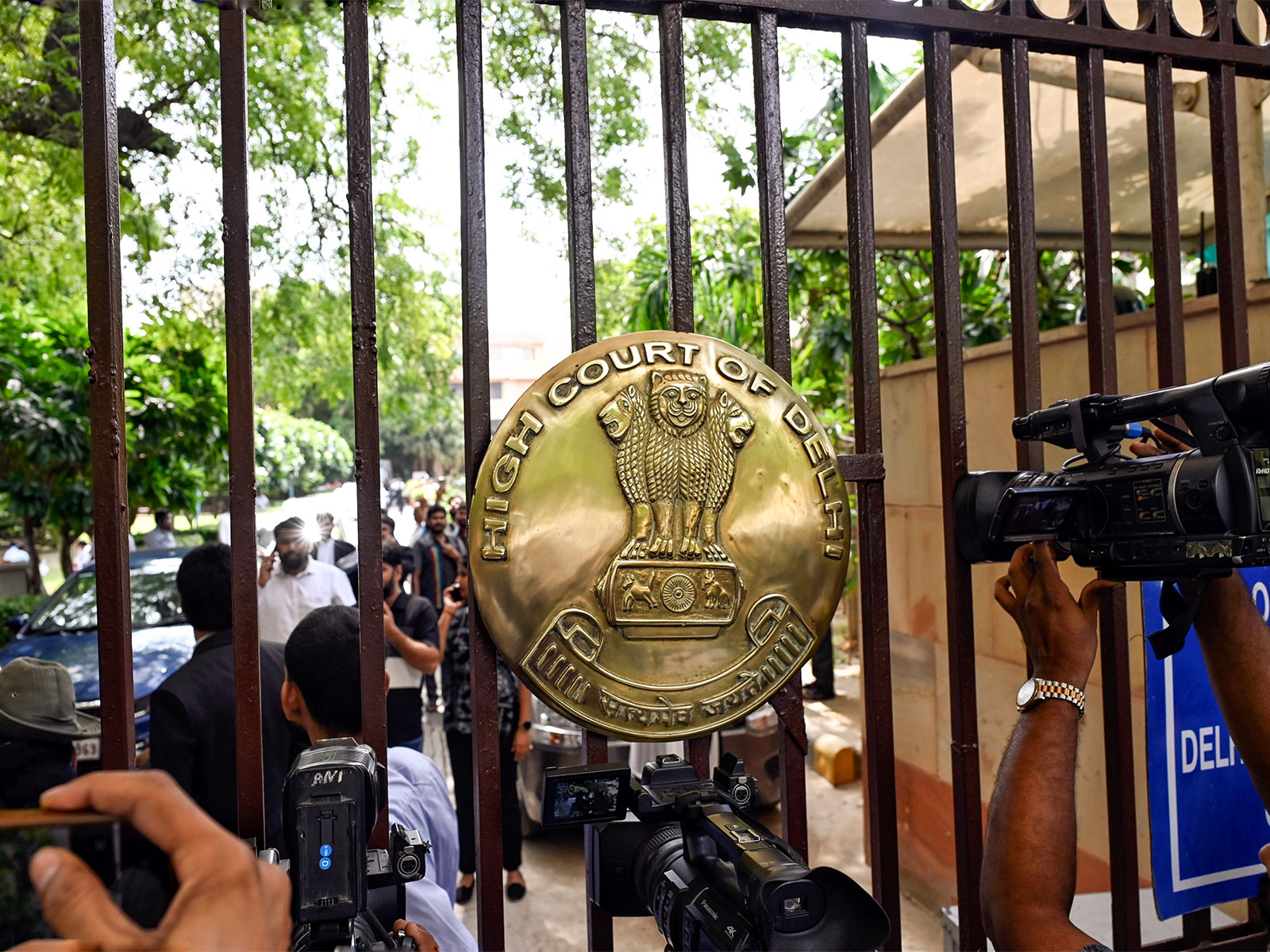
New Delhi [India], September 8 (ANI): The Delhi High Court on Tuesday directed the Ministry of Railways to comply, within four weeks, with an order of the Central Administrative Tribunal (CAT) directing the regularisation of commission vendors and bearers who had been litigating for decades for their service benefits.
The Court further directed that if the Railways failed to comply with the directions, the Central Administrative Tribunal would revive the contempt proceedings, which had been kept on hold during the pendency of the writ petitions, and take them to their logical conclusion.
A Division Bench of Justice C Hari Shankar and Justice Om Prakash Shukla dismissed two writ petitions filed by the Union of India challenging the CAT’s November 2016 order in favour of the employees.
“Let compliance with the order of the Tribunal, including the direction for payment of costs, be ensured within a period of four weeks from today,” the Court directed.
It added that in the event of non-compliance, the Tribunal should revive the contempt proceedings and take them to their logical conclusion.
The Court upheld the CAT’s direction to regularise the services of the concerned commission vendors and bearers and also its direction regarding payment of the minimum pay scale and allowances. The Tribunal had further imposed costs of Rs 1 lakh on the Railways.
The High Court observed that it was a matter of “deep regret” that low-paid Group-D employees working as bearers and vendors had been compelled to litigate for decades to secure their entitlements despite repeated directions issued by the Supreme Court.
The dispute relates to bearers and vendors working with the North Eastern Railway on a commission basis who had sought regularisation of their services.
The Court noted that the Railway Board had issued a circular in December 1976 providing for the progressive absorption of commission bearers and vendors against regular vacancies. The issue subsequently reached the Supreme Court on several occasions, with directions being issued for implementation of the Railway Board’s policy and absorption of such workers.
In 2005, the Railway Board again decided that all commission vendors and bearers should be regularised, with relaxation in educational qualifications, and directed the concerned authorities to take immediate action.
The CAT, in its November 2016 order, had directed the Railways to regularise all applicants in the two original applications within 90 days. It had also directed payment of the minimum of the pay scale along with applicable allowances from November 14, 2000, and imposed costs of Rs 1 lakh.
Challenging the order, the Union of India contended before the High Court that only those commission vendors and bearers who were found eligible during the screening process could be regularised and that some of the respondents had either failed the screening or had already been absorbed.
The High Court, however, rejected the contention. The Bench held that the sequence of events and the earlier orders of the Supreme Court left no doubt that commission bearers and vendors who were in service when the relevant Supreme Court judgments were delivered were entitled to regularisation in terms of the Railway Board’s 1976 circular.
“It is not disputed, before us, that all the respondents would fall within this category,” the Court observed, adding that there was no question of the Railways subsequently resorting to a screening process to eliminate any of them from regularisation.
The Court also referred to a series of recent Supreme Court judgments concerning regularisation of employees who had rendered long and continuous service.
Significantly, the High Court expressed concern over the Railways’ claim that several respondents had already been absorbed as Group-D employees.
During the proceedings, the Court had directed the Railways to file an affidavit detailing the benefits being paid to regular employees and those being paid to the respondents, including retiral benefits.
However, the Court noted that no such affidavit substantiating the Railways’ claim regarding the alleged absorption of several respondents had been filed.
Instead, an additional affidavit stated that commission vendors who had not been regularised were not entitled to retirement benefits available to regular employees.
The Bench termed the situation “very disturbing” and said the Railways appeared unable to substantiate assertions made before both the Tribunal and the High Court that several respondents had been absorbed as Group-D employees.
“One would expect the Railways to display candour both before the Tribunal as well as before this Court,” the Bench observed.
The Court said it was therefore inclined to accept the respondents’ assertion that none of them had been regularised despite repeated orders passed by judicial forums, including the Supreme Court.
While upholding the Rs 1 lakh costs imposed by the Tribunal, the High Court observed that the Tribunal had, if anything, erred on the side of leniency.
The Court said that courts must protect the interests of weaker sections of society and persons drawing paltry wages to ensure that the socialist structure of the country’s democracy remained intact.
The Court said it would have been inclined to enhance the costs but refrained from doing so. Accordingly, the writ petitions filed by the Union of India were dismissed. (ANI)
Related reading