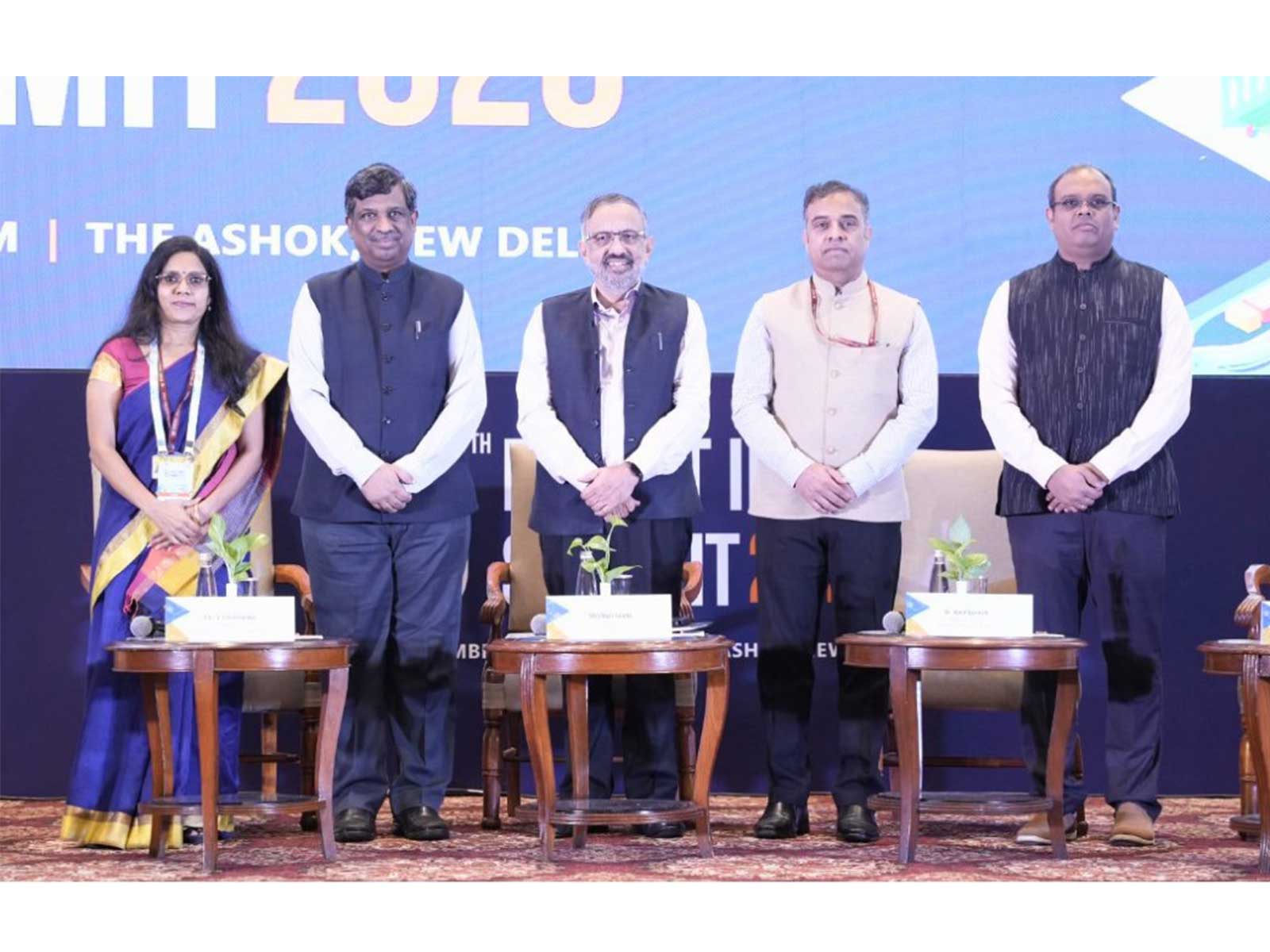
New Delhi [India], September 7 (ANI): India will need to accelerate the electrification of its freight sector through demand aggregation, innovative financing and coordinated charging corridors as it seeks to cut transport emissions and strengthen energy security, NITI Aayog Member Rajiv Gauba said on Monday, flagging the need for a market-led approach to scale up zero-emission trucking.
Gauba, speaking at the 5th E-Fast India Summit 2026, launched the Platform for Aggregating Clean Transport (PACT) and the Zero Emission Truck (ZET) Marketplace, initiatives aimed at addressing some of the structural constraints holding back the adoption of electric heavy-duty vehicles.
Heavy trucks account for only 3-4% of India’s vehicle fleet but contribute more than a third of transport-sector carbon emissions, making freight electrification a key priority for India’s clean mobility transition, Gauba said. With around 70% of India’s freight moving by road, he called for strategic electrification of key freight corridors.
“Only around 800 heavy-duty electric trucks were sold in 2025,” Gauba said, highlighting the scale of the challenge facing the segment.
According to Gauba, fragmentation among logistics operators, high financing costs and the lack of coordinated corridor planning are among the key barriers preventing electric trucks from scaling up. PACT and the ZET Marketplace are intended to address these gaps through demand aggregation, financing innovation and corridor-based projectisation.
Gauba called for blended finance mechanisms, leasing models and stronger data systems to bring the cost of capital for electric trucks closer to that of diesel-powered vehicles. He also urged logistics providers, vehicle manufacturers, charge point operators and financiers to participate in developing freight corridors, financing instruments and commercial models.
The launch comes as India seeks to build on government support for electric mobility through initiatives including the production-linked incentive schemes for automobiles and advanced chemistry cells, expansion of public charging infrastructure and demand-side programmes such as FAME, PM E-DRIVE, PARIVARTAN and PM e-Bus Sewa.
Gauba said the transition to electric mobility was not merely an environmental objective but an economic and strategic imperative, linked to India’s energy security, quality of life and the country’s goal of achieving net zero emissions by 2070.
He said the evolution of e-FAST over four years—from a platform for dialogue to one focused on coordinated action—mirrored India’s broader shift in clean mobility from intent to implementation.
He also said PACT represented a wider lesson for complex, capital-intensive sectors: government can be most effective not by directly allocating outcomes, but by creating systems that allow markets to discover them. (ANI)
Related reading