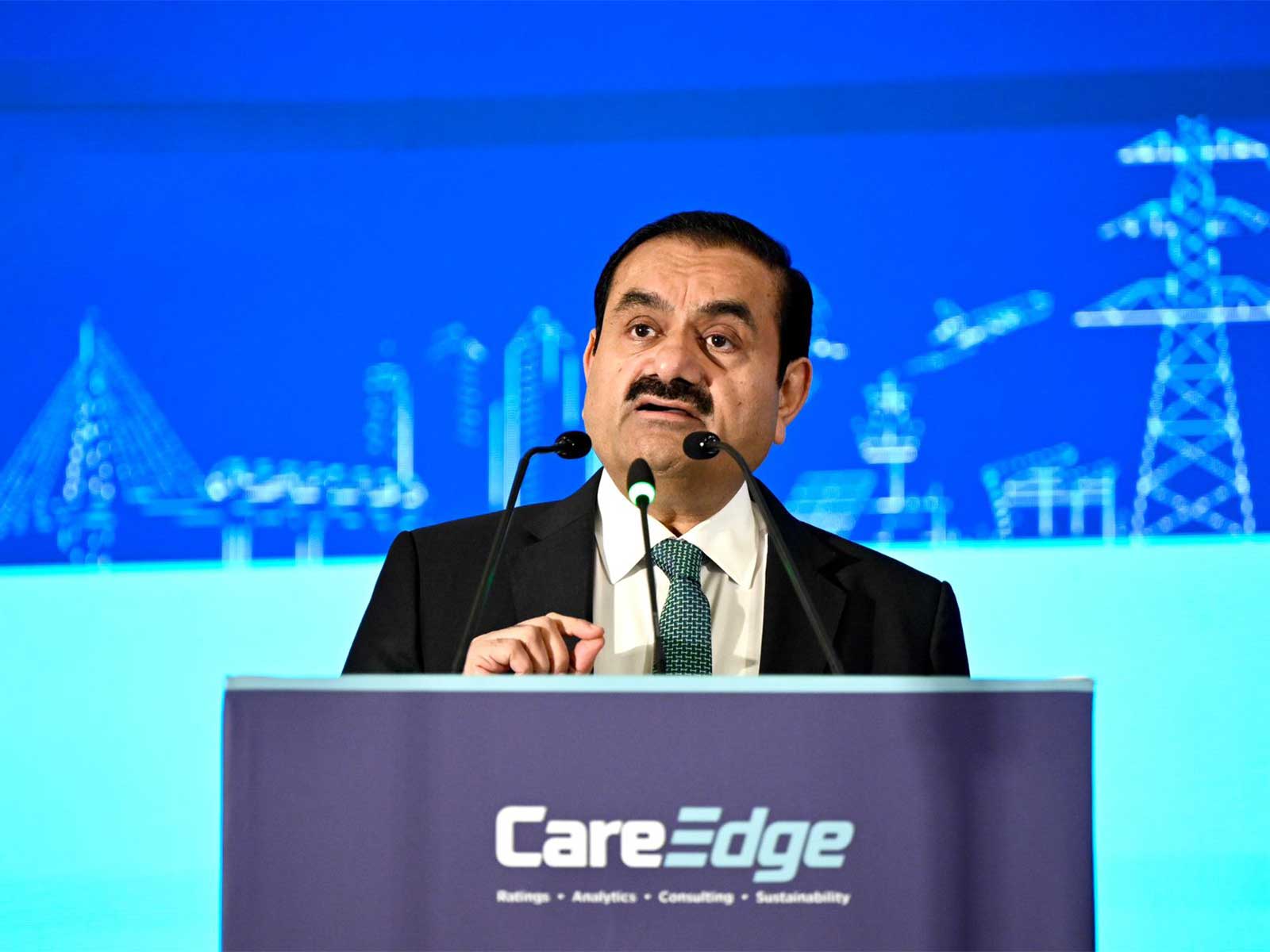
Mumbai (Maharashtra) [India], August 31 (ANI): Adani Group Chairman Gautam Adani on Monday called for a new credit framework to assess large infrastructure projects that can create wider economic ecosystems, saying traditional rating models may not fully capture the value of India’s changing infrastructure landscape.
Speaking at ‘Infrastructure Landscape: Vision for Viksit Bharat’ Conclave hosted by CareEdge Group, Adani said India’s infrastructure ambitions and the nature of projects being built have changed, requiring rating frameworks to evolve accordingly.
“Transformational infrastructures can be constrained not only by a lack of ambitions or capital, but also by the frameworks through which its risks are assessed. This is not a call for less scrutiny… India does not need lower standards. India needs wider lenses. Many of our analytical frameworks were developed for an age in which infrastructure evolved incrementally, demand was relatively visible and the boundaries of an asset were easier to define,” he said.
“The nature of infrastructure has changed and the sophistication of our rating frameworks must evolve alongside the sophistication of what India is building,” he added.
Adani said many existing analytical frameworks were developed when infrastructure projects were more incremental, demand was easier to assess and individual assets could be evaluated separately.
He said such models often use standalone cash flows and may not capture the wider economic benefits created when different infrastructure assets work together.
He cited the example of Mundra port in Gujarat, saying the project eventually developed into a much larger ecosystem involving rail, logistics centres, power plants, industrial zones, traders and manufacturers.
“Mundra proved that platform infrastructure operates as a multi-layer network where each new layer cross-subsidizes, feeds, and de-risks the other, creating an economic compounding flywheel that linear financial models mostly fail to capture,” he said.
Adani also referred to the Vizhinjam port in Keralam, which he said had faced difficulties in attracting capital because of the complexity and risks associated with the project.
He said the port became the fastest Indian port to achieve two million TEUs within eighteen months.
According to Adani, strategic infrastructure projects need to be assessed not only for their financial returns but also for their contribution to national resilience and wider economic activity.
He classified infrastructure into three categories — replacement infrastructure, growth infrastructure and platform infrastructure. While traditional rating frameworks work well for replacement infrastructure, he said the other two categories require frameworks that can account for ecosystem effects and multiplier value.
Adani described Mundra, Vizhinjam and the Khavda renewable energy project as examples of “platform infrastructure”. He said such projects can create new demand, ecosystems and capabilities rather than simply meeting existing demand.
“Platforms like Mundra, Vizhinjam and Khavda do not just satisfy existing demand. They create new demand. They create new ecosystems. They create new capabilities. They change the economics around them,” he said.
He also linked the changing infrastructure landscape to the growth of artificial intelligence, saying the future of AI will depend heavily on physical infrastructure such as electricity, data centres, cooling systems, transmission networks and land.
“AI may look like software. But, ultimately, AI runs on infrastructure,” Adani said.
He said projects such as Khavda should therefore be viewed beyond their role as power-generation assets, as they could support computing, advanced manufacturing, digital infrastructure and India’s wider AI ecosystem.
Adani urged CareEdge to develop what he described as a comprehensive credit framework for integrated platform infrastructure. He said such a framework should recognise ecosystem multipliers, adjacency value and the strategic benefits created by large infrastructure platforms.
“Why should the world’s first truly comprehensive Credit Framework for Integrated Platform Infrastructure not come from India? Why should CareEdge not lead it?” he asked.
Adani stressed that his call was not for lower standards, but for dynamic models that can better recognise the broader impact of infrastructure projects while maintaining independent assessment of risks.
He said India now has far more resources than earlier and has discovered confidence to dream at scale once thought impossible.
” Like every entrepreneur, I had ambition. I had ideas. I had a dream. But I learned very early that ideas alone do not build institutions. Ideas need credibility, which creates trust. Trust unlocks capital and capital turns ambition into a reality,” he said.
“When I began my journey of helping to build India’s infrastructure, our ambitions were constrained by limited resources, capabilities, and confidence. Today, that India has changed. India has the resources. India has demonstrated the capability. And most importantly, India has discovered the confidence to dream at a scale once thought impossible,” he added. (ANI)
Related reading