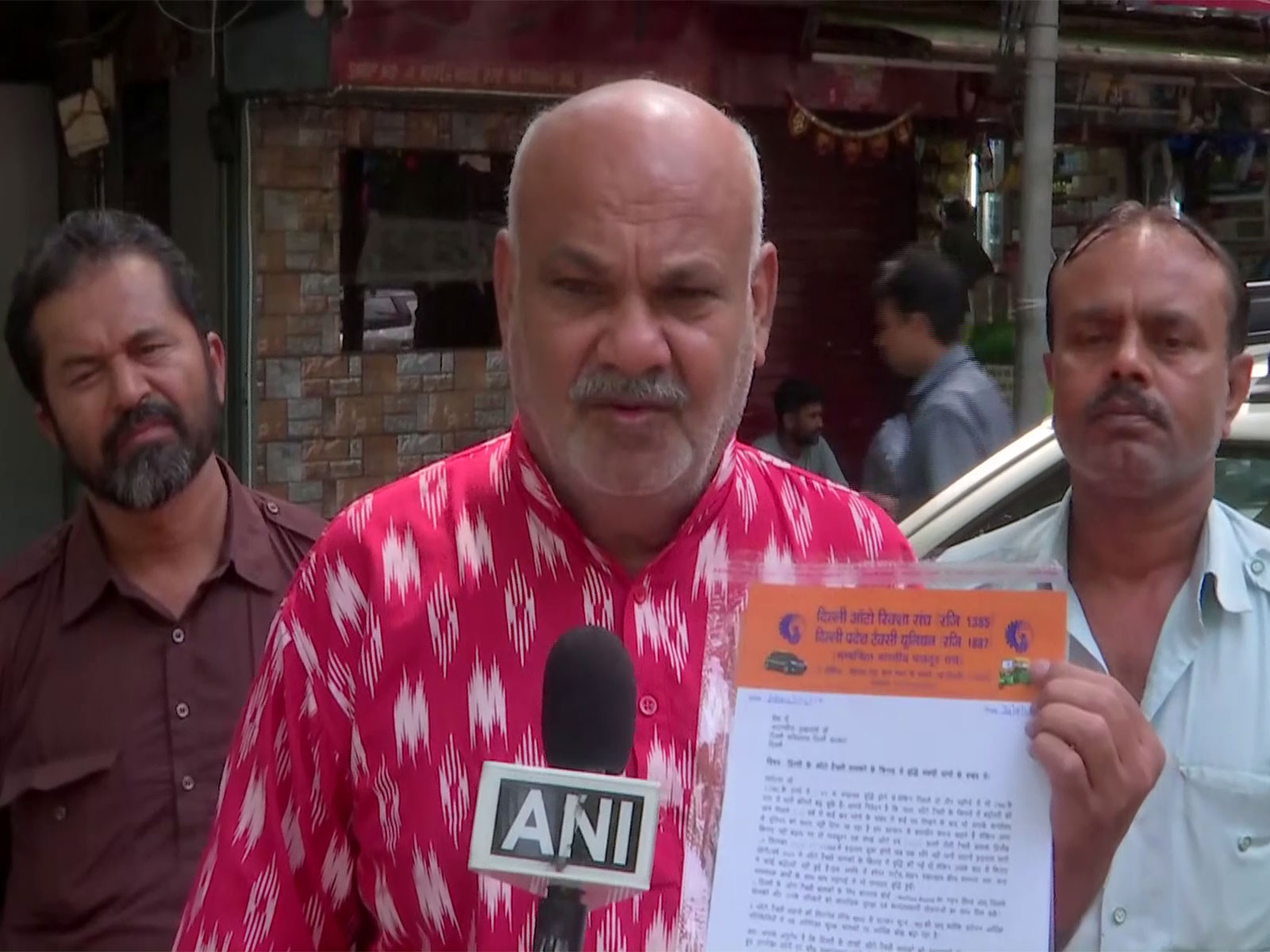
New Delhi [India], August 29 (ANI): Auto Rickshaw Association and Delhi Pradesh Taxi Union general secretary Rajendra Soni on Saturday opposed the latest hike in CNG prices in the national capital, saying auto-rickshaw and taxi drivers were already facing rising operating costs and did not want to pass the burden on to commuters.
Speaking on the CNG price hike, Soni said the price of the fuel had increased by Rs 10-12 over the past two-and-a-half to three months and alleged that repeated requests to the government for a meeting had not yielded any response.
“We do not want to burden the people of Delhi. Over the past two and a half to three months, CNG prices have increased by Rs 10-12. We have written several letters to the government requesting a meeting to discuss the problems faced by auto-rickshaw and taxi drivers. It has been one and a half years since the government came to power, but nothing has been done,” Soni said.
His remarks came after Indraprastha Gas Limited (IGL) announced a CNG price revision of Rs 3.89 per kg in Delhi, effective from 6 am on August 29.
According to IGL, the price revision has been necessitated by rising input gas costs amid volatility in international energy markets. The company said global Spot LNG prices have nearly doubled due to escalating conflicts in West Asia, which have disrupted LNG cargo movements through the Strait of Hormuz, along with rising European demand ahead of the winter season.
IGL said the latest increase was a calibrated adjustment aimed at partially offsetting higher input gas costs while ensuring uninterrupted supply.
The company said Delhi’s retail CNG price had increased gradually from Rs 77.09 per kg to Rs 83.09 per kg, an increase of around 7.8 per cent.
IGL also highlighted the sharp rise in international gas prices, saying Europe’s TTF gas benchmark had increased from around USD 11.36 per MMBTU to USD 23.35 per MMBTU, while Asia’s JKM LNG benchmark rose from around USD 10.99 per MMBTU to USD 23.41 per MMBTU.
The company said strategic sourcing and calibrated price adjustments had helped shield domestic consumers, including daily commuters and public transport operators, from the full impact of the global energy crisis. (ANI)
Related reading