New Delhi [India], August 29 (ANI): A Special NIA court at Rouse Avenue on Saturday took cognisance of the chargesheet filed by the National Investigation Agency (NIA) in the Delhi Red Fort blast case.
The NIA had filed the first chargesheet against 12 accused persons. While accused Umar Un Nabi died in the blast, another accused is absconding. A supplementary chargesheet was also filed against two accused persons.
This case pertains to the November 2025 Red Fort car bomb blast case. The NIA has already filed a chargesheet against several accused persons. One of them expired in the deadly blast that took place near the Red Fort in November 2025.
Special NIA Judge Prashant Sharma took cognisance of the chargesheets filed against all accused persons.
The next date of hearing is September 9. The court has asked the NIA to supply copies of the chargesheet.
The NIA filed a chargesheet running into 7,500 pages against the 11 accused persons. The agency has cited 588 witnesses.
Special Public Prosecutor (SPP) Madhav Khurana, along with Trisha Mittal and Public Prosecutor Anil Dabas, appeared for the NIA.
It was submitted that the first chargesheet against 11 accused was filed on May 14.
Thereafter, a supplementary chargesheet was filed on June 27, 2026.
The NIA produced accused Aamir Rashid Mir, Jasir Bilal Wani, Dr. Muzamil Shakeel, Dr. Adeel Ahmed Rather, Dr. Shaheen Saeed, Mufti Irfan Ahmad Wagay, Soyab, Dr. Bilal Naseer Malla and Yasir Ahmad Dar before the court through video conferencing.
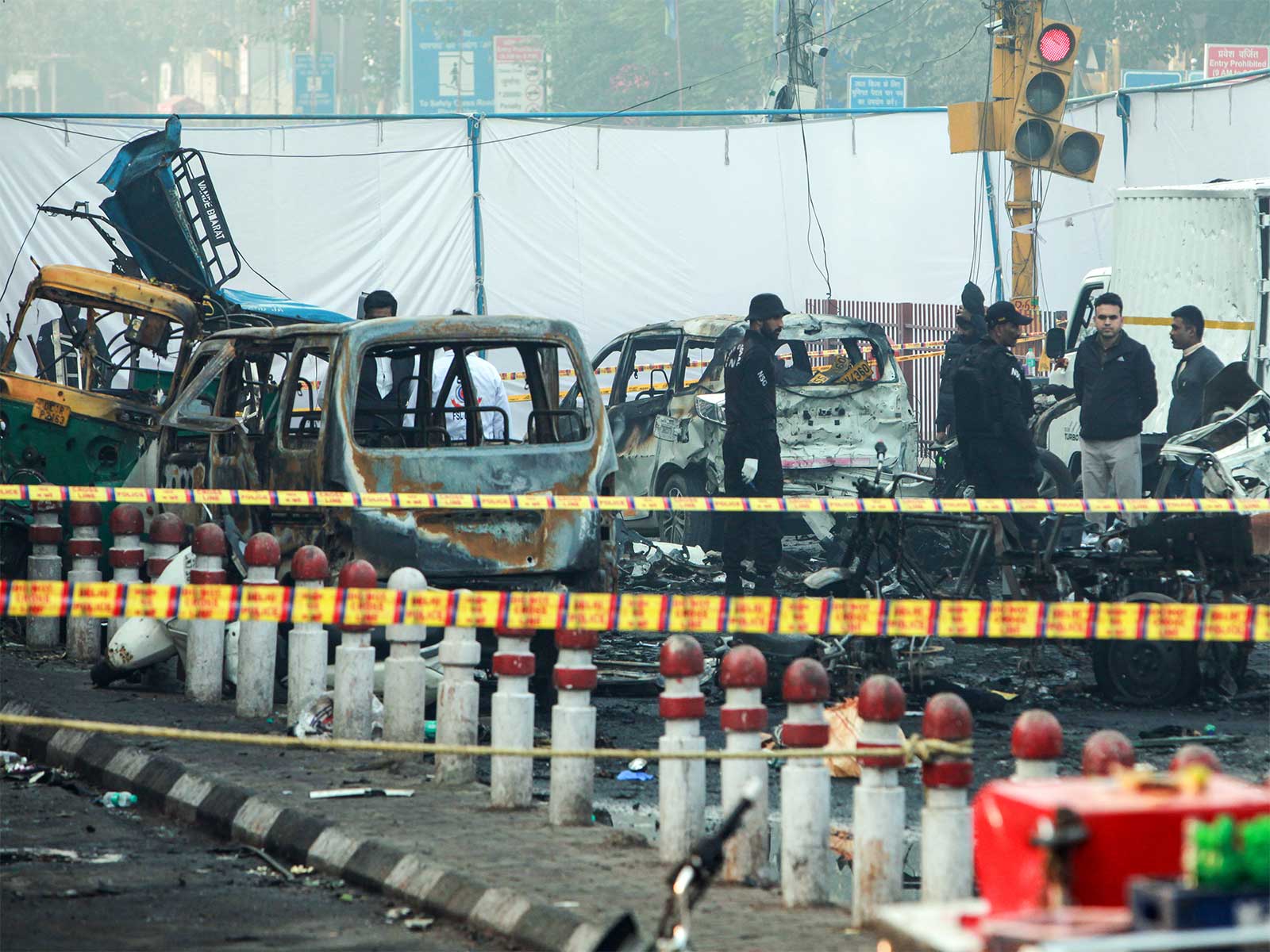
The National Investigation Agency (NIA) filed a 7,500-page chargesheet against 11 accused persons in connection with the blast that occurred near Delhi’s Red Fort on November 10, 2025.
According to the NIA, the high-intensity Vehicle-Borne Improvised Explosive Device (VBIED) explosion killed 11 people and injured several others, besides causing extensive damage to nearby property.
The agency has invoked provisions of the Unlawful Activities (Prevention) Act, Bharatiya Nyaya Sanhita, Explosive Substances Act, Arms Act and Prevention of Damage to Public Property Act.
Among those chargesheeted is the alleged main conspirator, Dr Umer Un Nabi, whose proceedings are proposed to be abated owing to his death. The remaining accused named in the prosecution complaint are Aamir Rashid Mir, Jasir Bilal Wani, Dr Muzamil Shakeel, Dr Adeel Ahmed Rather, Dr Shaheen Saeed, Mufti Irfan Ahmad Wagay, Soyab, Dr Bilal Naseer Malla and Yasir Ahmad Dar.
The NIA alleged that all the accused were associated with Ansar Ghazwat-ul-Hind (AGuH), an offshoot of Al-Qaida in the Indian Subcontinent (AQIS), which was declared a terrorist organisation by the Ministry of Home Affairs in 2018.
According to the agency, the chargesheet is based on an extensive investigation conducted across Jammu & Kashmir, Haryana, Uttar Pradesh, Maharashtra, Gujarat and Delhi-NCR. The prosecution complaint reportedly contains 588 oral testimonies, over 395 documents and more than 200 seized material exhibits.
The NIA has alleged a larger “jihadi conspiracy” involving radicalised individuals, including medical professionals, allegedly inspired by AQIS/AGuH ideology. Investigators claimed the accused reorganised the outfit as “AGuH Interim” during a secret meeting in Srinagar in 2022.
The agency further alleged that the accused launched an operation titled “Operation Heavenly Hind” aimed at overthrowing the democratically elected government and imposing Sharia rule.
According to the probe agency, the accused allegedly recruited members, spread extremist ideology, stockpiled arms and ammunition and manufactured explosives using commercially available chemicals. The NIA claimed that the explosive substance used in the blast was Triacetone Triperoxide (TATP), allegedly prepared after multiple experiments.
The investigation also allegedly revealed illegal procurement of prohibited weapons, including AK-47 rifles, Krinkov rifles and country-made pistols, along with experiments involving rocket-based and drone-mounted IEDs targeting security establishments.
The agency stated that scientific and forensic examination, including DNA fingerprinting and voice analysis, helped establish the identity of the deceased accused, Dr Umer Un Nabi. (ANI)
Related reading