HT Syndication
New Delhi [India], August 27: Healthcare costs have been climbing steadily for years, and the people feeling this most acutely are older adults trying to maintain adequate health coverage on fixed or diminishing incomes. The combination of age-driven premium increases and a tax structure that adds to the final cost has created a situation that genuinely needs addressing, not gradually, but with some urgency.
Let’s look at why this is happening, what the current tax structure actually does to premium affordability, and why the problem compounds every year without meaningful intervention.
Why Senior Health Premiums Rise Faster Than for Other Age Groups
Age-based premium loading is standard practice across the insurance industry, and the logic behind it isn’t difficult to understand. Older policyholders file claims more frequently and for larger amounts, and insurers price their products accordingly.
– Premiums for older adults can run three to five times higher than premiums for younger policyholders with identical cover amounts
– Each renewal can bring a fresh increase, even when no claim was filed during the previous year
– A cover amount that looked adequate at sixty may require a significant top-up by sixty-five, at a much higher premium
For anyone living on retirement savings or a pension, this trajectory creates a real problem. The cost of staying covered rises while the income available to pay for it either stays flat or shrinks.
What Makes the Best Health Insurance for Senior Citizens Harder to Access
Finding a policy that genuinely covers the conditions most likely to affect older adults, at a price that remains sustainable over several years, is considerably more difficult than most people assume when they first start looking.
– Pre-existing condition waiting periods, co-payment clauses, and disease-specific sub-limits reduce the practical value of many policies aimed at this age group
– The number of genuinely comprehensive options available narrows sharply above the age of seventy
– Premiums for comprehensive cover can reach figures that represent a significant percentage of a retiree’s monthly income
The best health insurance for senior citizens, in practical terms, needs to be both comprehensive and affordable over a long period, and that combination is increasingly rare in the current market.
How the Tax Structure Adds to an Already Difficult Equation
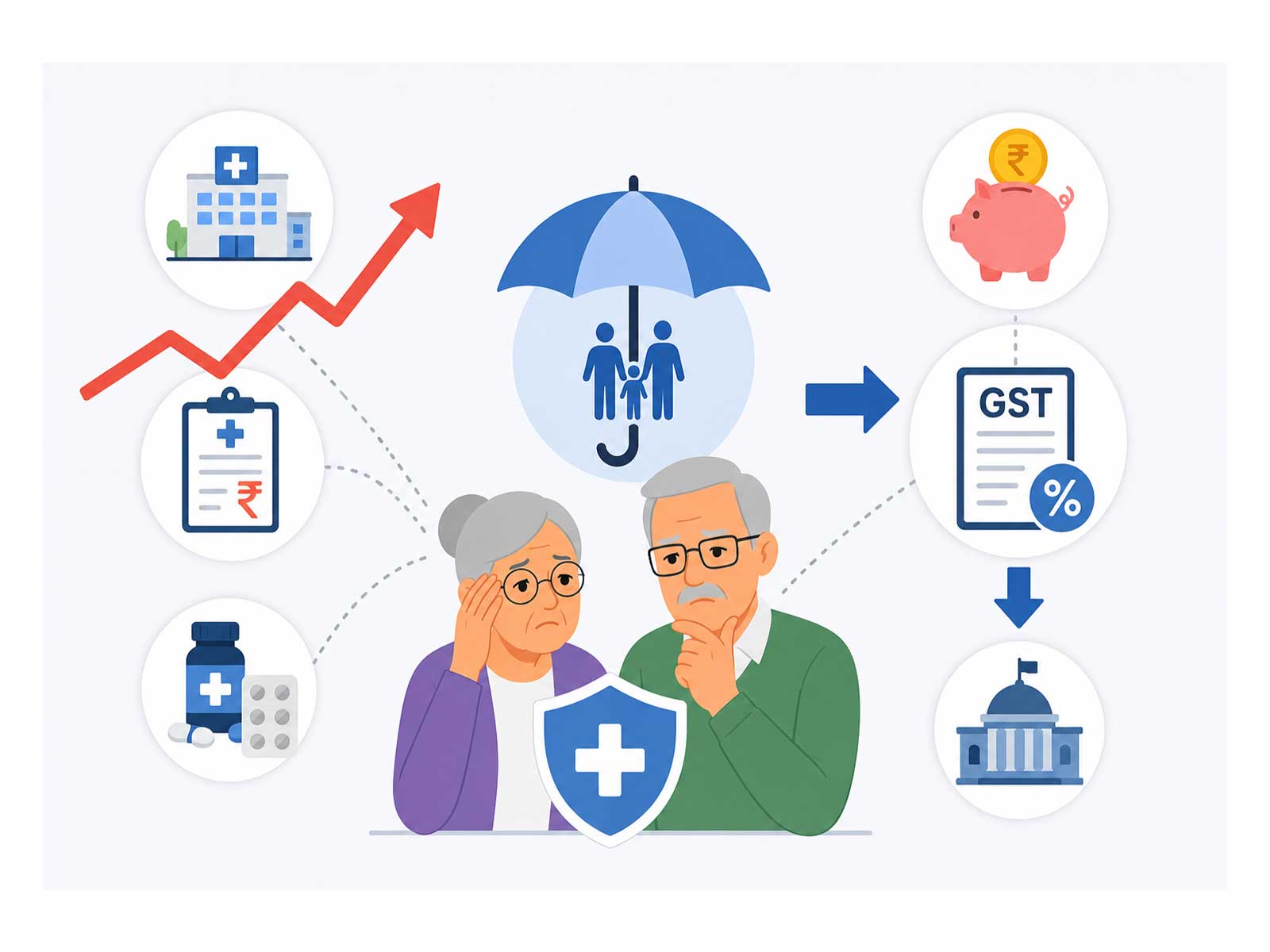
This is where the problem deepens beyond just premium pricing. Health insurance premiums in India currently attract GST, and this adds directly to the cost a policyholder pays out of pocket, before any coverage is even triggered.
– The applicable rate on health insurance premiums adds a meaningful percentage to the annual cost
– For a senior citizen already paying a high base premium, this addition represents a substantial absolute amount
– Unlike many other essential services, health insurance for older adults is not priced as a necessity in the current tax framework
The argument for reform here isn’t particularly complex. A product that exists specifically to reduce financial distress during illness should not itself become a source of financial pressure through its cost structure.
Why GST on Medical Insurance Deserves Specific Reform
The broader conversation about insurance taxation has been ongoing for some time, but the case for reform is particularly strong when looked at through the lens of senior citizen coverage specifically.
Reducing or restructuring the GST on medical insurance for senior citizens would lower the effective cost of premiums without requiring insurers to change their underlying pricing. This approach could make comprehensive coverage more accessible to a segment of the population that genuinely needs it without burdening insurers or reducing the quality of available products.
– A targeted reduction for policies covering adults above a certain age would be more precisely impactful than a blanket change across all health insurance products
– It would reduce the dropout rate among senior policyholders who lapse coverage because the combined premium and tax cost simply becomes unaffordable
– It would align the tax treatment of health insurance with its social function, which is keeping older adults financially protected during illness
None of these outcomes requires complex implementation. The mechanism already exists. The question is whether there’s sufficient urgency in the policy conversation to act on it.
Why This is a Broader Social Problem, Not Just an Insurance Market Issue
Senior citizens who cannot afford health insurance don’t simply go without coverage and manage. The financial consequences typically fall on the wider family unit.
– Adult children often absorb medical costs that should ideally be covered through insurance
– Families without adequate coverage may delay or defer treatment, leading to worse health outcomes and higher eventual costs
– The public health system absorbs additional pressure when private coverage gaps push more older adults toward government facilities
Viewing this only as a product affordability problem misses the downstream consequences that ripple outward from the coverage gap itself.
How Reform Could Practically Shift the Situation
The most immediate lever available is tax restructuring, and the argument for it gets stronger every year that premiums continue to rise.
– A reduced tax rate specifically for senior citizen health policies would lower the all-in annual cost meaningfully
– Insurers could use competitive pressure from a larger, more accessible market to introduce better product options at various price points
– Policyholders who might otherwise lapse would maintain coverage, reducing claim frequency from delayed treatment
The current structure effectively penalises older adults for trying to protect themselves financially against health risks. Reform in this area is less about subsidy and more about removing an unnecessary cost barrier from a product that already serves a clear social function.
Final Thought
Premium affordability for older adults isn’t going to improve on its own through market forces alone. The tax structure adds a layer of cost to an already difficult equation, and addressing it directly is one of the more practical steps available to make health coverage genuinely accessible for senior citizens across a much wider income range.
(ADVERTORIAL DISCLAIMER: The above press release has been provided by HT Syndication. ANI will not be responsible in any way for the content of the same.)
Related reading