By Kreeti Suman
New Delhi [India], August 27 (ANI): The Rakhi may arrive on time. The gift may be delivered. A video call may connect two homes separated by thousands of kilometres. But sometimes, what siblings miss most is not the Rakhi itself. It is the hand that ties it, sitting together, arguing over gifts, preparing food, remembering childhood and turning an ordinary day into a festival.
For siblings separated by cities and countries, Raksha Bandhan is increasingly becoming a celebration of love carried through courier packets, online orders and phone screens, a festival where technology helps bridge the distance, but cannot quite erase it.
Homemaker Dipti Chandra, who lives in Delhi while her brother is based in Bihar, has been celebrating Raksha Bandhan away from him for nearly 20 years. What she misses the most is the warmth of being physically together and celebrating the festival in person.
She shared her experience, “I have been celebrating Rakhi from different cities for 20 years now. What I miss the most is being together with my brother, tying the Rakhi on his wrist myself and preparing a special feast for him. Earlier, I would usually send the Rakhi by courier, but with so many online facilities now, I mostly send it online.”
On talking about how she celebrates Rakhi in today’s times, she said, “We do make sure to video-call during the ceremony, but celebrating virtually definitely feels different. Over the years, we have adjusted our Rakhi traditions to the distance, but the emotions and bond remain the same.”
A sister from Dubai, Shwetambari Jha, has said that she has been celebrating Raksha Bandhan away from her brother for around 20 years. But when she is in India, she usually buy a Rakhi from the market and give it to her brother, as the UAE is in summer break around this time. But even when she cannot be there, the tradition continues by wishing virtually.
She shared what she missed the most about the festival, “What I miss the most is the cute banter around Rakhi, especially the fun arguments and teasing over the gift. We don’t usually video-call during the ceremony, but I always make sure to call him and wish him.
Shwetambari said that the ritual has not disappeared, it has simply had to stretch across distance. However, she hasn’t really changed her Rakhi traditions because of the distance, she continues to celebrate it at home with her children.
For another sister, Priyam Jha, who lives in US and her brother lives in India, the separation has lasted nine years.
“I have been celebrating Raksha Bandhan from a different country for the past nine years. I usually buy the Rakhi online and make sure to video-call during the celebrations. Even though celebrating virtually definitely feels different, I have not changed my Rakhi traditions because of the distance. The rituals and emotions remain the same, even when we are apart,” she said.
While the sisters spoke about Raksha Bandhan as a festival filled with rituals, traditions and togetherness, brothers also feel the impact of celebrating it from a far. Vijay Sharma, who lives more than 1,200 km away from his sister, said his Rakhi now arrives through Flipkart, but receiving it also brings back memories of the days when siblings would shop for Rakhis together and celebrate the festival at home.
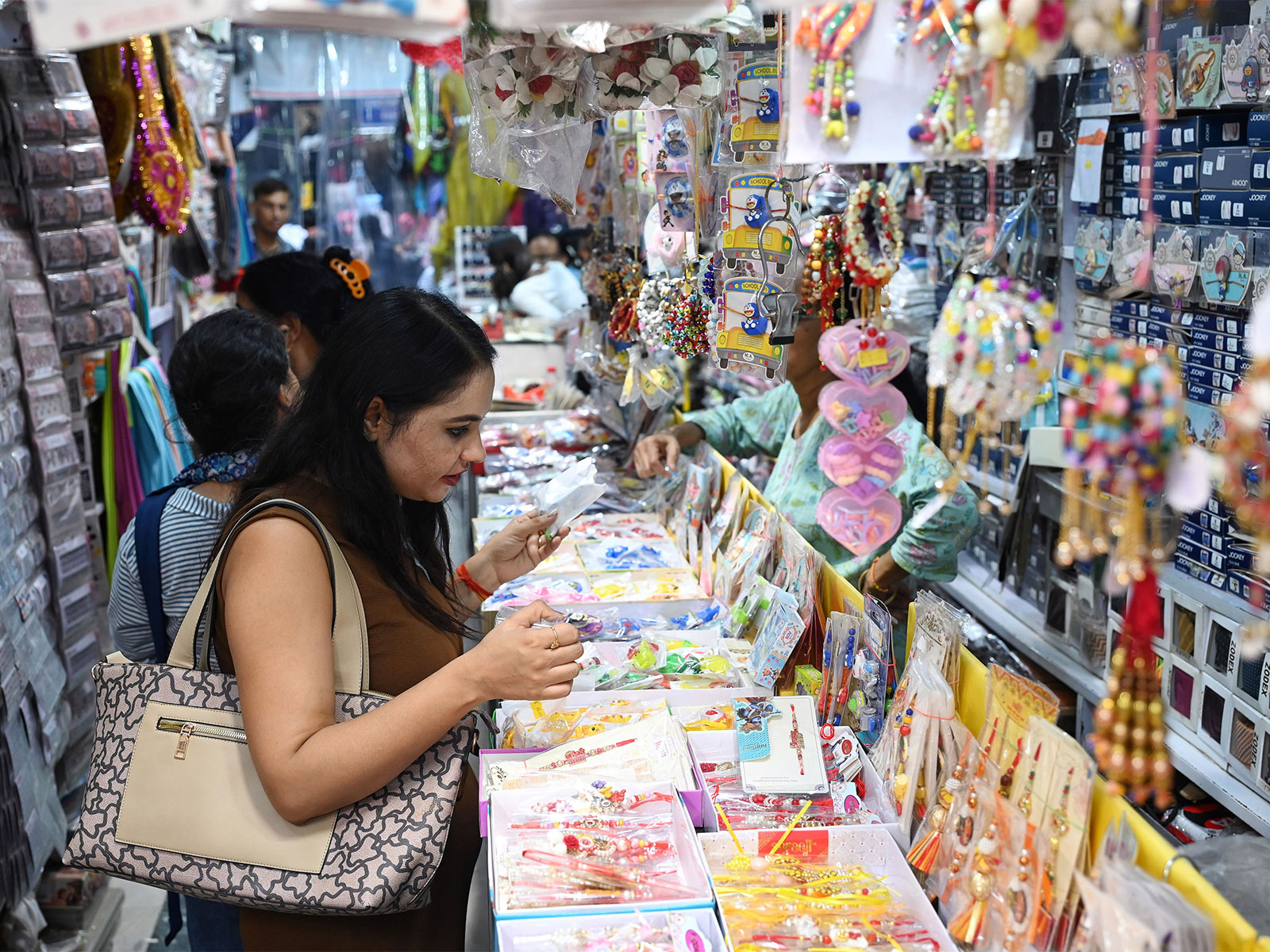
He remembers going to nearby shops, physically checking and selecting Rakhis and being together with his brothers and sisters during the festival.
“Celebrating Raksha Bandhan away from my sister and home sometimes makes it feel like the festival is missing its warmth. We will obviously video-call and exchange gifts online, which has become the only way for us to keep the celebration alive,” Vijay said.
He added, “All my childhood memories with my sister are special, and those are the moments I cherish the most. Distance has definitely changed the way we celebrate, the emotional bonding that comes from being together now feels more like a formality at times.”
What these siblings experience privately is also visible on the ground in the sudden rush of Rakhi parcels moving between cities and countries.
Talking to a delivery executive about Rakhi-related deliveries, he said it brings a noticeable increase in deliveries compared with regular days.
He said that as the festival approaches, parcels containing Rakhis, sweets, gifts and personalised items begin arriving in greater numbers.
A large number of Rakhi parcels travel to Delhi-NCR, Mumbai, Bengaluru, Hyderabad, Pune and Kolkata. Some travel across states, while others across international borders to reach siblings in the US, UK, Canada and Australia. And increasingly, the parcels contain much more than a thread.
In other words, people are not merely couriering a Rakhi, they are couriering a celebration.
The delivery person who don’t want to mention his name, said that for siblings living in different cities, the parcel becomes a substitute for the person who cannot be there and the timing matters.
For domestic deliveries, people generally send Rakhis about a week or more before the festival. International parcels are sent much earlier because transit time and customs clearance can take longer, and the pressure increases on them.
“Customers are particularly concerned about delivery dates during Rakhi and often opt for express or priority services to ensure their parcels arrive before the festival. The biggest challenges are the sudden surge in shipment volumes, traffic, weather conditions and last-mile delays, while international parcels may also face customs-related delays,” he said.
He added, “We see a strong movement of parcels between smaller towns and big cities, reflecting how many families are now spread across different parts of the country. Some parcels are especially memorable because they contain handwritten letters, photographs, sweets or personalised gifts, things that clearly carry a lot of emotional value.”
According to various media portals, online Rakhi shopping has witnessed a sharp surge. While demand for Rakhi hampers also grew moreb than regular days which highlights the growing role of e-commerce and quick-commerce platforms in festival shopping.
As more siblings live away from their families due to work, education and other commitments, celebrating festivals together is becoming increasingly difficult. For many, Raksha Bandhan now involves sending Rakhis and gifts online, making phone or video calls and finding new ways to maintain the tradition despite the physical distance. This shift, however, can also affect the emotional experience of the festival.
A psychologist, Janhvi Thakur, spoke about long-distance Raksha Bandhan celebrations said it is natural for siblings to feel emotional or that something is incomplete when they cannot celebrate together.
She said that Rakhi is deeply associated with physical presence, tying the thread, eating together and spending the day with family. Digital communication can maintain closeness, but it cannot completely recreate those experiences. At the same time, distance does not necessarily weaken a sibling bond. Regular calls, messages, video calls and even something as simple as sharing memes can help siblings remain emotionally connected.
“Sending a Rakhi, exchanging gifts or having a video call cannot completely replace being together, but these gestures can make the distance feel smaller. A video call may not give the same emotional satisfaction as sitting together, tying the Rakhi or having a meal as a family, but it can still be a meaningful way to celebrate,” Janhvi said.
She added, “Families are also creating new traditions around long-distance celebrations, such as video-calling at a fixed time, opening gifts together over a call or taking a family screenshot every year. The physical Rakhi remains important because it represents the relationship. When someone sends a Rakhi from far away, it carries a simple message: ‘I may not be there with you, but I still want to celebrate this relationship with you.”
For siblings separated by cities, countries and busy lives, Raksha Bandhan may no longer look the way it did in their childhood. Yet, the tradition continues to find its way into their lives through a couriered Rakhi, an online gift or a simple video call. While technology cannot replace the warmth of being together, these small efforts show that distance may change the way Rakhi is celebrated, but not the bond it represents. (ANI)
Related reading