By Toshi Mandola
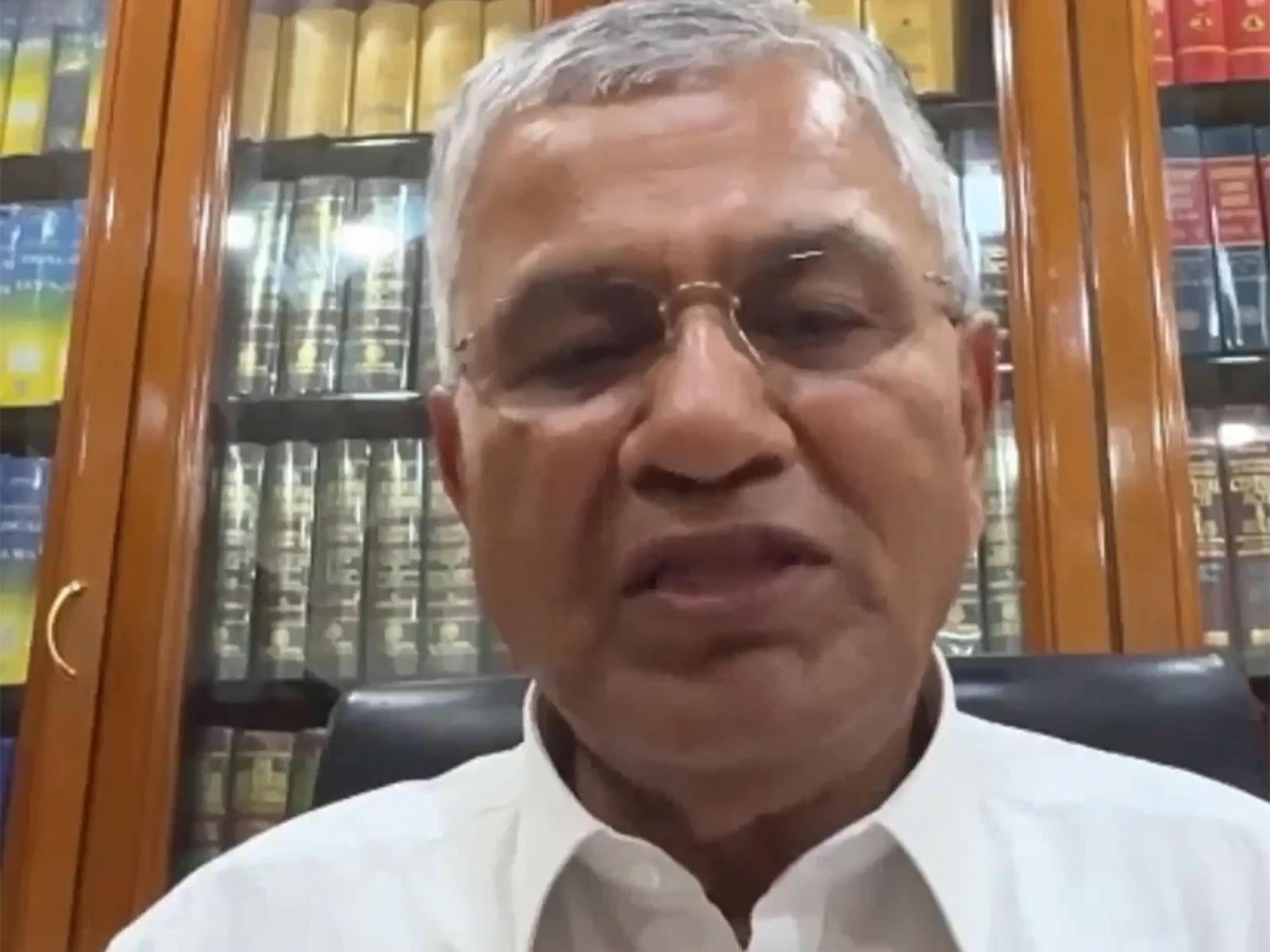
New Delhi [India], August 25 (ANI): Joint Parliamentary Committee (JPC) chairman on One Nation, One Election and BJP MP PP Chaudhary on Tuesday said that the proposed “One Nation, One Election” framework is neither against federalism nor violative of the basic structure of the Constitution, asserting that the move is aimed at synchronising the electoral calendar without affecting the autonomy of states.
Speaking to ANI, the JPC chairman said the committee has held around 21-22 meetings so far in Delhi and consulted a large number of stakeholders to examine whether simultaneous elections are constitutionally valid and in consonance with federalism and the basic structure of the Constitution.
“We first consulted six former Chief Justices of India, including Justice UU Lalit, Justice Ranjan Gogoi, Justice Sanjiv Khanna, Justice JS Khehar and Justice DY Chandrachud,” Chaudhary said.
He added that the committee also interacted with three former Chief Justices of High Courts, two former Supreme Court judges–Justice BS Chauhan and Justice Hemant Gupta–and Law Commission Chairman Justice Dinesh Maheshwari.
“Except for one person, almost all of the 12 people we consulted were of the view that One Nation, One Election is in the national interest and is not against federalism or the basic structure of the Constitution,” he said.
“One Nation, One Election is Prime Minister Narendra Modi’s vision of holding Lok Sabha and Assembly elections together. Under this vision, issues such as good infrastructure, industries, investment, governance and quality education are being considered. This is in the national interest,” he said.
While addressing concerns over federalism and state autonomy, Chaudhary said, “There is no interference with the State List under One Nation, One Election. Only the electoral calendar is being synchronised.”
He said the Constitution has three lists–the Union List, State List and Concurrent List–and subjects under the State List would continue to remain with state governments.
“It will not make any difference to the voter or the candidate. Synchronising election dates does not reduce the autonomy of the states. It does not reduce their legislative powers,” Chaudhary said, adding that the proposal was aimed at administrative convenience and could help save public money.
Chaudhary also pointed to India’s earlier experience with simultaneous elections, saying the first four general elections to the Lok Sabha and state assemblies were held together until 1967.
“After that, in 1968, around seven State Assemblies were dissolved before completing their terms so that elections could be held together. The electoral cycle was disrupted because President’s Rule was imposed in different states at different times,” he said.
The JPC chairman said the biggest beneficiaries of simultaneous elections would be the country’s youth, particularly Class 12 students, as repeated election duties affect the functioning of schools.
“Today, we are seeing that children are being deprived of quality education because school teachers and infrastructure are repeatedly utilised for election-related activities,” he said.
Chaudhary claimed that around 30 per cent of school teachers and school facilities are used during elections and that schools have to remain closed in many places.
Citing his interaction during the committee’s visits to states, he said that when the committee visited Uttarakhand, Chief Minister Pushkar Singh Dhami informed them that 43 per cent of the state’s economy depends on tourism.
“There are only two major tourism windows–April-May and September-October. If Lok Sabha elections take place during one window and Assembly elections during another, it can adversely affect the state’s tourism-dependent economy,” Chaudhary said.
Chaudhary referred to the high-level committee headed by former President Ram Nath Kovind, which, based on a report submitted by N K Singh and Prachi Mishra, estimated the economic impact of separate elections at around Rs 7 lakh crore.
“If elections are held together, this could potentially result in savings of around Rs 7 lakh crore,” he said, adding that the indirect impact of repeated elections was much larger and could not be quantified in monetary terms.
“After interacting with Chief Secretaries and Secretaries of different states and officials from various ministries and sectors, we realised that the losses are much larger. The loss to governance cannot be quantified in monetary terms,” he said.
He added that delays in delivering social justice schemes and benefits to the poor, disruption to education and the impact on investment and labour could not simply be calculated in monetary terms.
“Some things can be quantified financially, but human development cannot always be measured in terms of money. The loss to the country is therefore much greater, and Rs 7 lakh crore may be only a small part of the overall impact,” Chaudhary said.
He said that if simultaneous elections result in savings of Rs 7-10 lakh crore and the money is invested in education, it could improve the future of children and youth, generate employment and provide better quality education.
“This is the vision that Prime Minister Narendra Modi has had since 2014–that if India has to move forward, Lok Sabha and Assembly elections should be held together, and the money saved should be used for the development of young people,” he said.
On the requirement of EVMs and VVPAT machines for simultaneous elections, Chaudhary said the issue involved approximately Rs 10,000-15,000 crore and asserted that the Election Commission was fully prepared.
“If the Election Commission is informed six months in advance, all the EVMs and other arrangements can be made. Therefore, there is no major problem on that front,” he said.
Chaudhary also criticised the Congress and Leader of Opposition Rahul Gandhi over the Opposition’s role in Parliament.
“Congress is the largest opposition party and Rahul Gandhi is the Leader of Opposition (LoP). He has a duty, responsibility and accountability because the people have elected him and his party has been given the strength to serve as the Opposition,” he said.
He said the Opposition’s responsibility was to raise issues in Parliament, debate them and seek answers from the government.
“Instead of demanding answers from the government inside Parliament, I allege that the Opposition has left the government free and has come onto the streets. This is not good for the country or for democracy,” Chaudhary said. (ANI)
Related reading