New Delhi [India], August 25 (ANI): Pakistan’s jailed former Prime Minister Imran Khan’s son, Sulaiman Isa Khan, lambasted the military-led establishment for pushing the country deeper into dictatorship, stating the Tehreek-e-Insaf (PTI) founder’s prolonged incarceration as a case in point.
“Yes, undoubtedly,” asserted Sulaiman on Tuesday, the elder son of Imran Khan, who has alleged inhumane treatment being meted out to the former PM over the past several years. Imran Khan has been incarcerated at Rawalpindi’s Adiala Jail since 2023.
Imran Khan’s family and international legal team have repeatedly raised concerns over his detention, treatment in custody and access to medical care.
When asked about whether the current Pakistani regime was sliding towards dictatorship over the treatment towards Imran Khan, Sulaiman highlighted the visible escalation of military influence in the country’s governance, adding that there was little doubt that the country’s establishment was involved in “torture and the arbitrary detention” of their father’s general conditions.
“I would say, with some of the actions we’ve seen, I think yes, undoubtedly. You can see the influence of the military in a lot of the torture and the arbitrary detention of our father’s general conditions. I don’t think there’s any doubt that the whole establishment is involved,” Sulaiman told ANI during a virtual press conference.
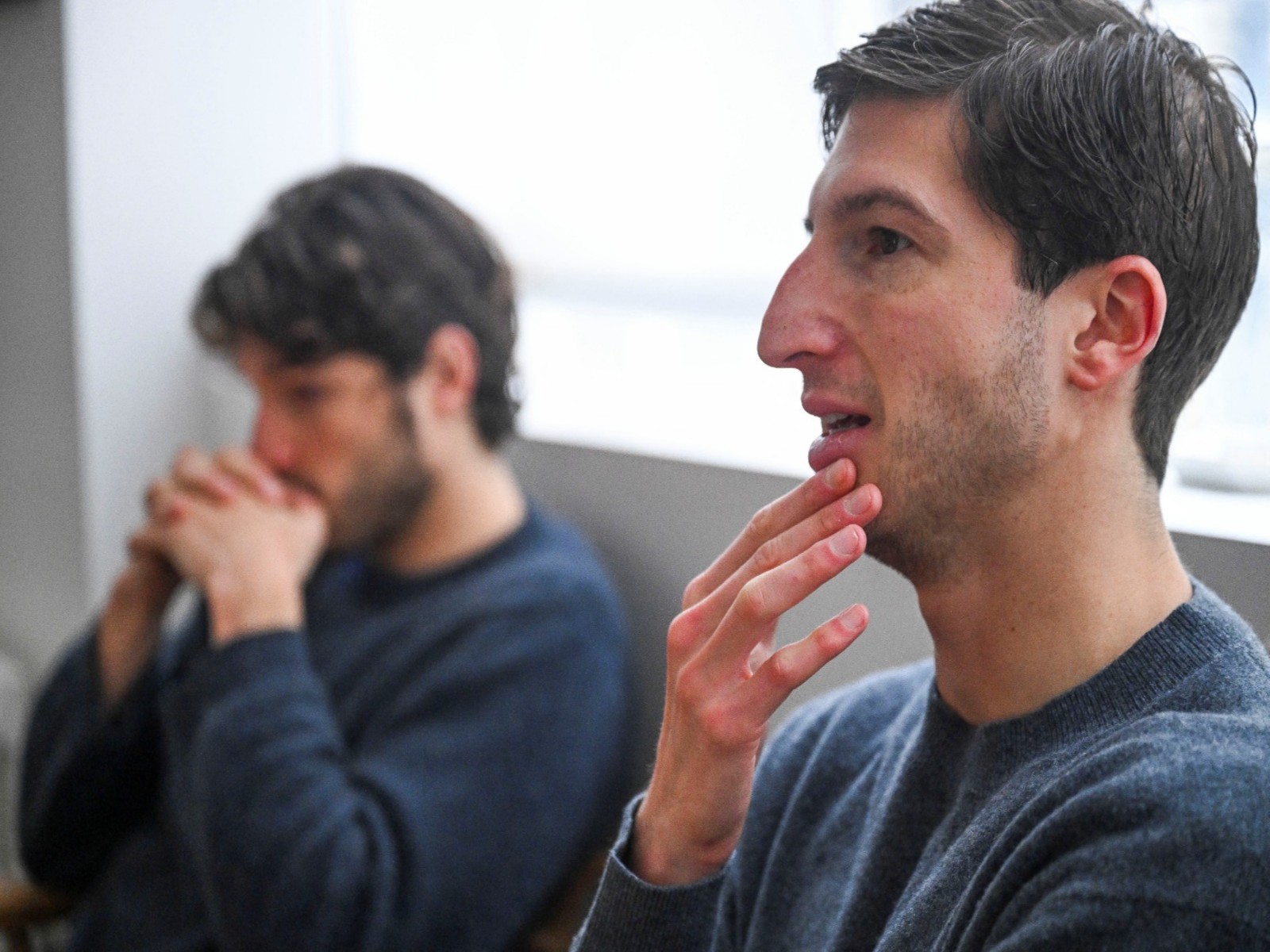
The press conference was organised to discuss Khan’s illegal detention and ongoing health challenges.
Sulaiman, alongside his brother Kasim Khan, International Counsel Jared Genser, and Advisor on International Affairs and International Media Sayed Bukhari, spoke out about the high-profile detention and the broader human rights situation in Pakistan.
Echoing the family’s deep concerns, Genser sharply criticised the state of democracy in Pakistan, placing the responsibility on military leadership. He accused Pakistan’s Army Chief Asim Munir of leading an “authoritarian regime”, arguing that the case of ex-PM Khan reflected a wider erosion of democratic institutions.
“The actions that we’re seeing taken on Imran Khan and his wife’s cases are not the actions of a healthy, functioning democratic government,” Genser said.
He said that hundreds of cases had been brought against Khan on “fabricated charges”, adding that the former prime minister’s imprisonment should be viewed in the context of a broader crackdown on political activists.
“When you’re talking about repressing the fundamental human rights of thousands of activists, but also just the wider population, and all the ways in which the entire system is being manipulated in order to maintain an iron grip on power, there’s no doubt that General Munir is running an authoritarian regime,” Genser added.
The International Counsel said Khan’s imprisonment had acquired significance beyond the former prime minister himself, arguing that his continued detention could serve as a warning to others who might challenge the authorities.
“Imran Khan’s case is a bellwether for the direction the country is heading in,” he said, adding, “With him in prison, it’s very clear that the regime is trying to send a message to the people of Pakistan that they better not stand up.”
Genser said the message was particularly significant because Khan remains a globally recognised political figure.
“Imagine if we can do this to Imran Khan, who everyone in the world knows about. What could we do to you, someone who the world doesn’t know about?” he said.
The concerns over Khan’s imprisonment have also extended to his health and medical treatment in custody.
On August 18, a three-judge bench of Pakistan’s Supreme Court, led by Justice Shahid Waheed, directed authorities to move Khan from Adiala jail to Shifa International Hospital in Islamabad within 48 hours for medical treatment and a comprehensive health evaluation.
The court also directed that Khan be examined by an independent medical panel comprising a cardiologist, eye specialist, general physician and his personal doctor, Dr Faisal Sultan.
The order was based on a prisoner’s fundamental right to healthcare under Pakistan’s Constitution.
However, authorities took him on August 20 to the Pakistan Institute of Medical Sciences (PIMS), a public hospital, where he was examined for several hours before being declared medically fit and returned to Adiala jail.
Khan’s team alleges that a decoy convoy was sent from the jail towards Shifa, creating the impression that he had been taken there. It further alleges that Dr Sultan was waiting at Shifa and did not get an opportunity to examine Khan, while no independent medical panel was constituted.
The UN Special Rapporteur on Torture has also spoken out three times over the past year concerning Khan’s mistreatment, while the UN Committee Against Torture has also raised similar concerns.
Khan’s Pakistan counsel is expected to file a motion before the Supreme Court seeking contempt proceedings over what his team describes as non-compliance with the court’s medical directive.
Against this backdrop, Genser said Khan’s international legal team was preparing a sustained campaign to draw greater attention to his case.
“I can assure you that we are embarking on a sustained campaign of legal, political and public relations advocacy actions,” he said.
Genser said the campaign would involve introducing Sulaiman and Kasim to a wider audience, highlighting what they say their father and his wife are experiencing, and engaging multilateral organisations, national governments and civil society.
The concerns shown by Khan’s son and his international counsel place the former prime minister’s imprisonment at the centre of their argument that Pakistan is moving away from democratic governance.
For Sulaiman, the issue is not simply about his father’s detention. His “yes, undoubtedly” response reflects his belief that Khan’s continued imprisonment, the military influence and the treatment of political opponents are indicators of a much broader political shift in Pakistan. (ANI)
Related reading