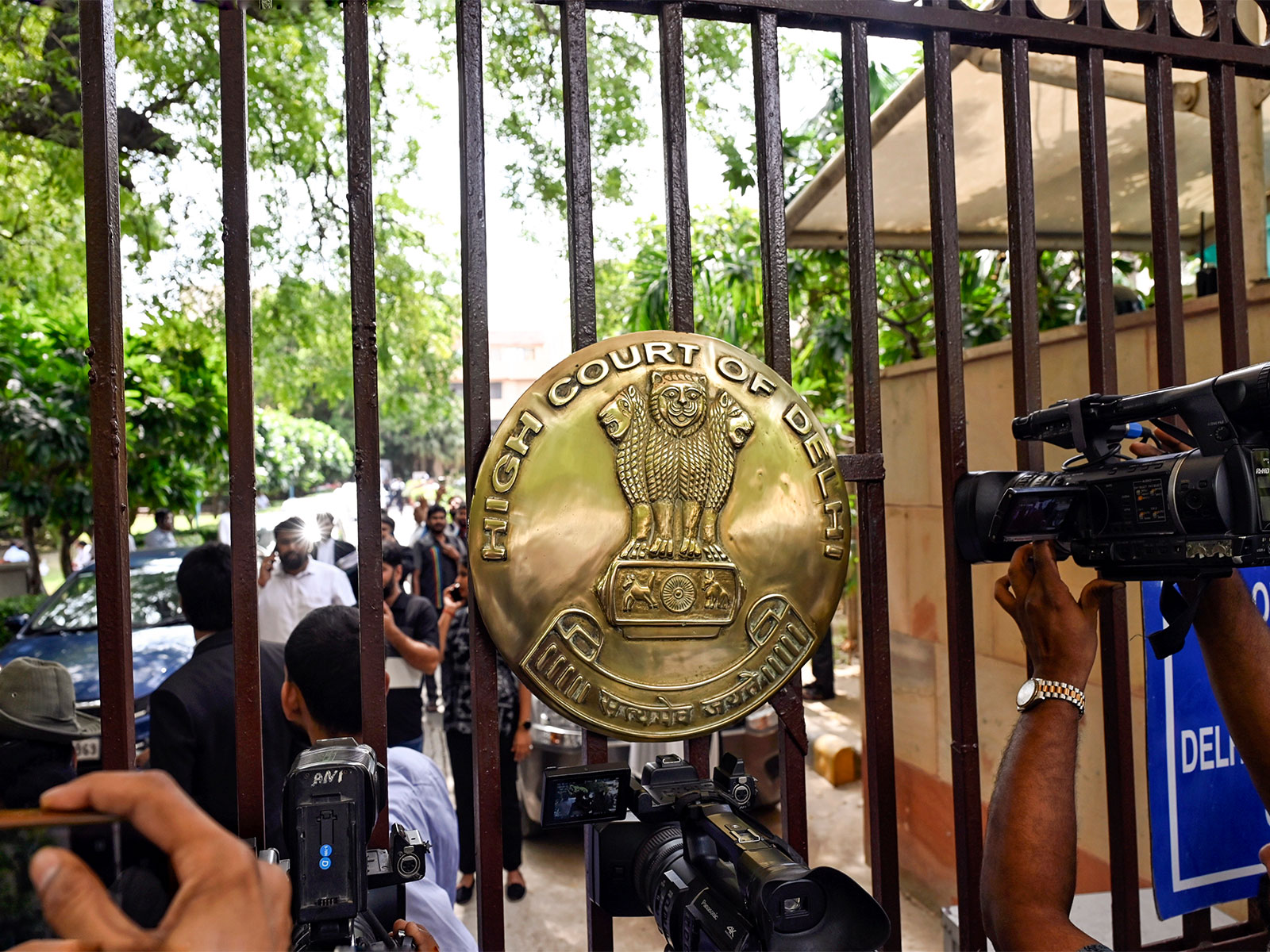
New Delhi [India], August 25 (ANI): The Delhi High Court has observed that marriage is a relationship built on “faith, companionship and trust,” but when matrimonial issues are not resolved in time, the “better-half becomes the bitter-half,” and the relationship can turn into a conflict zone where even physical violence may creep in.
The Court said relationships can take an “entirely different undesirable and unexpected direction” when matrimonial disputes are not handled carefully and in time. It observed that while time may heal many pains in life, delay in resolving issues within relationships can instead prove counterproductive.
The observations came while the High Court acquitted a man convicted by a trial court for allegedly attempting to murder his wife by forcibly administering Baygon insecticide during a matrimonial quarrel.
Justice Vimal Kumar Yadav observed that the case was an example of spouses coming to “loggerheads” within about a year of their marriage. The Court, however, said the prosecution had failed to establish beyond reasonable doubt that the accused had administered the substance with the intention or knowledge required to attract an offence under Section 307 of the IPC.
The Court found that the medical and forensic evidence was “on a slightly shaky wicket”. It noted that the victim’s initial medical parameters were normal and no symptoms of poisoning were found by doctors. Though vomiting was reported at the hospital, the Court said this alone was insufficient to conclude that a poisonous substance had been administered.
The Court further noted that the gastric lavage sent for forensic examination contained no trace of any poisonous substance.
It also pointed out an unexplained discrepancy concerning the alleged insecticide container. While the investigating officer stated that the recovered container was empty, the forensic report recorded that the container contained about 4 ml of insecticide.
The Court said the testimony of an injured witness carries significant evidentiary value but is not immune from judicial scrutiny and must be examined in the light of surrounding circumstances and available medical and scientific evidence.
It also considered the accused’s conduct after the incident, noting that the victim was promptly taken to hospital and medical treatment was arranged. Such conduct, the Court said, was a relevant circumstance while examining the intention required for an offence under Section 307 IPC.
The Court further found inconsistencies in the victim’s testimony on several aspects of the matrimonial dispute and said these required the evidence to be appreciated with greater caution.
“Highly unsafe” was the Court’s assessment of relying on the evidence placed on record to sustain the conviction, holding that the prosecution had failed to establish the requisite intention and knowledge. (ANI)
Related reading