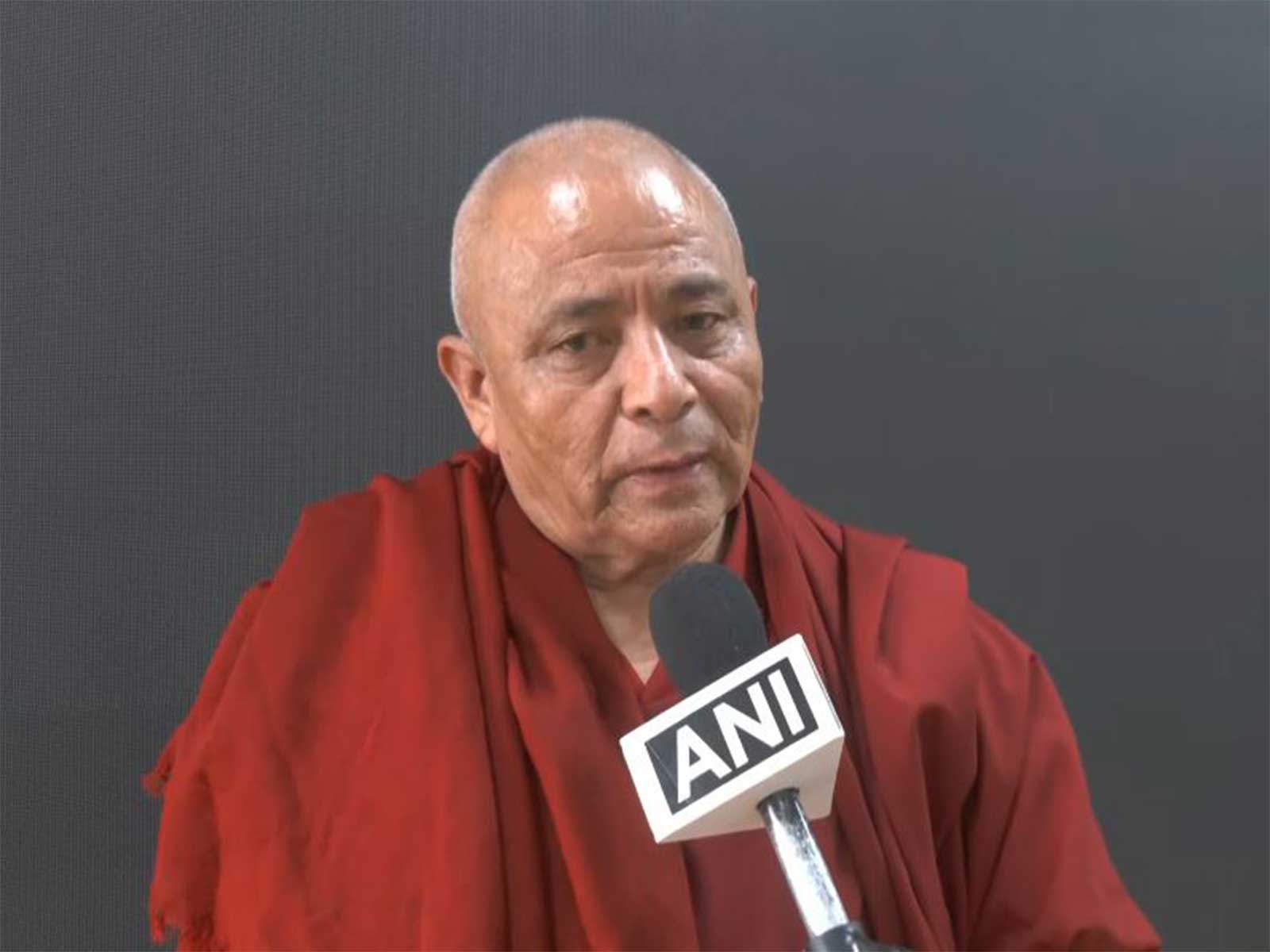
Shimla (Himachal Pradesh) [India], August 19 (ANI): Tibetan Buddhist monk and scholar Acharya Yeshi Phuntsok, former Deputy Speaker of the Tibetan Parliament-in-Exile, has expressed optimism over the growing interest among young Indian students in Tibet, its history, culture, environment and longstanding relationship with India, saying the younger generation can play an important role in carrying forward a deeper understanding of India-Tibet ties.
Phuntsok, who has been conducting an outreach programme among students in Shimla, said the enthusiastic response from students at Indian educational institutions was encouraging, particularly at a time when the third generation of Indians and Tibetans is growing up with limited direct exposure to Tibet’s history and the historical relationship between the two societies.
During his visit, Phuntsok delivered lectures and interacted with students at Himachal Pradesh University and three colleges in Shimla, including two women’s colleges, discussing a wide range of subjects including India-Tibet relations, Tibetan history, Buddhist knowledge, traditional medicine, culture, environmental issues and the significance of the Tibetan plateau and its rivers.
Speaking to ANI, Phuntsok said the objective of the initiative was to ensure that young Indians understood Tibet through historical facts and contemporary realities rather than viewing the issue only through a political lens.
“I am hopeful because the younger generation is showing interest. This initiative is about creating awareness of Tibet-India relations among the younger generation so that they understand the real Tibet, the facts about Tibet and the historical relationship between Tibet and India,” he said.
Phuntsok said the need for such interaction had become particularly important as the generations that had direct experience of Tibet were gradually being replaced by younger generations.
He said the first generation of Indians had witnessed Tibet and understood its historical links with India, while the second generation retained considerable knowledge of the subject. However, he said the third generation needed greater outreach.
“This is now the third generation in India. We need to give them more facts and explain the historical and present scenario,” he said
Referring to China’s occupation of Tibet more than six decades ago, Phuntsok said young Indians were generally aware of the present situation but often lacked an understanding of its historical background.
“For the last more than six decades, everyone knows about the Chinese aggression, but why it happened is difficult for the younger generation to understand. Once we reach out to them, they can understand more easily and may become good scholars of India-Tibet relations,” he said.
Phuntsok said the response from students across the institutions he visited had been particularly encouraging.
He said students listened attentively and many were keen to pursue further research on Tibet and India-Tibet relations.
“Students have been very interested. In all the places I have visited, they listened with pin-drop silence. It means they are receiving the information and taking notes,” he said.
He said a number of students pursuing PhD and other research programmes were already showing interest in Tibet-related subjects and that direct interaction with Tibetan scholars and the community could provide them with a deeper understanding.
Phuntsok also encouraged students to visit Dharamshala and interact directly with members of the Tibetan community.
“If students want to know more closely about Tibet and the issue and all the background of Tibet, it will be easy for them to do PhD and research in the future. They can visit Dharamshala and interact with the Tibetan community,” he said.
Phuntsok said the interaction with Indian students was not limited to the political dimensions of the Tibet issue.
The lectures covered Tibetan culture, Buddhist philosophy, traditional medicine, environmental concerns, rivers and the wider historical and cultural links between India and Tibet.
He said Tibet’s environmental importance made the subject relevant not only to Tibetans but also to India and other countries in Asia.
Phuntsok also referred to the teachings of the Dalai Lama on compassion, secular ethics and positive engagement with young people, saying these ideas could help promote constructive dialogue and greater understanding.
He said many Indian students were already familiar with the Tibetan community and the Dalai Lama but needed opportunities to explore Tibet in greater depth.
“Many students know a little about Tibet because Tibetan communities are present in different places and they know His Holiness the Dalai Lama. But for deeper and closer understanding, they need more interaction with the Tibetan community,” he said.
The interaction also generated interest among students in exploring Tibet beyond the political narrative.
Tanya Chauhan, a Political Science student, said Phuntsok’s lecture had given students a broader understanding of the relationship between India and Tibet.
“He gave us very insightful knowledge. We came to know not only about the political relationship but also about the environment, medicine, the flow of rivers and how East and South Asian countries are also facing problems today,” Chauhan told ANI.
She said students were also introduced to the richness of Tibetan culture and its influence on other societies.
“He told us about Tibetan culture, how rich it is and how it is influencing other countries. We also learnt that the relationship between India and Tibet is very old,” she said.
Chauhan said the discussion on Tibetan traditional medicine and environmental issues was particularly useful for students.
“It was a great help for us because we got to know all these things, and we would love to know more about Tibetan culture and everything Acharya ji told us by practically learning and interacting more with the Tibetan community,” she said.
Asked whether she would pursue research on Tibetan issues, Chauhan said she would welcome such an opportunity.
“Yes, surely. If I get an opportunity in the future, I would love to work on this topic. It is very interesting,” she said.
Phuntsok said universities and colleges could become important platforms for encouraging Indian students to undertake academic research on Tibet.
He said direct exposure to Tibetan scholars and the Tibetan community could help students who are interested in pursuing research, including PhD programmes.
“Students are the future of India and they have to learn more about the past history. Many students are doing PhD and research in different universities and states. If present students want to know more closely about Tibet, they can pursue their future research on the subject,” he said.
Phuntsok said Tibetan institutions had a responsibility to reach Indian communities directly because not every Indian student could travel to Dharamshala to learn about Tibet.
“This is our responsibility. We have to reach out to Indian youth and the Indian community because they may not be able to come to Dharamshala. Therefore, we have to reach universities, schools and colleges,” he said.
He said the support extended by educational institutions in facilitating such interactions was important for building stronger people-to-people understanding.
Phuntsok also highlighted the continued interest among Indians in the teachings of the Dalai Lama.
He said many Indians who interact with the Dalai Lama seek guidance on questions concerning their lives and future.
He said the teachings on compassion and secular ethics continued to attract Indian audiences and could provide an additional avenue for closer engagement between Indian youth and the Tibetan community.
Phuntsok said modern communication tools, particularly social media, could significantly expand the reach of such educational initiatives.
“In the 21st century, social media is very important. We cannot just come to one place and give lectures. Through social media and the fourth pillar of democracy, the message can reach a much wider audience,” he said.
He said media organisations could take discussions about Tibet beyond Dharamshala and Shimla and bring them to a national and global audience.
“Through media such as ANI, this can reach the global level, not only Dharamshala and Shimla. This is also important to highlight positive aspects about Tibet and the Tibetan people,” he said.
Phuntsok said such interactions were especially significant in Himachal Pradesh, where the Tibetan community has a longstanding presence and the Dalai Lama resides in Dharamshala.
He said he had been invited by several institutions over the years to speak on Buddhism, Buddhist law, environmental issues and the current situation in Tibet.
Describing the outreach as a responsibility towards future generations, he said the younger generation needed to inherit a deeper understanding of India’s historical and cultural relationship with Tibet.
As students in Shimla showed interest in pursuing further study and research on Tibet, Phuntsok said the response offered hope that Indian youth could contribute to a more informed understanding of the region and its historical relationship with India.
The outreach programme, he said, aims to bridge the information gap between younger Indians and the Tibetan community by combining historical awareness with contemporary discussions on culture, environment, traditional knowledge, Buddhist thought and India-Tibet relations. (ANI)
Related reading