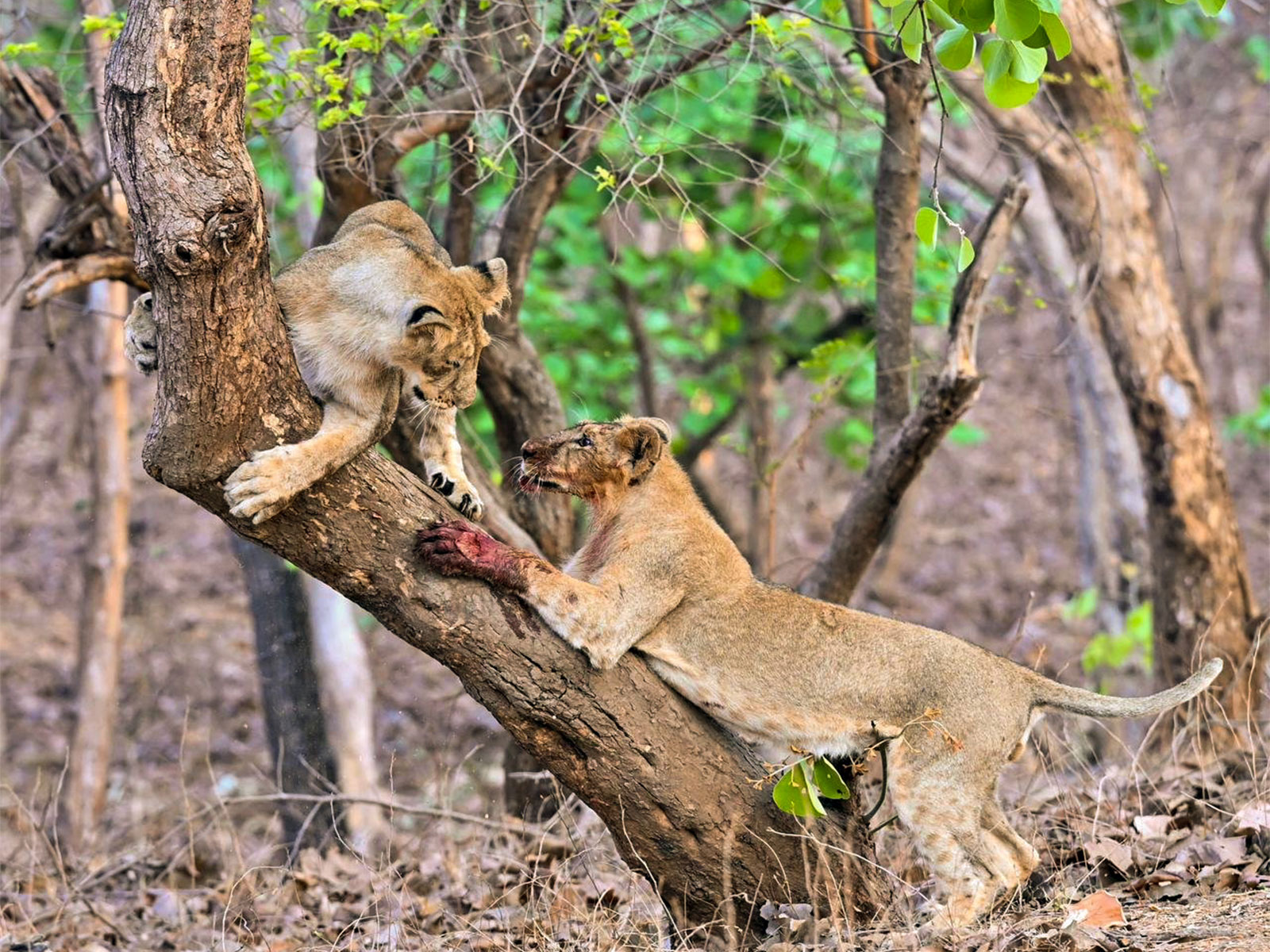
Gandhinagar (Gujarat) [India], August 19 (ANI): Gujarat’s Forest Department, committed to protecting Asiatic lions and forest resources, has taken strict action against illegal activities and violations of the Wildlife Protection Act.
On the instructions of Forest and Environment Minister Arjun Modhwadia, the Gir East Forest Division registered 75 offences and recovered fines of over Rs. 13.30 lakh in the last four months, according to a press release on Wednesday.
In addition, the Forest Department has registered 38 offences against those entering the sanctuary area without authorisation and taken action as per the rules, imposing fines of approximately Rs. 7,76,400/-. This includes 8 offences related to the hunting of wild animals. Of these, court proceedings are currently underway in 4 cases.
In the remaining 4 cases, punitive action has been taken, and a fine of Rs. 2,20,000 has been recovered.
The Forest Department has registered 16 offences against offenders transporting timber without a valid permit or transit pass and recovered a fine of Rs. 3,03,000.
To maintain the environmental cleanliness of the sanctuary area, 17 offences were registered for dumping plastic waste and illegally grazing livestock in reserved grassland, and a fine of Rs. 32,500 was recovered.
The Forest Department has appealed to citizens that if any person is found in their vicinity engaging in illegal activities such as harassing wild animals, illegal hunting, unauthorised entry into restricted forest areas or theft of timber, the matter should be immediately reported to the nearest Forest Department office or staff.
The Office of the Deputy Conservator of Forests, Gir-East, Amreli, has also stated that if any reel, photograph or video related to the harassment of lions or other wildlife, illegal lion shows/sightings, entry into prohibited areas or hunting is found on social media, its details should also be immediately reported.
Meanwhile, over the past five years, the number of women-led dairy societies in Gujarat has risen by 21 per cent to 4,562, creating greater opportunities for women in rural communities.
In Banaskantha, the Harsiddhnagar Mahila Doodh Utpadak Sahakari Mandali is managed entirely by women. The cooperative collects, tests and sends around 2,000 litres of milk to Banas Dairy every day.
The growing participation of women is reflected across Gujarat’s dairy sector. Nearly 12 lakh women are among the state’s 36 lakh dairy producers. Women-managed cooperatives now procure around 57 lakh litres of milk every day, registering a 39 per cent increase over five years.
The sector has also witnessed significant growth in revenue. Daily revenue has increased from Rs 17 crore to Rs 25 crore, while annual turnover has crossed Rs 6,000 crore. Nearly 80,000 women are also participating in the management of primary dairy cooperatives. (ANI)
Related reading