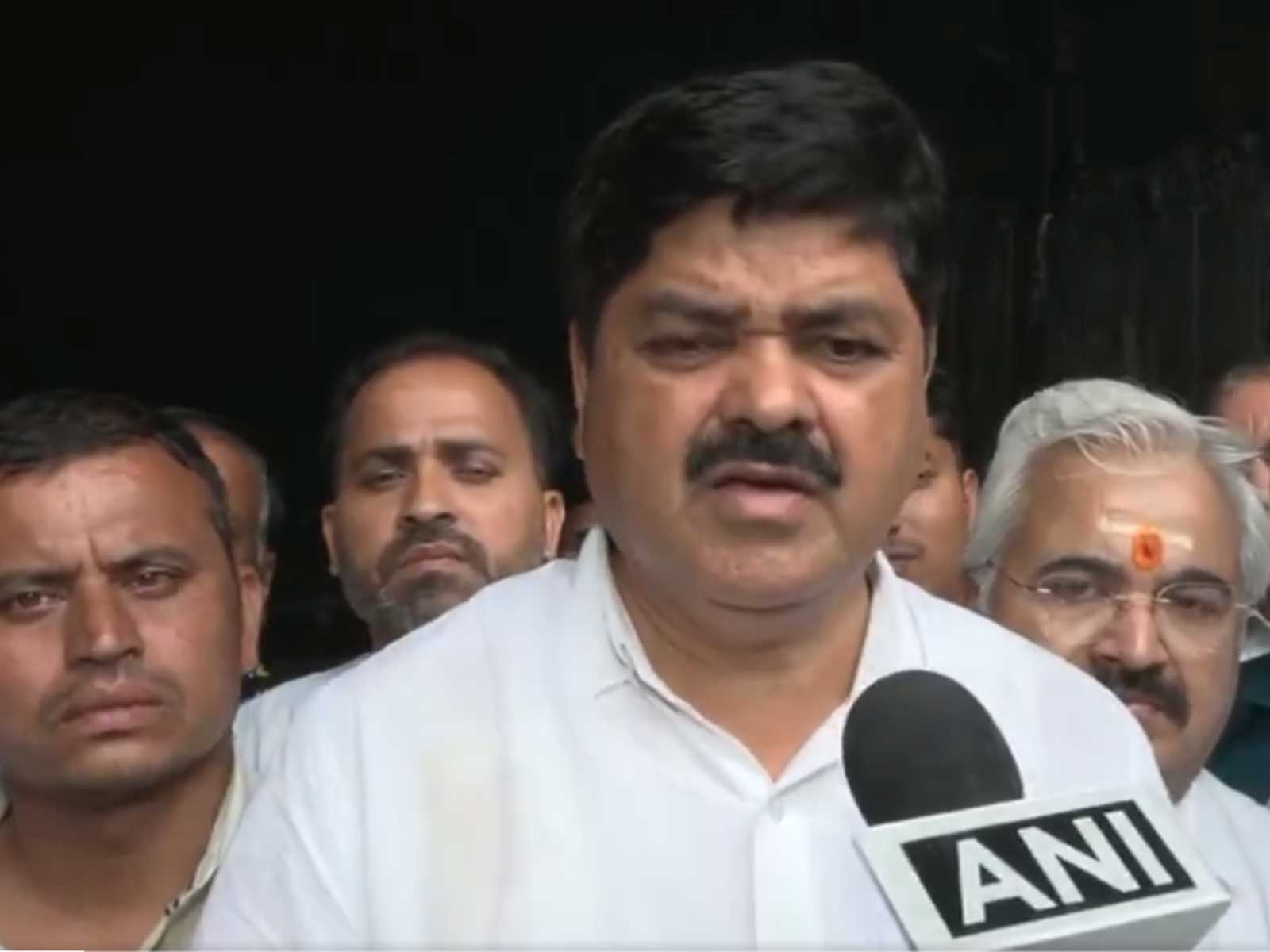

New Delhi [India], August 15 (ANI): Bar Council of India (BCI) Chairman Manan Kumar Mishra on Saturday apologised to law students if any of his words or letter in connection with the recent controversy hurt their feelings, while urging them to independently assess the issue and decide whether to participate in their convocation.
The controversy began after the Bar Council of India (BCI) on August 13 ordered State Bar Councils not to enrol Hyderabad’s NALSAR varsity’s 2026 graduating batch, following a student campaign over recent judicial developments and the invitation to CJI Surya Kant to their convocation. After criticism, the BCI allowed the students to enrol and later withdrew the proceedings, saying most students were innocent. CJI Kant subsequently termed the BCI order “absolutely unnecessary”, and upheld the students’ right to protest and barred punitive action against NALSAR students or faculty. The episode also raised concerns over the BCI’s power to impose a blanket enrolment freeze on an entire graduating batch.
In a letter addressed to law students, Mishra said the developments of the last few days had caused “concern and anguish” among a section of the student community and stressed that their grievances deserved to be heard with patience, sensitivity and respect.
“If anything connected with the present controversy, any of my words, or letter, has hurt the feelings of our law students, I sincerely regret and apologise for the same,” Mishra said.
He added that expressing regret was “not a matter of prestige or ego”, but an acknowledgement that the feelings and concerns of students matter.
Mishra, who is also a senior advocate of the Supreme Court, described law students, particularly those studying in National Law Universities and other leading centres of legal education, as among the country’s “most informed and discerning young citizens”.
He said students study the Constitution, the rule of law, fairness and the importance of hearing all sides before reaching a conclusion, and therefore “do not require anyone to decide for them”.
“Nor should they be subjected to pressure or influence from any quarter,” he said.
The BCI Chairman said the National Law Universities occupy an important position in Indian legal education and that the choices of their students are noticed across the legal education system.
Referring to their future roles, he said students would go on to become advocates, senior advocates, teachers, scholars and judges, with some potentially occupying the highest positions in the legal and judicial system.
Mishra also defended the students’ right to disagree and protest, saying peaceful disagreement, questioning and protest were important features of a constitutional democracy.
“At the same time, the legal tradition teaches us something equally important, namely that when further facts or clarifications emerge, every issue should be reconsidered objectively and with an open mind,” he said.
He said there was no inconsistency between expressing a genuine grievance and subsequently considering a clarification fairly.
‘No student should be compelled to attend or abstain’
On the issue of convocation, Mishra said the occasion was special in the life of a graduating student and their family, representing years of hard work and an important transition. He emphasised that the decision to attend must ultimately remain with the students.
“No student should be compelled to attend, and no student should feel compelled to abstain,” he said, adding that students should take the decision independently after considering the matter in its entirety and according to their own judgment.
Mishra further said the relationship between the Judiciary, the Bar, universities and law students was “much deeper and more enduring than any temporary controversy”.
Differences and strong views, he said, should ultimately be capable of resolution through dialogue, clarification and mutual respect.
The BCI regards law students as the future of the legal profession, he said, adding that their dignity, independence of thought and legitimate concerns must always be respected.
At the same time, he stressed that dialogue, mutual respect and constitutional values were equally important for the profession they were preparing to enter.
Mishra urged that the present issue be considered with fairness and in a spirit of reconciliation, and said it should not acquire a political or extraneous colour through outside influence. “Our law students are mature and discerning enough to examine the facts, consider the clarification offered, and take their own independent decision,” he said.
He also called for institutions to respect students’ independence of thought and said there should be space for dialogue and moving forward “without bitterness” where clarification had been offered.
Concluding his three-page letter, Mishra said the greatest strength of future leaders of the Bar, Bench and legal academia would be their ability to think independently, listen to differing viewpoints and reach conclusions guided by reason, fairness and the Constitution.
“On this Independence Day, that spirit of independent thought, mutual respect and constitutional responsibility is perhaps the most meaningful message we can collectively reaffirm,” he said. (ANI)
Related reading